Air Suction Control System
- Check all vacuum hose routing. Start engine, and warm until cooling fan comes on. Disconnect vacuum hose No. 7 from air suction valve. See Fig 1
. Connect a vacuum gauge to hose.
- If no vacuum is present, go to next step. If vacuum is present, disconnect 6-wire connector at air suction control solenoid. See Fig 2
. If vacuum is still present, replace air suction control solenoid. If vacuum goes away, check for short in Gray wire between 6-pin connector and ECU terminal A17. If wire is okay, substitute a known good ECU, and retest. If problem goes away, replace ECU.
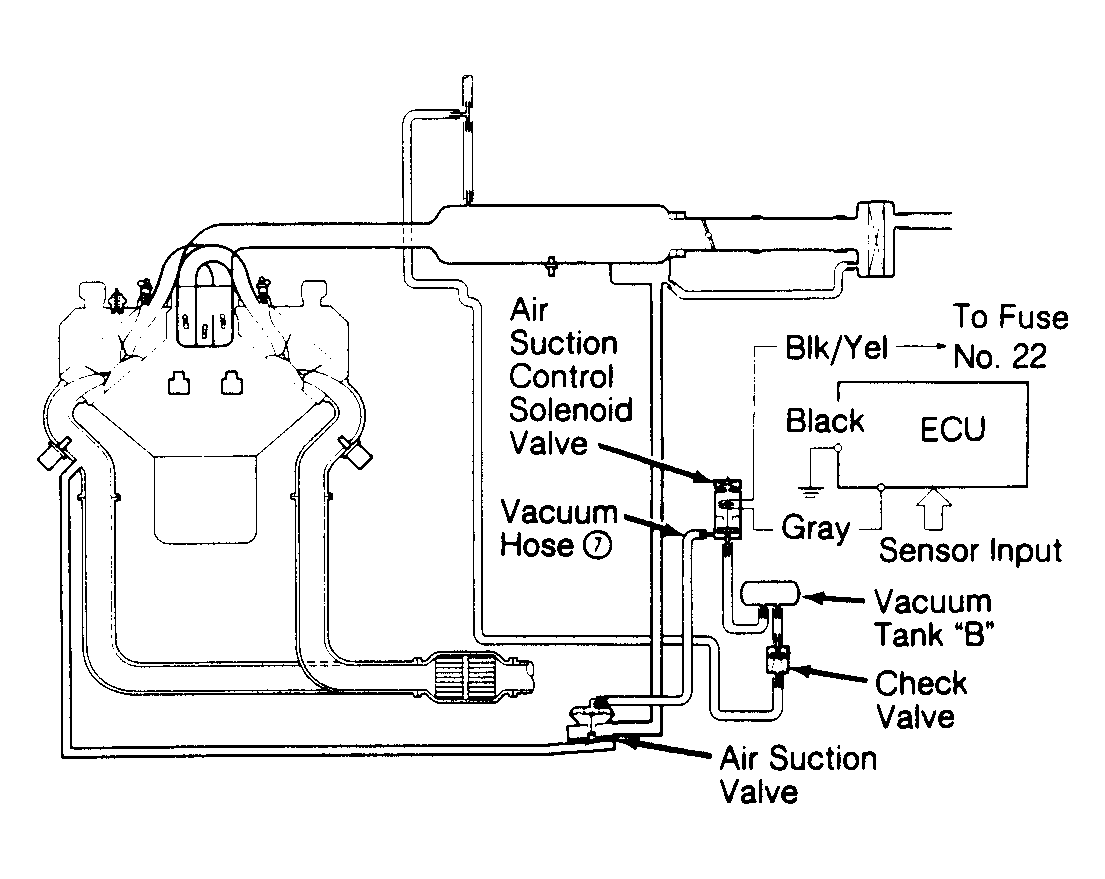 Courtesy of AMERICAN HONDA MOTOR CO., INC.
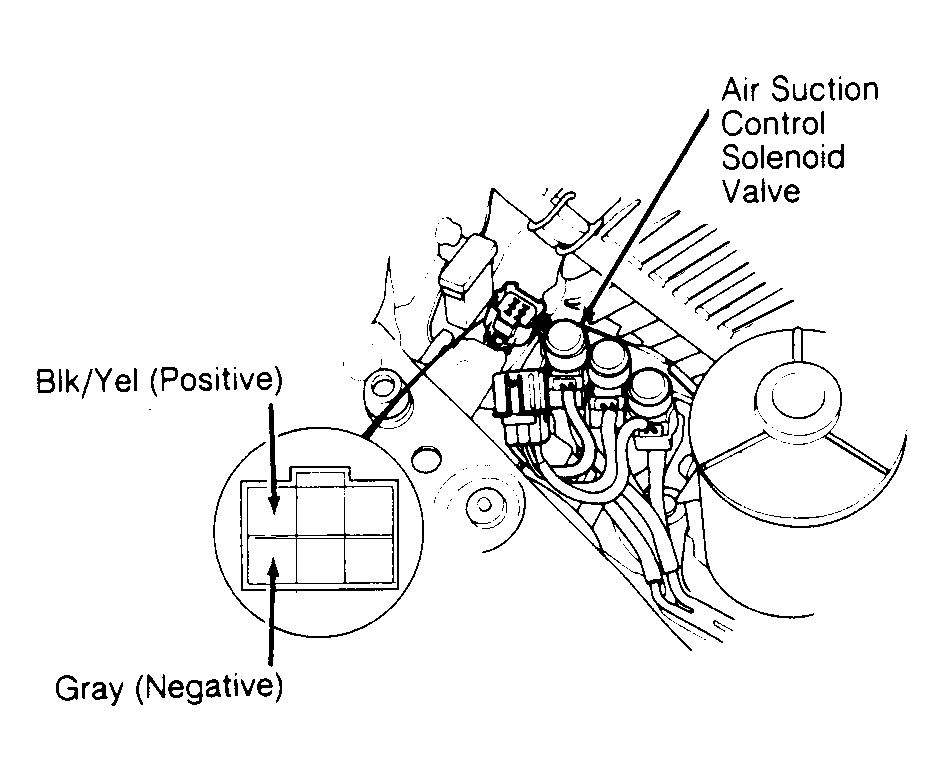 Courtesy of AMERICAN HONDA MOTOR CO., INC.
- Block rear wheels. Raise front of vehicle. Start engine, and place transmission in second gear. Check for vacuum during deceleration above 9 MPH and 1500 RPM. If vacuum is present, go to step 6).
- If no vacuum is present, turn ignition off. Disconnect 6-wire connector at air suction control solenoid. Start engine. Connect voltmeter to Black/Yellow (positive) and Gray (negative) wire terminals of air suction control solenoid valve. Check voltmeter reading during deceleration above 9 MPH and 1500 RPM. If voltage is present, replace air suction control solenoid valve. If voltage is not present, go to next step.
- If battery voltage is not present, check Black/Yellow wire for source of voltage and Gray wire for opens or shorts. If no problems are found, substitute a known good ECU, and retest. If problem goes away, replace ECU.
- If vacuum is present from step 3), connect vacuum hose No. 7. Check for suction noise from air suction valve during operation above 9 MPH and 1500 RPM. If noise is not present, replace air suction valve. If noise is present, system is okay.