By-Pass Control Solenoid Valve
- By-pass control solenoid valve is located on top of intake manifold. Start and idle engine. Disconnect vacuum hose No. 13 from by-pass control diaphragm. See Fig 1
. Connect vacuum gauge to hose. If vacuum exists, go to step 6). If vacuum does not exist, go to next step.
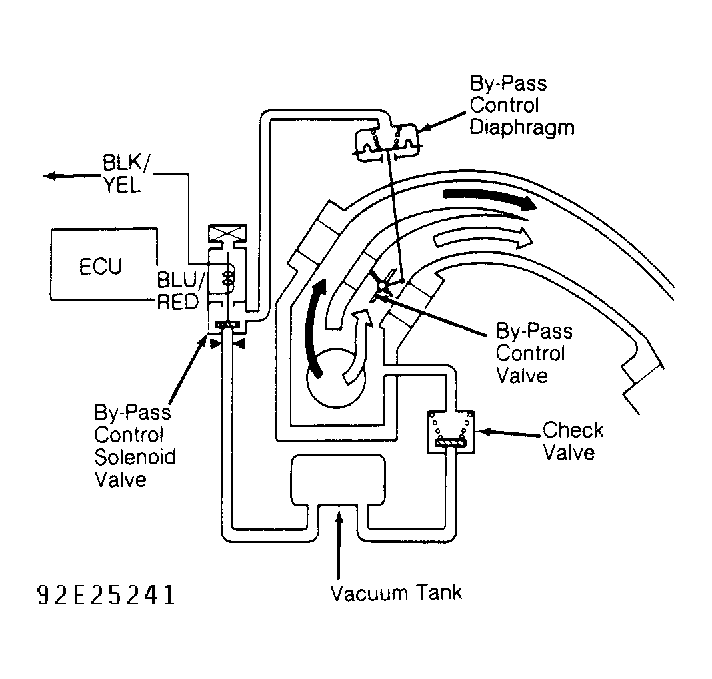 Courtesy of AMERICAN HONDA MOTOR CO., INC.
- Unplug 2-pin connector from by-pass control solenoid valve. Measure voltage between Black/Yellow and Blue/Red wire terminals of harness connector. If battery voltage exists, repair vacuum leak or blockage between intake manifold and diaphragm. If vacuum is okay, replace by-pass control solenoid valve. If battery voltage does not exist, go to next step.
- Measure voltage between harness connector Black/Yellow wire terminal and body ground. If battery voltage does not exist, repair open in Black/Yellow wire between connector and fuse No. 2. If battery voltage exists, go to next step.
- Turn ignition off. Reconnect wiring to by-pass control solenoid valve. Connect test harness to main wire harness only. DO NOT
connect it to ECU.
- Turn ignition on. Connect jumper wire between ECU terminals A17 and A26. If solenoid clicks when jumper wire is connected, substitute a known good ECU and recheck operation. If solenoid valve clicks, repair open circuit between harness connector Blue/Red wire and ECU terminal A17.
- Increase engine speed to 4900 RPM. Check for vacuum at hose No. 13. If there is no vacuum, system is okay. If vacuum exists, unplug 2-pin connector from by-pass control solenoid valve. If vacuum now exists, replace by-pass control solenoid valve. If vacuum does not exist, go to next step.
- Turn ignition off. Unplug connector "A" from ECU. Check Blue/Red wire for short to ground between ECU terminal A17 and by-pass control solenoid valve connector. Repair as necessary. If Blue/Red wire is okay, substitute a known good ECU and recheck operation. If symptom goes away, replace ECU.