Intake Air By-Pass (IAB) Control Solenoid Valves
- IAB control solenoid valves are located at right front of engine compartment. Check IAB valve shaft for binding, sticking, and smooth movement. If necessary, clean linkage and shafts with carburetor cleaner.
- Start engine and let idle. Remove vacuum hose No. 2 from IAB low control diaphragm. See Fig 1
. Connect vacuum gauge to hose. If vacuum is not present, go to step 6. If vacuum is present, go to step 3.
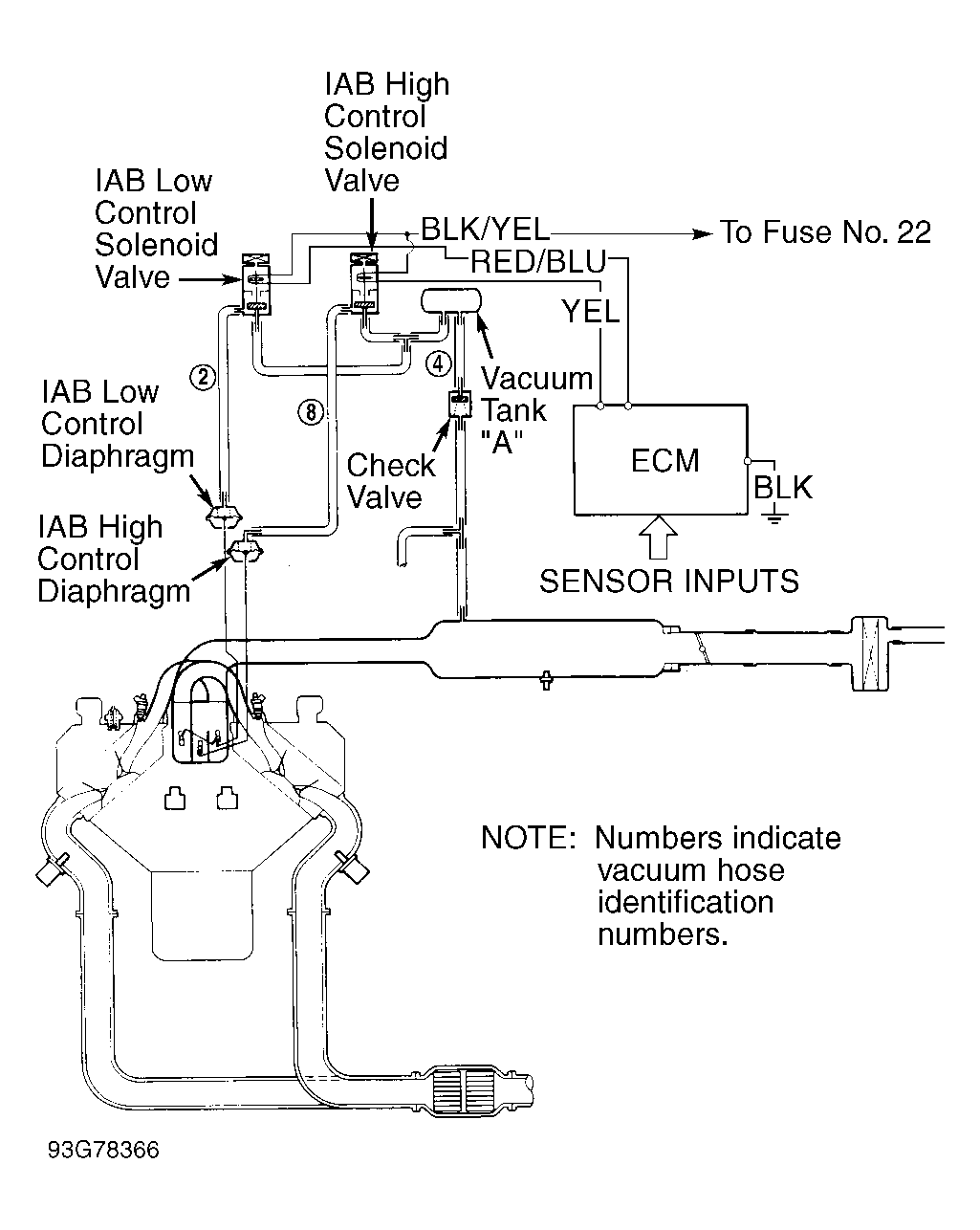 Courtesy of AMERICAN HONDA MOTOR CO., INC.
- Disconnect vacuum hose No. 8 from IAB high control diaphragm. Connect vacuum gauge to hose. If vacuum is present, go to next step. If vacuum is not present, go to step 11.
- Increase engine speed to 3300 RPM. Check for vacuum at hose No. 2. If vacuum is not present, go to next step. If vacuum is present, go to step 16.
- Increase engine speed to 4000 RPM. Check for vacuum at hose No. 8. If vacuum is not present, system is okay. If vacuum is present, go to step 18.
- Remove vacuum hose No. 4 at IAB low control solenoid. Connect vacuum gauge to hose. If vacuum is present, go to next step. If vacuum is not present, check vacuum lines between solenoid, vacuum tank and intake manifold. See Fig 1
. Repair as necessary and recheck.
- Turn ignition off. Unplug 6-wire connector from IAB low control solenoid. Turn ignition on. Measure voltage between Black/Yellow (positive) and Red/Blue (negative) wire terminals. If battery voltage is present, replace by-pass low control solenoid valve. If voltage is not present, go to next step.
- Measure voltage between Black/Yellow wire terminal and body ground. If battery voltage is not present, repair open in Black/Yellow wire between solenoid 6-wire connector and fuse No. 22. If battery voltage is present, go to next step.
- Turn ignition off. Install ECM test harness connector between ECM and ECM harness connector. Check Red/Blue wire for continuity between ECM terminal A14 and solenoid connector.
- If continuity does not exist, repair open in Red/Blue wire. If continuity exists, substitute a known-good ECM and retest. If symptom goes away, replace ECM.
- Remove vacuum hose No. 4 at IAB high control solenoid. Connect vacuum gauge to hose. If vacuum is present, go to next step. If vacuum is not present, check vacuum line between solenoid and intake manifold. Repair as necessary and recheck.
- Turn ignition off. Unplug 6-wire connector from IAB high control solenoid. Turn ignition on. Measure voltage between Black/Yellow (positive) and Red/Blue (negative) wire terminals. If battery voltage is present, replace IAB high control solenoid valve. If voltage is not present, go to next step.
- Measure voltage between Black/Yellow wire terminal and body ground. If battery voltage is not present, repair open in Black/Yellow wire between solenoid 6-wire connector and fuse No. 22. If battery voltage is present, go to next step.
- Turn ignition off. Install ECM test harness connector between ECM and ECM harness connector. Check Yellow wire for continuity between ECM terminal A18 and solenoid connector.
- If continuity does not exist, repair open in Yellow wire. If continuity exists, substitute a known-good ECM and retest. If symptom goes away, replace ECM.
- Turn ignition off. Unplug 6-pin connector from IAB low control solenoid. If vacuum is present, replace IAB low control solenoid valve. If vacuum is not present, go to next step.
- Unplug connector "A" from ECM. Check Red/Blue wire for short to ground. Repair as necessary. If Red/Blue wire is okay, substitute a known-good ECM and retest. If symptom goes away, replace ECM.
- Unplug 6-pin connector from by-pass high control solenoid valve. If vacuum is present, replace by-pass high control solenoid valve. If vacuum is not present, go to next step.
- Unplug connector "A" from ECM. Check Yellow wire between connector and ECM terminal A18 for short to ground. Repair as necessary. If Yellow wire is okay, substitute a known-good ECM and retest. If symptom goes away, replace ECM.