Code 12 - EGR System
- Turn ignition off. Remove ACG (No. 15, 7.5-amp) from fuse in underdash fuse box for 10 seconds to reset ECM. Warm engine until cooling fan comes on. Road-test vehicle about 10 minutes, keeping engine speed about 1700-2500 RPM. Retrieve codes. If Code 12 does not appear, problem is intermittent. Inspect for poor connections at ECM, EGR valve, control box, and shock tower wiring harness connectors.
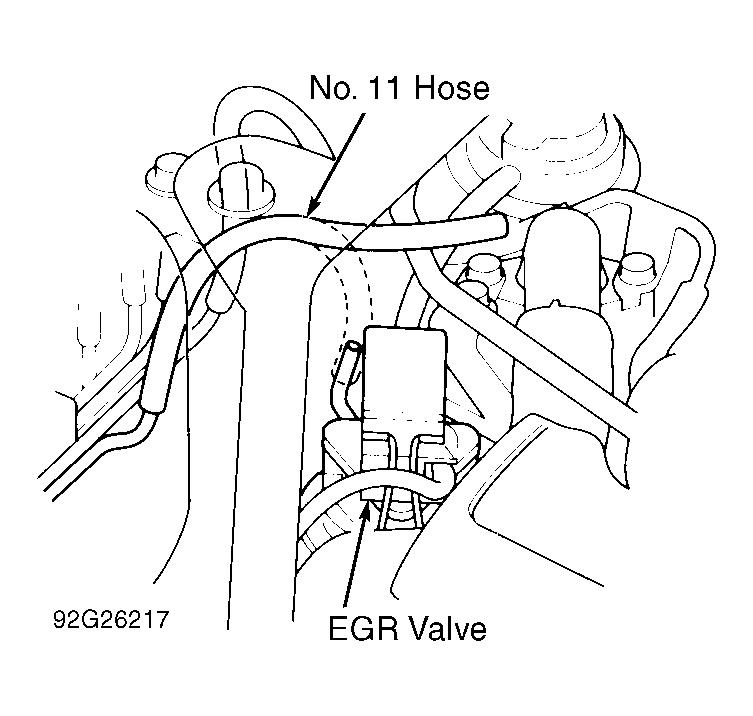
- Test-drive vehicle and retest. If Code 12 appears, start engine. Disconnect No. 11 hose from EGR valve. See Fig 1
. Start engine. Check for vacuum at hose. If there is no vacuum, go to step 4). If vacuum exists, unplug 4-pin connector from control box, located on right side of engine bulkhead. Test for vacuum again on No. 11 hose. If vacuum exists, check vacuum hose routing. If routing is okay, replace EGR control solenoid valve.
 Courtesy of AMERICAN HONDA MOTOR CO., INC.
- If there is no vacuum, turn ignition off. Unplug connector "A" from ECM. Test for continuity between White wire terminal of 4-pin connector and ground. If continuity exists, repair short in White wire between EGR control solenoid valve and ECM connector terminal A11. If continuity does not exist, temporarily substitute known good ECM, then retest system.
- If there was no vacuum during first vacuum test in step 2), connect vacuum pump to EGR valve. With engine idling, apply 8 in. Hg to EGR valve. If engine does not stall or run rough, or EGR valve does not hold vacuum, replace EGR valve.
- If engine stalls or runs rough, and EGR valve holds vacuum, unplug 4-pin connector from control box. Measure voltage between Black/Yellow wire terminal and body ground. If battery voltage does not exist, repair open in Black/Yellow wire between solenoid valve and FUEL PUMP fuse (No. 22, 20-amp) in underdash fuse box.
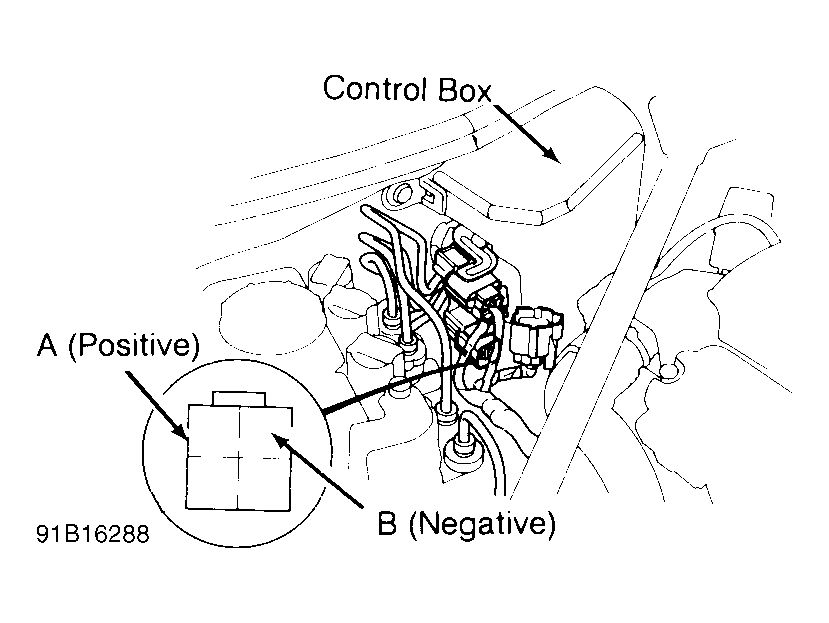
- If battery voltage exists, install "T" fitting into No. 11 hose. Connect vacuum gauge to "T" fitting. Start engine, and allow it to idle. Connect battery voltage to terminal "A" of control box connector. See Fig 2
. While observing vacuum gauge, connect terminal "B" to negative battery terminal.
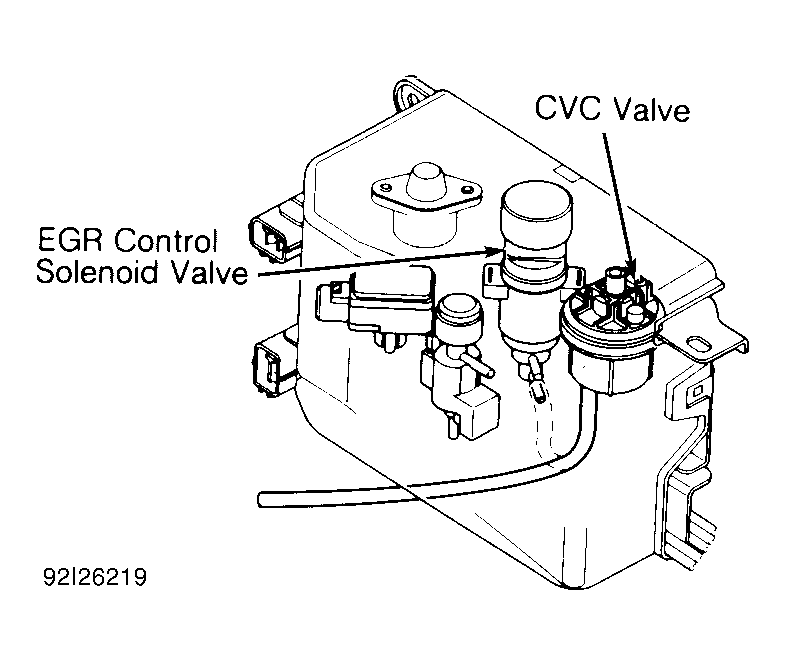
- If gauge indicates 6 in. Hg within one second, go to step 9). If gauge does not indicate 6 in. Hg within one second, turn ignition off. Inspect hoses for leaks, restrictions, or misrouting. Repair as necessary. If hoses are okay, disconnect lower hose from EGR control solenoid valve.
- Connect vacuum gauge to hose. See Fig 3
. Start engine, and allow it to idle. If vacuum is not 4.8-6.8 in. Hg, replace Constant Vacuum Control (CVC) valve. If vacuum is 4.8-6.8 in. Hg, replace EGR control solenoid valve.
 Courtesy of AMERICAN HONDA MOTOR CO., INC.
 Courtesy of AMERICAN HONDA MOTOR CO., INC.
- If gauge indicated 6 in. Hg in step 7), turn ignition off. Reconnect wiring at control box. Unplug EGR valve position sensor. Turn ignition on. Measure voltage between Yellow/White (+) and Green/White (-) wires. If voltage is about 5 volts, go to step 12).
- If voltage is not about 5 volts, measure voltage between Yellow/White wire (+) and body ground. If voltage is about 5 volts, repair open in Green/White wire between EGR valve lift sensor and ECM connector D22. If voltage is not about 5 volts, turn ignition off.
- Connect ECM Test Harness (07LAJ-PT3010A
) connector "D" to ECM, leaving vehicle wiring harness disconnected. Turn ignition on. Measure voltage between test terminals D20 (+) and D22 (-). See Figure
. If voltage is about 5 volts, repair open in Yellow/White wire between ECM connector terminal D20 and EGR valve lift sensor. If voltage is not about 5 volts, temporarily substitute known good ECM, then retest system.
- If voltage was about 5 volts in step 9), turn ignition off. Reconnect wiring at EGR valve lift sensor. Connect ECM Test Harness (07LAJ-PT3010A
) between ECM and ECM harness. Turn ignition on. Measure voltage between test terminals D12 (+) and D22 (-). Voltage should be 1.2 volts with no vacuum, and 4.3 volts with 6 in. Hg vacuum applied to EGR valve. If voltage is not as specified, repair open or short in Black/White wire between EGR valve lift sensor and ECM connector terminal D12.
- If voltage is as specified, observe whether it consistently increases and decreases as vacuum increases and decreases. If vacuum does not consistently increase and decrease as vacuum increases and decreases, replace EGR valve. If voltage increases and decreases with vacuum, reconnect No. 11 hose. Start engine. Allow it to idle. Connect jumper wire between test terminals A11 and A26.
- If engine does not stall or run rough, repair open in White wire between ECM connector terminal A11 and EGR control solenoid valve. If engine stalls or runs rough, temporarily substitute known good ECM, then retest system.