EVAP 2-Way Valve
- Remove fuel filler cap. Remove fuel tank vapor hose from EVAP 2-way valve. On Integra and 2.3CL, EVAP 2-way valve is located on fuel tank. On 2.5TL, 3.2TL and 3.5RL, EVAP 2-way valve is located at left side of engine compartment. On 3.0CL, EVAP 2-way valve is located at rear of engine compartment. On 2.3CL EVAP 2-way valve is located at right side of engine compartment. Connect hose end to a "T" fitting connected to a vacuum/pressure gauge and vacuum pump. See Fig 1.
- Slowly apply vacuum while observing vacuum/pressure gauge. Vacuum should stabilize (valve opens) momentarily at 0.2-0.6 in. Hg (0.8-2.1 kPa). If vacuum stabilizes within specified range, go to next step. If vacuum stabilizes less than or more than specified range, replace EVAP 2-way valve and retest.
- Move vacuum pump and vacuum gauge from vacuum side to pressure side. See Fig 1. Slowly pressurize vapor line while observing gauge. On Integra and 2.3CL, pressure should momentarily stabilize (valve opens) within specified range. On 3.0CL, 2.5TL, 3.2TL and 3.5RL, pressure should momentarily stabilize (valve opens) at a pressure greater than 0.3 in. Hg (1.0 kPa). If pressure stabilizes as specified, valve is okay. If pressure does not stabilize as specified, replace EVAP 2-way valve and retest.
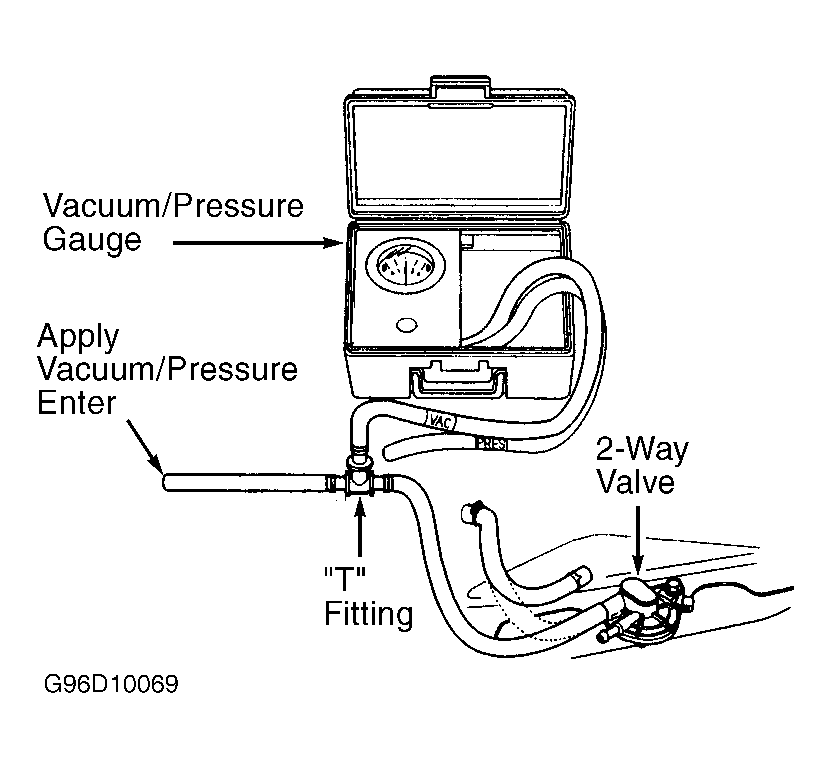 Courtesy of AMERICAN HONDA MOTOR CO., INC.