Starter Test: Integra
- Connect a voltmeter and ammeter to battery. See Fig 1
. Connect tachometer to engine. Disconnect 2-pin connector from distributor. On A/T models, ensure transmission is in Park or Neutral. On M/T models, ensure clutch pedal is depressed to floor.
- On all models, turn ignition switch to START position. Starter should crank. If starter cranks, go to next step. If starter does not crank, check battery cables, starter relay and all starter wire connectors for corrosion or looseness. If battery cables starter relay and starter wire connections are okay, go to step 4
. If starter cranks erratically, go to step 5
. If starter cranks slowly, go to step 6
.
- If starter cranks normally but will not disengage when ignition switch is moved back to ON position, check for malfunctioning starter solenoid plunger and switch. Also check for dirty starter drive gear or damaged overrunning clutch.
- On A/T models, ensure transmission is in Park or Neutral. On M/T models, ensure clutch pedal is depressed to floor. Unplug terminal "S" connector (Black/White wire) from starter solenoid. Connect a fused jumper wire between positive battery terminal and solenoid terminal "S". Starter should crank. If starter does not crank, remove starter and check for internal problems. If starter cranks, check ignition switch, IGNITION 1 fuse (40-amp), starter relay and clutch interlock switch (M/T), or A/T gear position switch. IGNITION 1 fuse is located in underhood fuse/relay box. Also check for open circuit between ignition switch and starter. See WIRING DIAGRAMS
. Repair or replace as necessary.
- Check starter drive gear and flywheel (M/T) or flexplate (A/T) ring gear for damage. Also check starter drive gear overrunning clutch for binding or slipping when armature is rotated with drive gear held in place. If overrunning clutch is damaged, replace overrunning clutch assembly.
- Crank engine and check engine speed. If engine speed is more than 100 RPM, go to next step. If engine speed is 100 RPM of less, check for loose battery or starter terminals, excessively worn starter brushes, open circuit in commutator brushes, dirty or damaged helical spline or drive gear, or faulty drive gear clutch.
- Crank engine, and check cranking voltage and current draw. Cranking voltage should be 8.0 volts or more, and current draw should be less than 360 amps. If readings are as specified, check starter drive gear and flywheel (M/T) or flexplate (A/T) ring gear for damage. If readings are not as specified, check for open circuit in starter armature commutator segments, starter armature dragging, shorted armature winding or excessive engine resistance. Repair or replace as necessary.
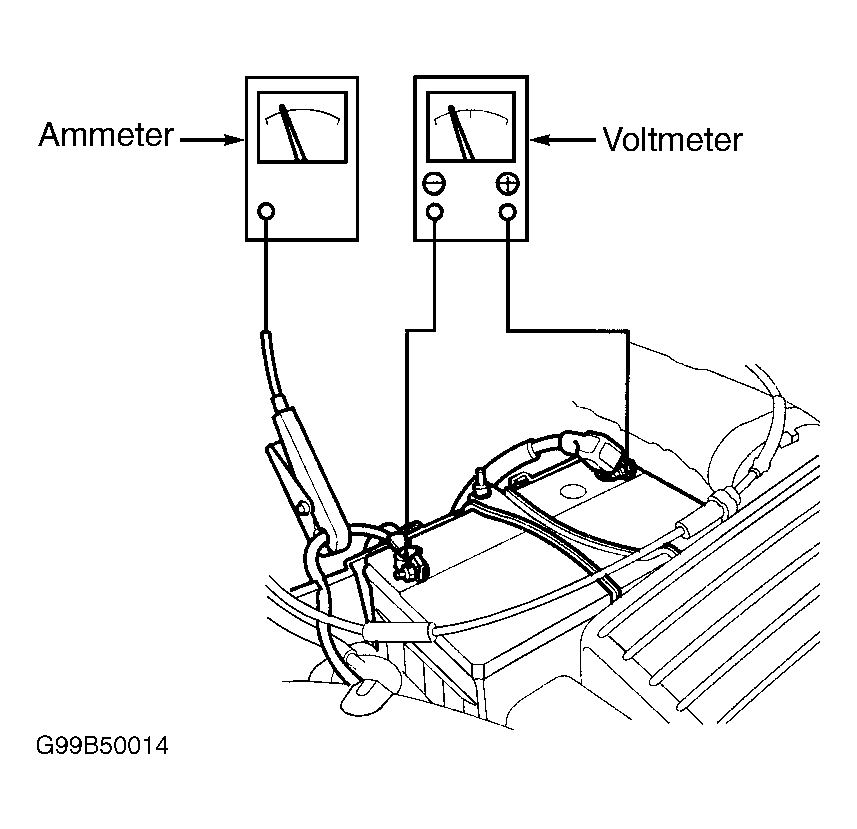 Courtesy of AMERICAN HONDA MOTOR CO., INC.