Intake Manifold Runner Control System: 3.5RL
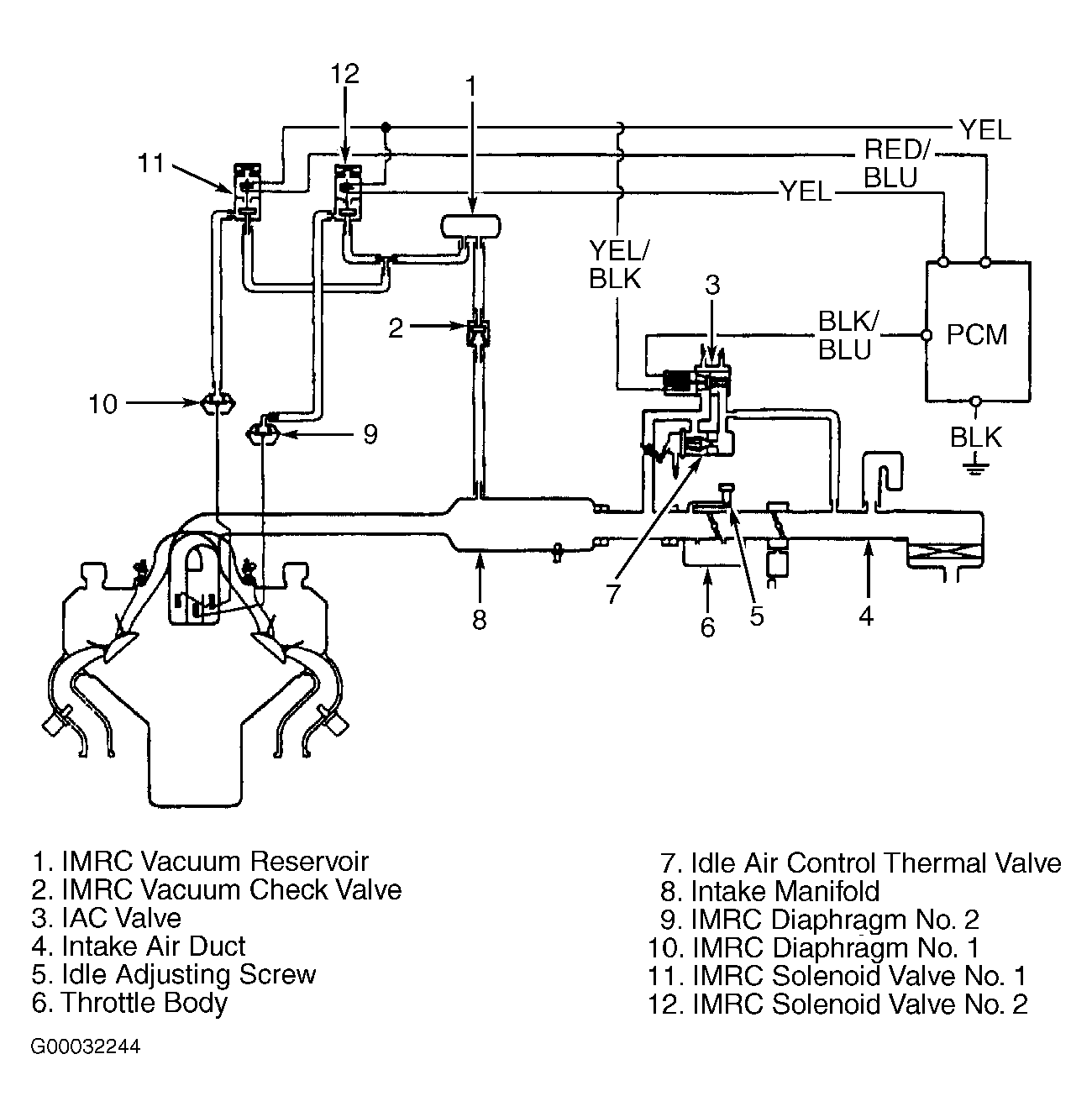
- Intake Manifold Runner Control (IMRC) solenoid valves are located at center rear of engine. See Figure
. IMRC diaphragms No. 1 and 2 are located at rear of intake plenum. Ensure IMRC diaphragm shafts move smoothly and do not bind or stick. If necessary, clean linkage and shafts.
- Start engine and allow to idle. Remove vacuum hose No. 2 from IMRC diaphragm valve No. 1. See Fig 2
. Connect vacuum gauge to hose. If vacuum is not present, go to next step. If vacuum is present, go to step 7
.
- Disconnect vacuum hose No. 4 at IMRC solenoid No. 1. See Fig 2
. Connect vacuum gauge to disconnected hose. With engine at idle, if vacuum is present, go to next step. If vacuum is not present, check for a blockage or vacuum leak between IMRC vacuum reservoir and intake manifold. Repair as necessary and recheck.
- Turn ignition switch off. Disconnect IMRC/engine mount control solenoid valve assembly 6-pin harness connector. Start engine and allow to idle. Measure voltage between IMRC/engine mount control solenoid valve assembly 6-pin harness connector terminals No. 2 (Black/Yellow wire) and No. 5 (Red/Blue wire). See WIRING DIAGRAMS article. If voltage is not present, go to next step. If battery voltage is present, replace IMRC solenoid valve No. 1.
- Measure voltage between ground and IMRC/engine mount control solenoid valve assembly 6-pin harness connector terminal No. 2 (Black/Yellow wire). If battery voltage is present, go to next step. If battery voltage is not present, repair open in Black/Yellow wire between IMRC/engine mount control solenoid valve assembly 6-pin harness connector terminal No. 2 and No. 20 ECU (20-amp) fuse located in underdash fuse/relay box.
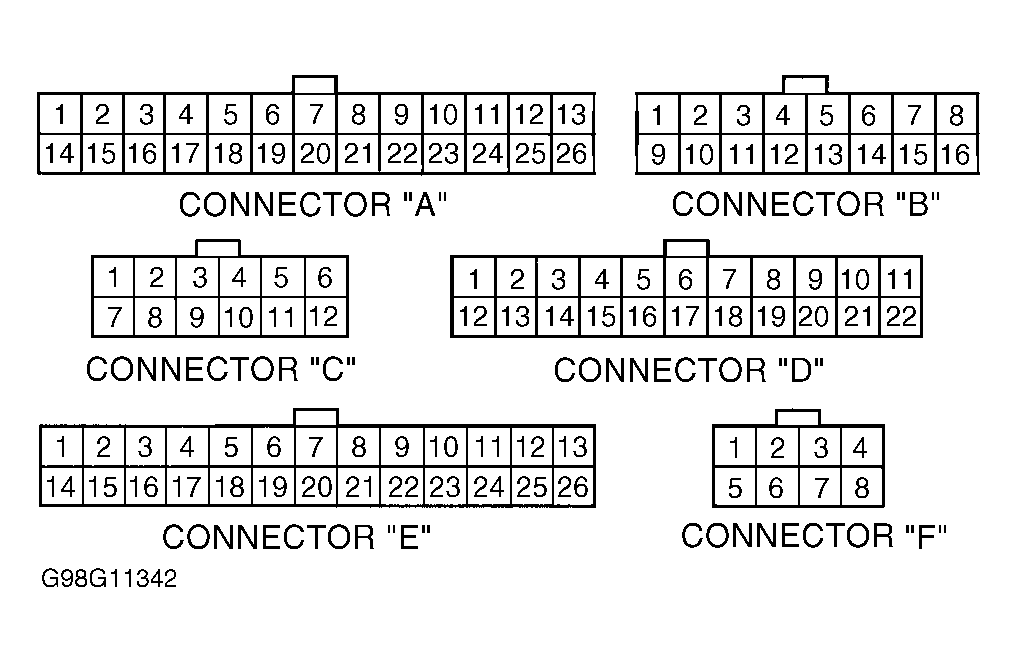
- Turn ignition switch off. Check for continuity in Red/Blue wire between ground and PCM 26-pin harness connector terminal No. 20. See Fig 3
. If continuity is not present, repair open in Red/Blue wire between PCM 26-pin harness connector terminal No. 20 and IMRC/engine mount control solenoid valve assembly 6-pin harness connector terminal No. 5. If continuity is present, go to step 18
.
- With engine idling, disconnect vacuum hose No. 8 from IMRC diaphragm No. 2. Connect vacuum gauge to disconnected hose. If vacuum is present, go to next step. If vacuum is not present, go to step 10
.
 Courtesy of AMERICAN HONDA MOTOR CO., INC.
- Increase engine speed to 3400 RPM. Disconnect No. 2 vacuum hose from IMRC diaphragm No. 1. Connect vacuum gauge to disconnected No. 2 vacuum hose. See Fig 1
. If vacuum is not present, go to next step. If vacuum is present, go to step 14
.
- Increase engine speed to 4000 RPM. Disconnect No. 8 vacuum hose from IMRC diaphragm No. 2. Connect vacuum gauge to disconnected No. 8 vacuum hose. See Fig 1
. If vacuum is not present, IMRC system is okay. If vacuum is present, go to step 16
.
- Disconnect vacuum hose No. 4 from IMRC solenoid valve No. 1. See Fig 2
. Connect vacuum gauge to disconnected No. 4 vacuum hose and check for vacuum. With engine at idle, if vacuum is present, go to next step. If vacuum is not present, check for a blockage or vacuum leak between IMRC vacuum reservoir and intake manifold. Repair as necessary and recheck.
- Turn ignition switch off. Disconnect IMRC/engine mount control solenoid valve assembly 6-pin connector. Start engine and allow to idle. Measure voltage between IMRC/engine mount control solenoid valve assembly 6-pin harness connector terminals No. 1 (Black/Yellow wire) and No. 4 (Yellow wire terminals). See WIRING DIAGRAMS article. If battery voltage is not present, go to next step. If battery voltage is present, replace IMRC solenoid valve No. 2.
- Measure voltage between ground and IMRC/engine mount control solenoid valve assembly 6-pin harness connector terminal No. 1 (Black/Yellow wire). If battery voltage is present, go to next step. If battery voltage is not present, repair open in Black/Yellow wire between IMRC/engine mount control solenoid valve assembly 6-pin harness connector terminal No. 1 and No. 20 ECU (20-amp) fuse in under dash fuse box.
- Turn ignition switch off. Check for continuity between ground and PCM 26-pin harness connector terminal No. 22 (Yellow wire). See Fig 3
. If continuity does not exist, repair open in Yellow wire between PCM 26-pin harness connector terminal No. 22 and IMRC/engine mount control solenoid valve assembly 6-pin harness connector terminal No. 4. If continuity exists, go to step 18
.
- Disconnect IMRC/engine mount control solenoid valve assembly 6-pin harness connector. With engine speed at 3400 RPM, if vacuum is not present, go to next step. If vacuum is present, replace IMRC solenoid valve No. 1.
- Turn ignition switch off. Disconnect PCM 26-pin harness connector. See Fig 3
. Check continuity between ground and PCM 26-pin harness connector terminal No. 20 (Red/Blue wire). See WIRING DIAGRAMS article. If continuity is present, repair short to ground in Red/Blue wire between PCM 26-pin harness connector terminal No. 20 and IMRC solenoid valve No. 1. If continuity is not present, go to step 18
.
- Disconnect IMRC/engine mount control solenoid valve assembly 6-pin harness connector. With engine speed at 4000 RPM, if vacuum is not present, go to next step. If vacuum is present, replace IMRC solenoid valve No. 2.
- Turn ignition switch off. Disconnect PCM 26-pin harness connector. See Fig 3
. Check continuity between ground and PCM 26-pin connector terminal No. 22 (Yellow wire). If continuity is present, repair short to ground in yellow wire between PCM 26-pin connector terminal No. 22 and IMRC solenoid valve assembly No. 2. If continuity is not present, go to next step.
- Cut temporary key from a non-immobilizer key blank and tape donor vehicle key to it backwards in order to deactivate immobilizer system during testing. Substitute known-good PCM, then recheck. If symptom or indication goes away, replace original PCM.
 Courtesy of AMERICAN HONDA MOTOR CO., INC.
 Courtesy of AMERICAN HONDA MOTOR CO., INC.