Diagnostic Procedure
- Perform Diagnostic System Check - Engine Controls. See DIAGNOSTIC SYSTEM CHECK - ENGINE CONTROLS
under SELF-DIAGNOSTIC SYSTEM in SELF-DIAGNOSTICS - 3.1L CENTURY, GRAND PRIX & MALIBU article. After performing diagnostic system check - engine controls, go to next step.
- Using scan tool, check Engine Coolant Temperature (ECT) sensor value. Is the ECT sensor value 50-90°F (10-32°C)? If yes, go to next step. If no, go to step 4.
- Disconnect fuel injector harness connector. Using a DVOM, measure the resistance of each fuel injector between the ignition feed circuit and the fuel injector control circuit, at the multi-way harness connector. See Fig 1. Do any of the fuel injectors display a resistance outside 11-14 ohms? If yes, go to next step. If no, go to DIAGNOSTIC AIDS .
- Disconnect the fuel injector multi-way harness connector. Using a DVOM, measure the resistance of each fuel injector between the ignition feed circuit and the fuel injector control circuit, at the multi-way harness connector. See Fig 1. Record each fuel injector value. Subtract the lowest resistance value from the highest resistance value. Is the difference equal to, or less than 3 ohms? If yes, go to FUEL INJECTOR BALANCE TEST WITH SPECIAL TOOL or FUEL INJECTOR BALANCE TEST WITH TECH 2
. If no, go to next step.
- Add all fuel injector resistance values to obtain a total resistance value. Divide the total resistance value by the number of fuel injectors, to obtain an average resistance value. Subtract the lowest and the highest individual fuel injector resistance values from the average resistance value. Replace the fuel injector that displays the greatest resistance difference, above or below the average. After repair, go to step 7.
- Replace the fuel injector or fuel injectors that are out of the 11-14 ohms range. After repair, go to next step.
- Operate system to verify repair. Did you correct the condition? If yes, system is okay at this time. If no, go to step 2.
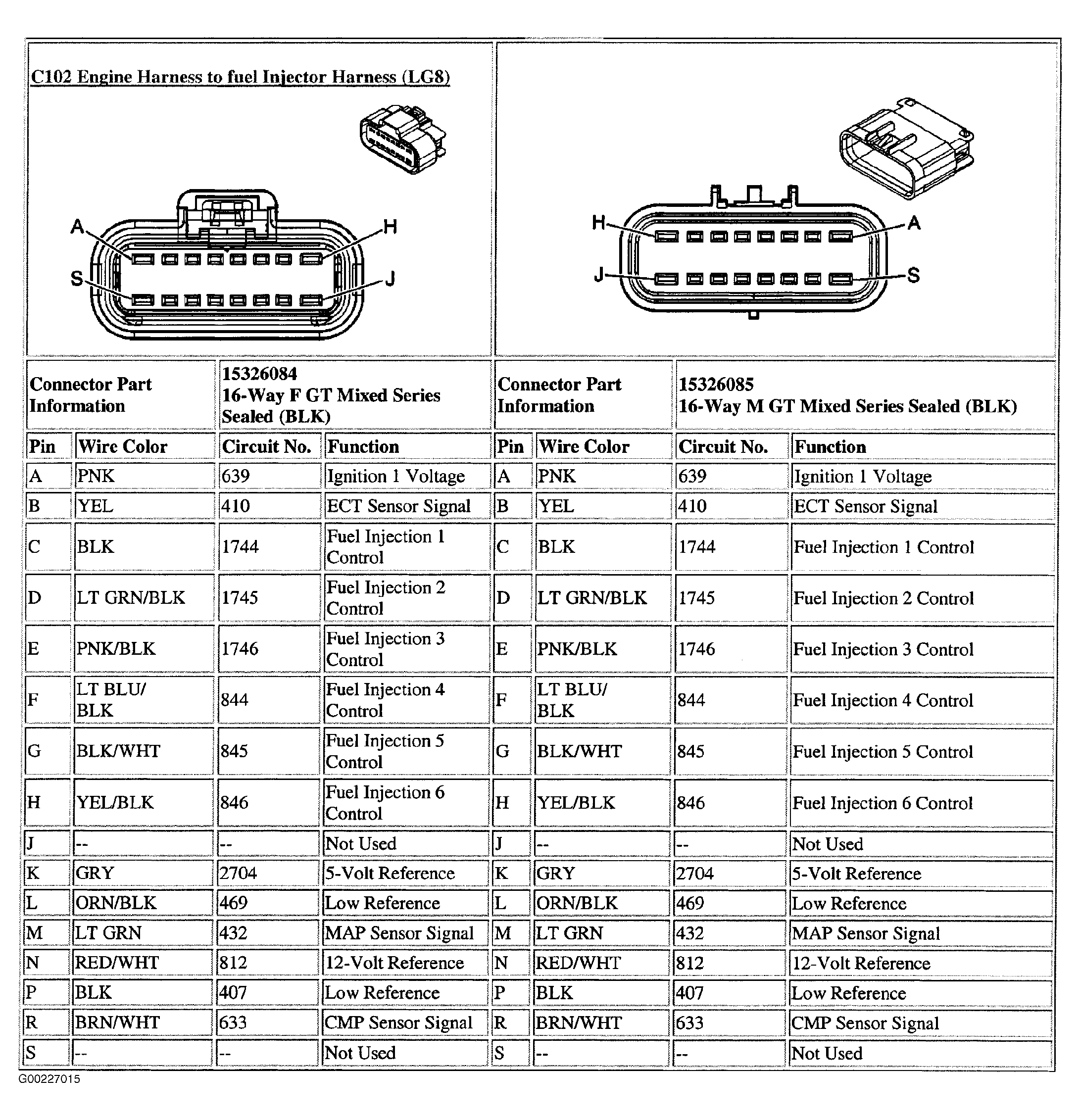 Courtesy of GENERAL MOTORS CORP.