Fuel Pressure Test
- Disconnect negative battery cable. Release fuel pressure. See FUEL PRESSURE RELEASE
under FUEL SYSTEM.
- Remove protective cap from fuel pressure test port on fuel rail. Fuel pressure test port is located at passenger's side front corner of fuel rail, just below thermostat housing.
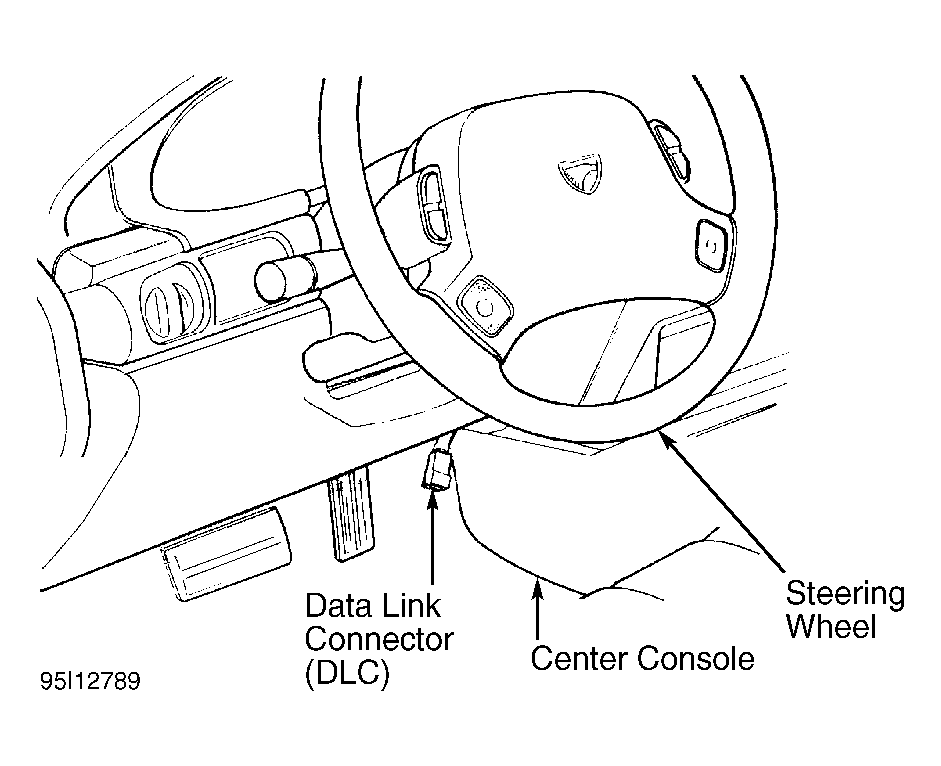
- Using fuel pressure gauge hose, connect Fuel Pressure Gauge (C-4799B) to fuel pressure test port. Connect scan tool to Data Link Connector (DLC), located below driver's side of instrument panel. See Fig 1
.
 Courtesy of CHRYSLER CORP.
- Turn ignition on. Using scan tool, actuate ASD fuel system test to activate fuel pump and pressurize fuel system. Note fuel pressure. Fuel pressure should be within specification. See the FUEL PRESSURE SPECIFICATIONS
table. Release fuel pressure. If fuel pressure is okay, remove fuel pressure gauge. Reinstall protective cap from fuel pressure test port on fuel rail.
- If no fuel pressure exists, fuel pump relay and control circuit may be defective. See FUEL PUMP RELAY
under FUEL SYSTEM. If fuel pressure is more than specified, go to step 6). If fuel pressure is less than specified, go to step 13).
- Release fuel pressure. Install Adapter (6631) and fuel pressure gauge in fuel supply line at fuel filter. Fuel supply line goes between fuel pump module and fuel filter. Fuel filter is mounted on frame rail, in front of fuel tank. Fuel pump module is located on top of fuel tank.
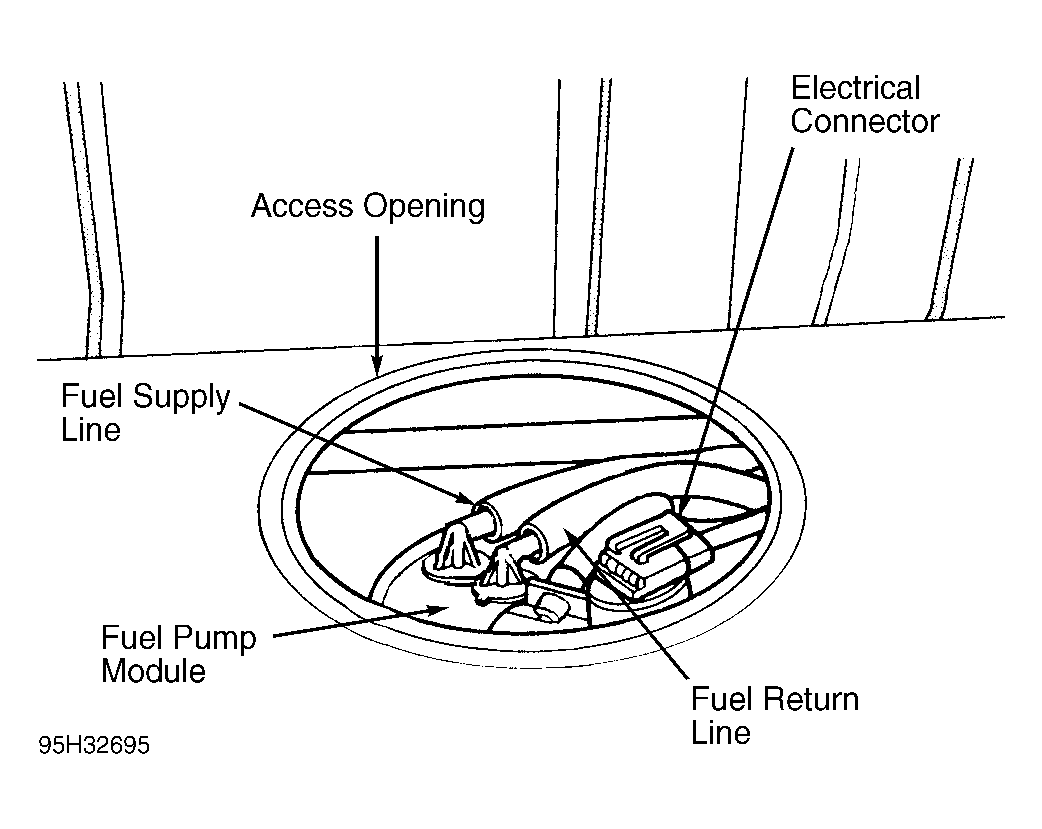
- Disconnect fuel return line at fuel pump module, by squeezing retaining tabs together on fuel line quick-connector fitting, and pulling fuel return line quick-connector fitting from fuel pump module. Fuel pump module is located on top of fuel tank. See Fig 2
. Fuel pump module may be accessed by using access opening located below carpeting and cover in the trunk, just behind the rear seat.
 Courtesy of CHRYSLER CORP.
- Install Adapter (6668) on fuel return line. Place remaining end of hose on adapter into approved gasoline container with minimum capacity of 2 gallons.
- Turn ignition on. Using scan tool, actuate ASD fuel system test and note fuel pressure. If fuel pressure is now within specification, replace fuel pump module. See procedures in the REMOVE/INSTALL/OVERHAUL
article. Turn ignition off. Release fuel pressure. Remove test equipment. Reinstall fuel lines.
- If fuel pressure still exceeds specification, turn ignition off. Release fuel pressure. Disconnect fuel return line at end of fuel rail on the engine. Install Adapter (6668) on fuel return line fitting at fuel rail. Place remaining end of hose on adapter into approved gasoline container with minimum capacity of 2 gallons.
- Turn ignition on. Using scan tool, actuate ASD fuel system test and note fuel pressure. If fuel pressure is now within specification, check for restricted fuel return line.
- If no change in fuel pressure is noted, replace fuel pressure regulator, located on fuel rail. See procedures in the REMOVE/INSTALL/OVERHAUL
article. Turn ignition off. Release fuel pressure. Remove test equipment. Reinstall fuel lines.
- If fuel pressure is less than specified, release fuel pressure. Install Adapter (6631) and fuel pressure gauge in fuel supply line at fuel filter. Fuel supply line goes between fuel pump module and fuel filter. Fuel filter is mounted on frame rail, in front of fuel tank. Fuel pump module is located on top of fuel tank.
- Turn ignition on. Using scan tool, actuate ASD fuel system test and note fuel pressure. If fuel pressure is now at least 5 psi (.35 kg/cm2
) greater than fuel pressure first obtained in step 4), replace fuel filter and recheck fuel pressure.
- If no fuel pressure change was noted, gently squeeze fuel return line closed while observing fuel pressure. Fuel return line goes from rear of fuel rail to top of fuel pump module, located on top of fuel tank. See Fig 2
.
- If fuel pressure increases, replace fuel pressure regulator, located on fuel rail. See procedures in the REMOVE/INSTALL/OVERHAUL
article. Turn ignition off. Release fuel pressure. Remove test equipment.
- If fuel pressure fails to increase when fuel return line was squeezed closed, low fuel pressure may be caused by restricted fuel pump inlet strainer.
- Check for restricted fuel pump inlet strainer. Fuel pump inlet strainer is located inside fuel tank, on bottom of fuel pump module. See the REMOVE/INSTALL/OVERHAUL
article for fuel pump module removal procedure.
- If fuel pump inlet strainer is restricted, replace fuel pump inlet strainer. If fuel pump inlet strainer is not restricted, fuel pump is defective. Fuel pump is mounted inside fuel tank, on the fuel pump module. See the REMOVE/INSTALL/OVERHAUL
article. Turn ignition off. Release fuel pressure. Remove test equipment. Reinstall fuel lines.
FUEL PRESSURE SPECIFICATIONS
| Application |
psi (kg/cm2
) |
| LHS & New Yorker |
|