All Doors Failing To Lock & Unlock From Any Switch
- Connect scan tool to Data Link Connector (DLC). Turn ignition on. Using scan tool, activate door lock relay. If all doors lock, go to next step. If all doors do not lock, go to step 12
.
- Using scan tool, check door lock switch voltage. If greater than .2 volt is displayed, go to next step. If .2 volt or less is displayed, go to step 7
.
- Turn ignition off. Disconnect passenger's door lock switch harness connector. Turn ignition on. Using scan tool, check door lock switch voltage. If greater than .2 volt is displayed, go to next step. If .2 volt or less is displayed, replace passenger's door lock switch.
- Turn ignition off. Disconnect Body Control Module (BCM) harness connector C4. Turn ignition on. Measure voltage at terminal No. 12 (White/Light Green wire) at BCM harness connector C4. See Figure
. If voltage is .2 volt or less, go to next step. If voltage is greater than .2 volt, repair short to voltage in White/Light Green wire between passenger's door lock switch and BCM.
- Turn ignition off. Connect BCM harness connector C4. Disconnect driver's door lock switch harness connector. Turn ignition on. Using scan tool, check door lock switch voltage. If greater than .2 volt is displayed, go to next step. If .2 volt or less is displayed, replace driver's door lock switch.
- Turn ignition off. Disconnect Body Control Module (BCM) harness connector C4. Turn ignition on. Measure voltage at terminal No. 5 (White/Dark Green wire) at BCM harness connector C4. If voltage is .2 volt or less, replace BCM. If voltage is greater than .2 volt, repair short to voltage in White/Light Green wire between passenger's door lock switch and BCM.
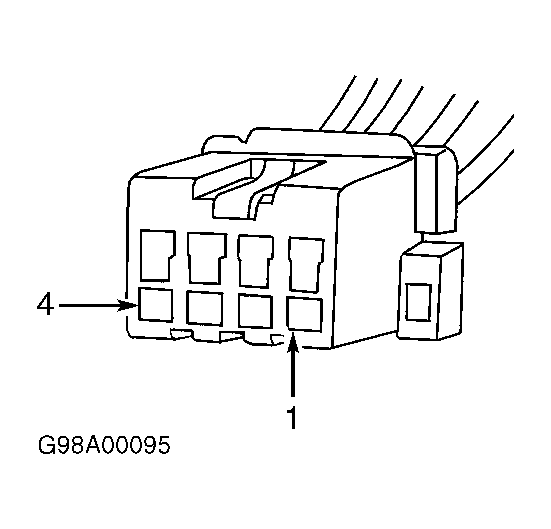
- Turn ignition off. Disconnect driver's door lock switch harness connector. Measure voltage at terminal No. 1 (Pink wire) at driver's door lock switch harness connector. See Fig 1
. If battery voltage exists, go to next step. If battery voltage does not exist, repair power distribution circuit as necessary. See POWER DISTRIBUTION article in WIRING DIAGRAMS.
- Disconnect Body Control Module (BCM) harness connector C4. Disconnect passenger's door lock switch harness connector. Measure resistance between ground and terminal No. 12 (White/Light Green wire) at BCM harness connector C4. See Figure
. If resistance is greater than 5 ohms, go to next step. If resistance is 5 ohms or less, repair short to ground in White/Light Green wire between passenger's door lock switch and BCM.
- Measure resistance between ground and terminal No. 5 (White/Dark Green wire) at BCM harness connector C4. If resistance is greater than 5 ohms, go to next step. If resistance is 5 ohms or less, repair short to ground in White/Dark Green wire between driver's door lock switch and BCM.
- Measure resistance in White/Dark Green wire between terminal No. 4 at driver's door lock switch harness connector and terminal No. 5 at BCM harness connector C4. If resistance is 5 ohms or less, go to next step. If resistance is greater than 5 ohms, repair open in White/Dark Green wire between driver's door lock switch and BCM.
- Measure resistance in White/Light Green wire between terminal No. 4 at passenger's door lock switch harness connector and terminal No. 12 at BCM harness connector C4. If resistance is 5 ohms or less, replace BCM. If resistance is greater than 5 ohms, repair open in White/Light Green wire between passenger's door lock switch and BCM.
- Turn ignition off. Remove circuit breaker No. 2 (20-amp) from junction block. Measure resistance of circuit breaker. If resistance is 5 ohms or less, go to next step. If resistance is greater than 5 ohms, replace circuit breaker.
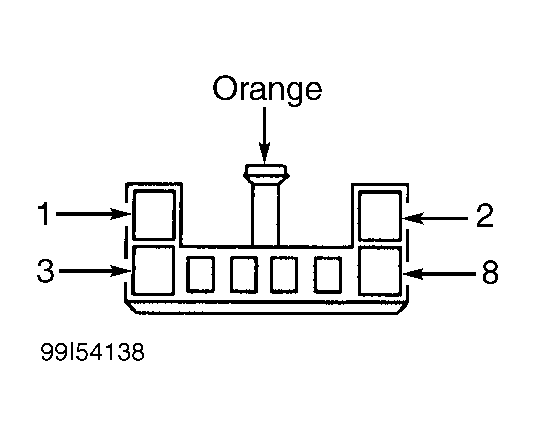
- Disconnect junction block harness connector C9. See Figure
. Measure voltage at terminal No. 2 (Light Blue/Red wire) at junction block harness connector C9. See Fig 2
. If battery voltage exists, go to next step. If battery voltage does not exist, repair power distribution circuit as necessary. See POWER DISTRIBUTION article in WIRING DIAGRAMS.
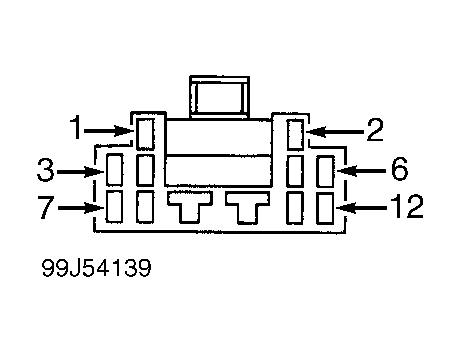
- Disconnect junction block harness connector C7. Measure resistance between ground and terminal No. 10 (Black wire) at junction block harness connector C7. See Fig 3
. If resistance is 5 ohms or less, go to next step. If resistance is greater than 5 ohms, repair open in Black wire between ground and junction block.
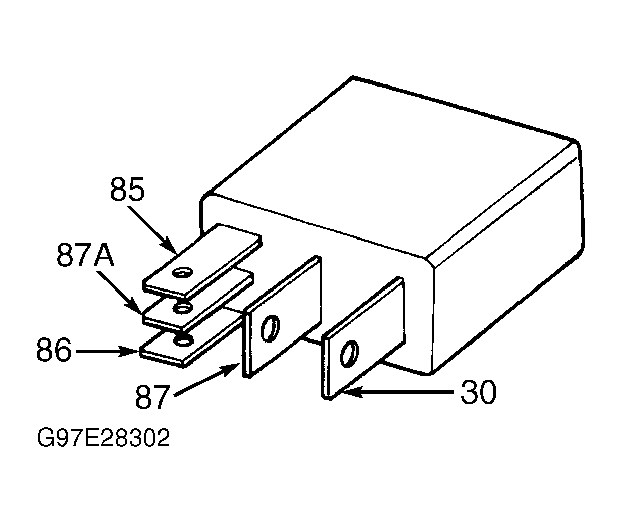
- Remove door lock relay from junction block. Measure resistance between terminal No. 85 and 86 at door lock relay (component side). See Fig 4
. If resistance is 50-90 ohms, go to next step. If resistance is not 50-90 ohms, replace door lock relay.
- Measure resistance between terminal No. 86 and terminals No. 30, 87 and 87a at door lock relay (component side). If all resistances are greater than 100 ohms, go to next step. If any resistance is 100 ohms or less, replace door lock relay.
- Measure voltage at terminal No. 83 at door lock relay socket on junction block. See Figure
. If battery voltage exists, go to next step. If battery voltage does not exist, replace junction block.
- Connect junction block harness connectors C7 and C9. Connect a test light between terminals No. 83 and 85 at door lock relay socket on junction block. Turn ignition on. Using scan tool, activate door lock relay. If test light does not illuminate, go to next step. If test light illuminates, replace junction block.
- Turn ignition off. Disconnect Body Control Module (BCM) from back of junction block. Measure resistance between terminal No. 85 at door lock relay socket on junction block and terminal No. 15 at BCM connector on back of junction block. See Figure
and Figure
. If resistance is 5 ohms or less, go to next step. If resistance is greater than 5 ohms, replace junction block.
- Disconnect junction block harness connector C7. Measure voltage at input side of circuit breaker No. 2 in junction block. If battery voltage exists, go to next step. If battery voltage does not exist, replace junction block.
- Install circuit breaker No. 2. Measure voltage at terminal No. 82 at door lock relay socket on junction block. If battery voltage exists, go to next step. If battery voltage does not exist, replace junction block.
- Disconnect junction block harness connector C6. Measure resistance between terminal No. 81 at door lock relay socket on junction block and terminal No. 3 at junction block connector C6 (junction block side). If resistance is 5 ohms or less, go to next step. If resistance is greater than 5 ohms, replace junction block.
- Connect junction block harness connector C7. Measure resistance between ground and terminal No. 84 at door lock relay socket on junction block. If resistance is 5 ohms or less, replace BCM. If resistance is greater than 5 ohms, replace junction block.
 Courtesy of DAIMLERCHRYSLER CORP.
 Courtesy of DAIMLERCHRYSLER CORP.
 Courtesy of DAIMLERCHRYSLER CORP.
 Courtesy of CHRYSLER CORP.