Fuel Pressure
- Disconnect negative battery cable. Release fuel pressure. See FUEL PRESSURE RELEASE
under FUEL SYSTEM.
- Fuel supply line must be disconnected from rear of fuel rail. Cover fuel supply line with shop towel, as some residual fuel pressure may exist in fuel rail. Remove bolts and fuel supply line. Install Hose Adapter (MD998742), Adapter Hose (MD998709) and fuel pressure gauge on end of fuel rail. Reconnect fuel supply line.
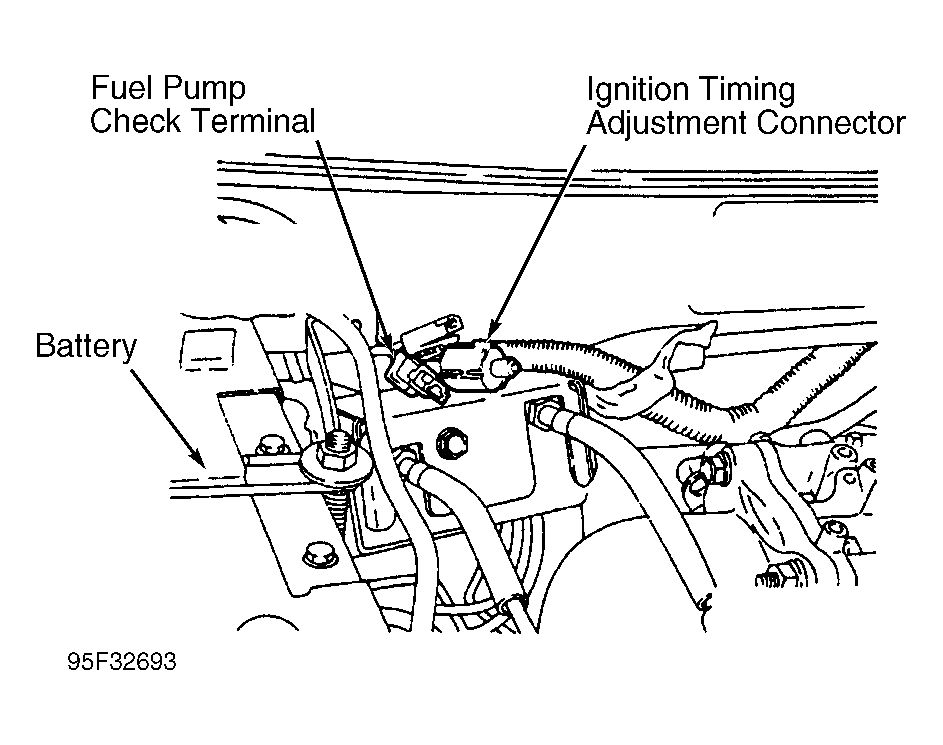
- Apply battery voltage to fuel pump check terminal. Fuel pump check terminal is a 1-pin Black connector located on firewall, near battery and contains a Black/Blue wire. See Fig 1
. Check for fuel leaks. Disconnect battery voltage from fuel pump check terminal.
 Courtesy of CHRYSLER CORP.
- Start engine and allow engine to idle. Note fuel pressure. Fuel pressure with engine idling should be 33 psi (2.3 kg/cm2
).
- Disconnect and plug vacuum hose at fuel pressure regulator, located on front (timing belt end) of fuel rail. Note fuel pressure with engine idling. Fuel pressure should be 42-45 psi (2.9-3.2 kg/cm2
).
- Accelerate engine several times and then allow engine to idle. Note that fuel pressure does not decrease.
- If fuel pressure is the same with or without vacuum hose connected to fuel pressure regulator, check for defective vacuum hose. If vacuum hose is okay, check for defective fuel pressure solenoid and control system. If problem exists in fuel pressure solenoid and control system, a Diagnostic Trouble Code (DTC) will be stored in Engine Control Module (ECM). See the TESTS W/CODES
article.
- If fuel pressure exceeds specification, go to step 11). If fuel pressure is less than specified, check for clogged fuel filter. Fuel filter is located on frame rail, near fuel tank. Replace fuel filter if clogged, and recheck fuel pressure. If fuel pressure is still not within specification, go to next step.
- Check for fuel pressure in fuel return hose at fuel pressure regulator. Fuel pressure regulator is located on front (timing belt end) of fuel rail.
- If fuel pressure exists in fuel return hose, fuel pressure regulator is leaking. If no fuel pressure exists in fuel return hose, low fuel pressure is caused by defective fuel pump. Fuel pump is located in fuel tank. Replace components as necessary. See the REMOVE/INSTALL/OVERHAUL
article.
- If fuel pressure exceeds specification, check for restricted fuel return hose or pipe. If fuel return hose or pipe are not restricted, check for binding valve in fuel pressure regulator. Fuel pressure regulator is located on front (timing belt end) of fuel rail. See the REMOVE/INSTALL/OVERHAUL
article. Once correct fuel pressure is obtained, go to next step.
- Ensure ignition is off. Release fuel pressure. Remove test equipment. Reinstall fuel supply line.