Spark Check
- Using a high output spark tester, check for spark at coil wire. If spark is present, go to step 2). If spark is not present, remove distributor cap and crank engine to check for distributor rotation. If okay, check coil secondary wire resistance. Resistance should be no greater than 7000 ohms per foot.
- With spark tester attached, cycle on and off 2-3 times. Spark should occur each time ignition is cycled. If spark is not present, go to step 3). If spark is present, inspect ignition components for wear or damage and service as necessary. Ensure distributor armature to sleeve roll pin is secure. Verify that Orange and Purple wires between distributor and ignition module ARE NOT CROSSED.
- Turn ignition off. With ignition module connector attached, insert straight pin in Red wire. Ensure pin DOES NOT contact ground. Turn ignition on. Measure battery voltage. Measure voltage at straight pin. Straight pin voltage should be at least 90 percent of battery voltage. If not, check ignition switch and circuitry for wear or damage. Repair as necessary.
- If battery voltage at straight pin is 12 volts, remove ignition coil and module connector. Inspect connector terminals and wiring. With an ohmmeter, measure resistance between ignition coil BAT terminal and ignition module harness connector Red wire. Resistance should be 0.8-1.6 ohms. If resistance is okay, replace ignition module. If not, replace ballast resistor.
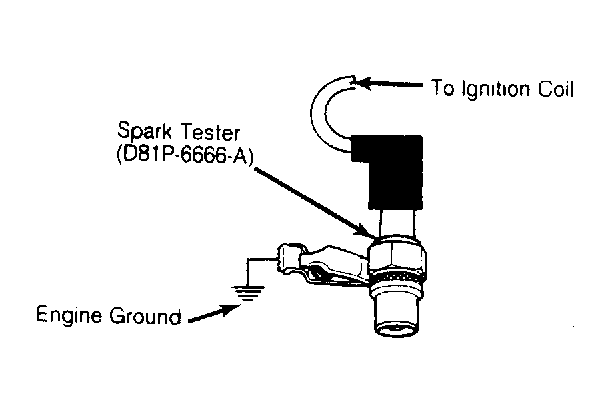 Courtesy of FORD MOTOR CO.