Low Fuel Pressure Test
- Turn ignition off. Using jumper wire, connect Data Link Connector (DLC) fuel pump terminal to ground terminal. See Figure. Disconnect fuel pump connector. Turn ignition on. Measure voltage between ground and Black/Pink wire (1.8L) or White/Yellow wire (2.0L A/T and 2.5L) at fuel pump connector. If battery voltage is present, go to next step. If battery voltage is not present, go to appropriate NO FUEL PRESSURE TEST.
- Turn ignition off. Release fuel system pressure. See FUEL PRESSURE RELEASE. Remove fuel filter. Inspect filter for restriction and contamination. Replace fuel filter if necessary, and recheck fuel pressure. If fuel filter is okay, go to next step.
- With fuel pressure released, install fuel pressure gauge between fuel filter and fuel rail (between fuel rails on 2.5L). Ensure pressure gauge main valve is open and drain valve is closed. Start engine and run it for 10 seconds. Stop engine and wait for 10 seconds. Start engine again and run it for 10 seconds.
- Stop engine, and remove vacuum hose from pressure regulator. Check pressure regulator for fuel leakage through diaphragm. See Fig 1. If fuel is present, replace pressure regulator. If fuel is not present, go to next step.
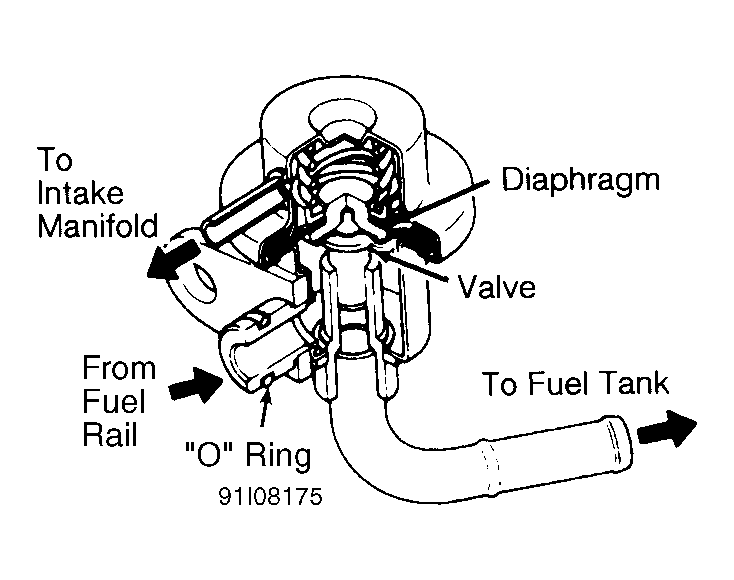 Courtesy of FORD MOTOR CO.
- Reconnect vacuum hose. Start engine. Run it for 30 seconds. Stop engine and observe fuel pressure after 5 minutes. If fuel pressure is more than 21 psi, go to next step. If fuel pressure is 21 psi or less, start engine and run it for 30 seconds. Stop engine and wait 5 minutes. If fuel pressure is still less than 21 psi, replace pressure regulator and repeat test.
- Disconnect fuel return hose at fuel pressure regulator. Connect vacuum gauge to fuel return tube of fuel pressure regulator. Apply 20 in. Hg of vacuum for 10 seconds. If vacuum does not drop to less than 10 in. Hg, go to next step. If vacuum drops to less than 10 in. Hg, replace pressure regulator.
- Place fuel pressure gauge drain hose into an empty metal container. Using jumper wire, connect fuel pump terminal to ground terminal to activate fuel pump. See Figure. Turn ignition on for 10 seconds. Measure fuel volume. If fuel volume is 5.5 ounces or more, go to next step. If fuel volume is less than 5.5 ounces, service fuel pump inlet screen and repeat fuel volume test. If fuel volume is still less than specified, replace fuel pump.
- Using a jumper wire, connect fuel pump terminal to ground terminal to activate fuel pump. Turn ignition on. Operate fuel pump for 30 seconds. Observe fuel pressure gauge for 3 minutes. If fuel pressure does not decrease more than 2 psi, replace fuel pump. If fuel pump decreases more than 2 psi, check for leaking fuel injector. See FUEL INJECTOR TEST.