Fuel Pump Testing
- Visually inspect entire fuel delivery system for leaks and damaged or kinked lines and hoses. Ensure battery is fully charged and fuses are okay. Ensure adequate fuel is available in fuel tank. Release fuel pressure. See FUEL SYSTEM PRESSURE RELEASE. Install fuel pressure gauge. With Key On Engine Off (KOEO) to activate pump, check and record fuel pressure. For fuel pressure specifications, see FUEL PRESSURE SPECIFICATIONS
article.Proceed to appropriate step, as indicated:
- If fuel pressure is within specification, go to step 2).
- If fuel pressure is zero, go to step 5).
- If fuel pressure is low, go to step 11).
- If fuel pressure is high, go to step 12).
- Check fuel injectors. See FUEL CONTROL. Crank or run engine. Using a mechanic's stethoscope, listen for regular clicks at each injector. If sound is present, check fuel injectors for flow and leakage. Clean or replace injectors as necessary.
- If injector clicking is not present, check fuel injector resistance. See FUEL CONTROL. If injector is not within specification, replace as necessary. If injector is within specification, check injector electrical connections for continuity to PCM. If no continuity exists in circuit, check for 12 volts at each injector lead.
- If voltage is not present at injector, see QUICK TEST in TESTS W/CODES - EEC-IV
article in the ENGINE PERFORMANCE section. Faults in injector circuit should set a service code. If no service code has been set, see CIRCUIT TEST H in TESTS W/CODES - EEC-IV
article in the ENGINE PERFORMANCE section.
- If fuel pressure is zero, ensure battery is fully charged and ignition is off. Ground fuel pump lead. Using a jumper lead, ground terminal FP at Data Link Connector (DLC). See Fig 1
. Ensure connection is okay at pump/sender unit. Turn ignition on, engine off. Listen for sound of fuel pump running. If pump is running, proceed to next step. If fuel pump is not running, proceed to step 7).
- Check condition of high-pressure fuel filter. If filter is free of contamination, check fuel pressure regulator. If filter is contaminated, replace filter and recheck system pressure as outlined in step 1).
- Turn ignition off, and disconnect fuel pump/sender or high pressure pump connector. Set DVOM on 200-ohm scale. Measure resistance between pump ground at pump connector and chassis ground. See Fig 2
. If resistance is one ohm or more, repair open circuit to ground. If resistance is less than one ohm, go to next step.
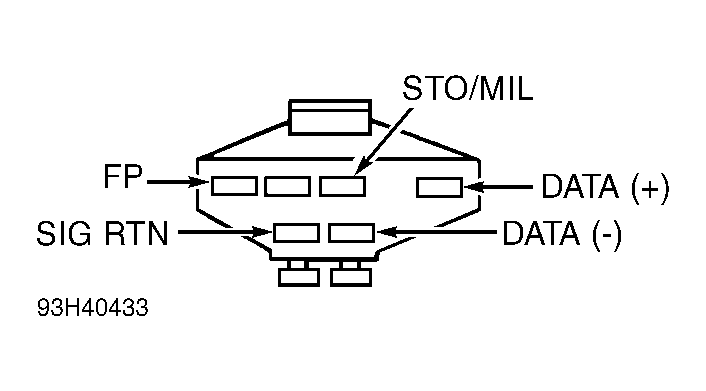 Courtesy of FORD MOTOR CO.
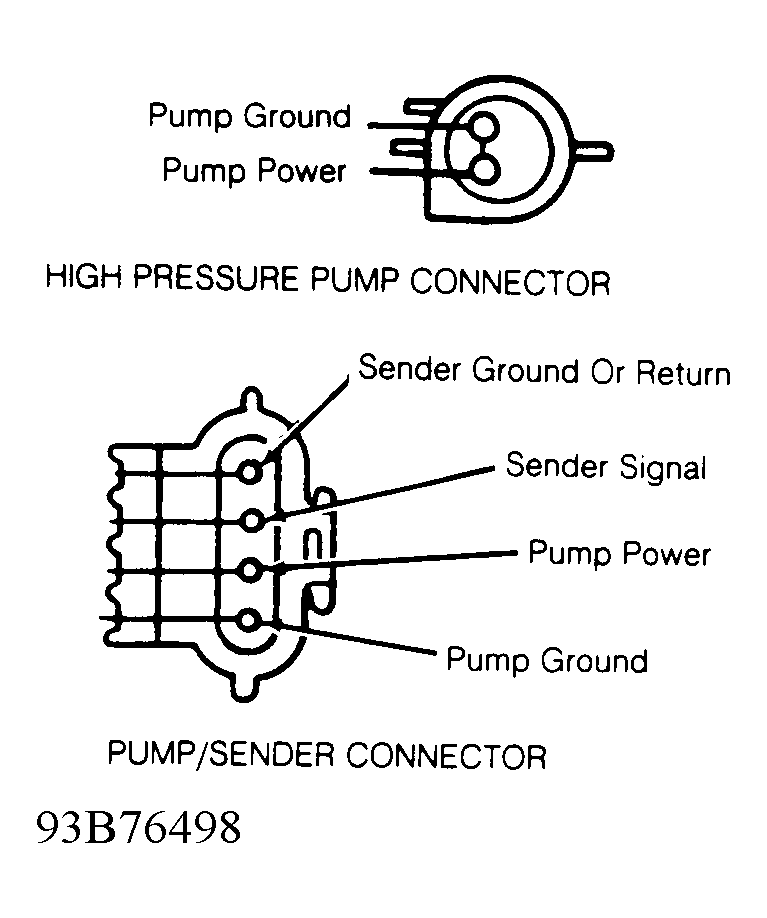 Courtesy of FORD MOTOR CO.
- Ensure ignition is off and battery is fully charged. Disconnect harness connector from pump/sender unit. Ground terminal FP at data link connector. With KOEO and DVOM on 20-volt scale, measure voltage at terminal PUMP POWER of pump/sender or high pressure pump connector. If voltage is 10.5 volts or more, replace pump/sender assembly. If voltage is not as specified, go to next step.
- With KOEO, backprobe fuel pump inertia switch connector. If voltage is 10.5 volts or more at both inertia switch terminals, repair wire between inertia switch and pump. If voltage is not as specified, reset or replace inertia switch as necessary and go to next step.
- Ensure ignition is off and battery is fully charged. Ground terminal FP at data link connector. With KOEO and DVOM on 20-volt scale, measure voltage at fuel pump relay (Dark Green/Yellow wire). If voltage is 10.5 volts or more at relay, repair Dark Green/Yellow wire between fuel pump relay and inertia switch. If voltage is not as specified, check voltage supply to fuel pump relay and to terminal No. 1 at PCM. For additional circuit testing information, see CIRCUIT TEST J in TESTS W/CODES - EEC-IV
article in the ENGINE PERFORMANCE section.
- Ground terminal FP at data link connector. Using a DVOM, check voltage at fuel pump terminal (Pink/Black wire). If voltage at fuel pump is within .5 volt of battery voltage, go to step 6). If voltage is not as specified, go to step 5).
- Check engine compartment vacuum hose for leaks. Ensure engine produces normal vacuum. See FUEL PRESSURE REGULATOR.