Pinpoint Test "A"
- Turn ignition switch to RUN position. Repeat ON-DEMAND SELF TEST. If code 0000 is present, system is okay. If fault symptoms are still present, go to PINPOINT TEST "B"
. If code 0000 is not present, go to next step.
- If fault code 0006 is present, go to next step. If fault code 0006 is not present, go to step 5).
- If vehicle is equipped with passive anti-theft, go to step 9). If vehicle is not equipped with passive anti-theft, go to next step.
- If vehicle is equipped with remote climate control, go to step 9). If vehicle is not equipped with remote climate control, testing is complete. If fault symptoms are still present, go to PINPOINT TEST "B"
.
- Repeat ON-DEMAND SELF TEST. If fault code 0004 is present, go to next step. If code 0004 is not present, go to step 7).
- If vehicle is equipped with passive anti-theft, go to step 9). If vehicle is not equipped with passive anti-theft, testing is complete. If fault symptoms are still present, go to PINPOINT TEST "B"
.
- Repeat ON-DEMAND SELF TEST. If fault code 0002 is present, go to next step. If code 0002 is not present, go to step 9).
- If vehicle is equipped with remote climate control, go to step 9). If vehicle is not equipped with remote climate control, testing is complete. If fault symptoms are still present, go to PINPOINT TEST "B"
.
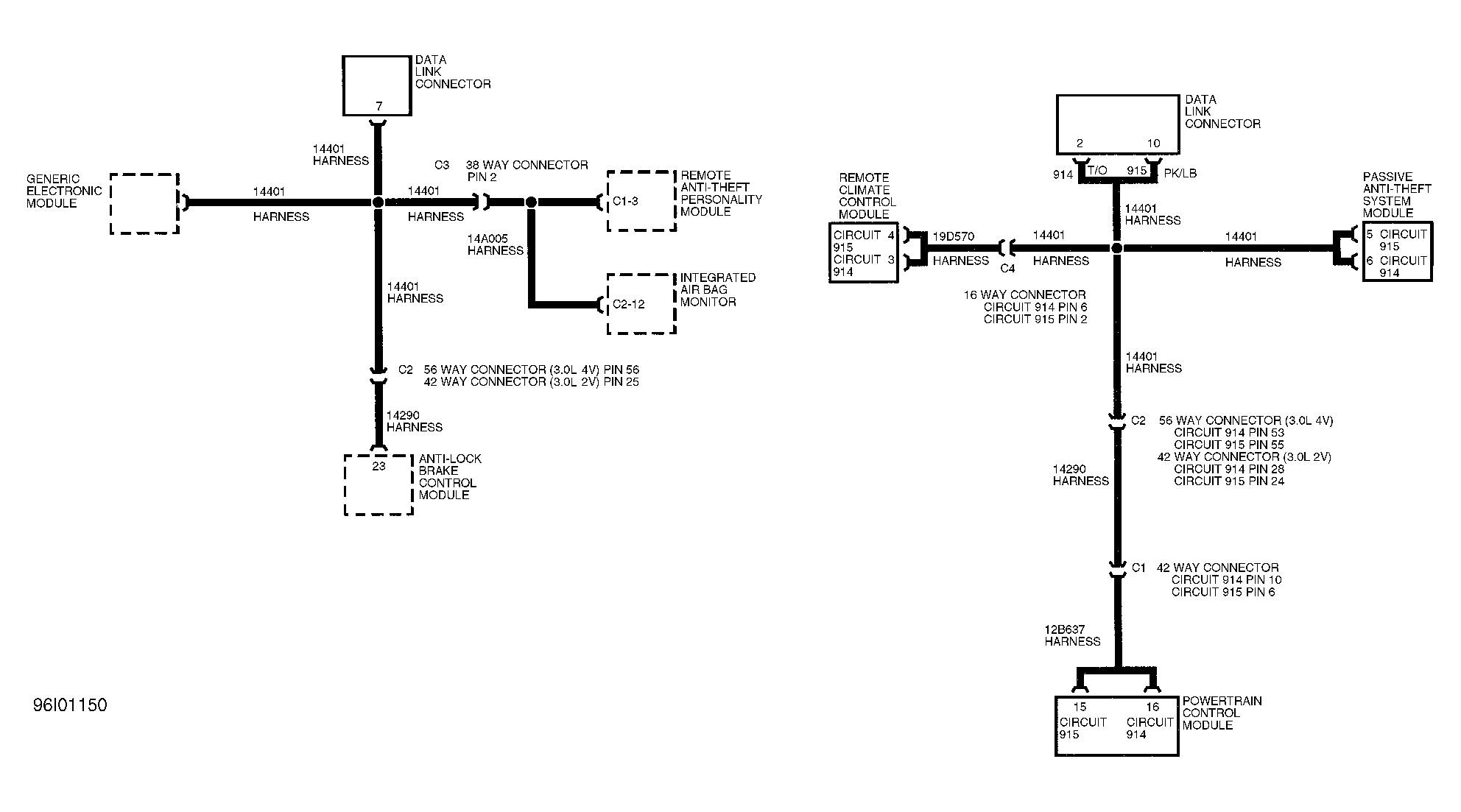
- Disconnect battery. Disconnect passive anti-theft module and automatic temperature control switch. See Figure
and Fig 3
. Reconnect battery. Turn ignition switch to RUN position. Repeat ON-DEMAND SELF TEST. If fault code 0007 is present, go to next step. If fault code 0007 is not present, go to step 18).
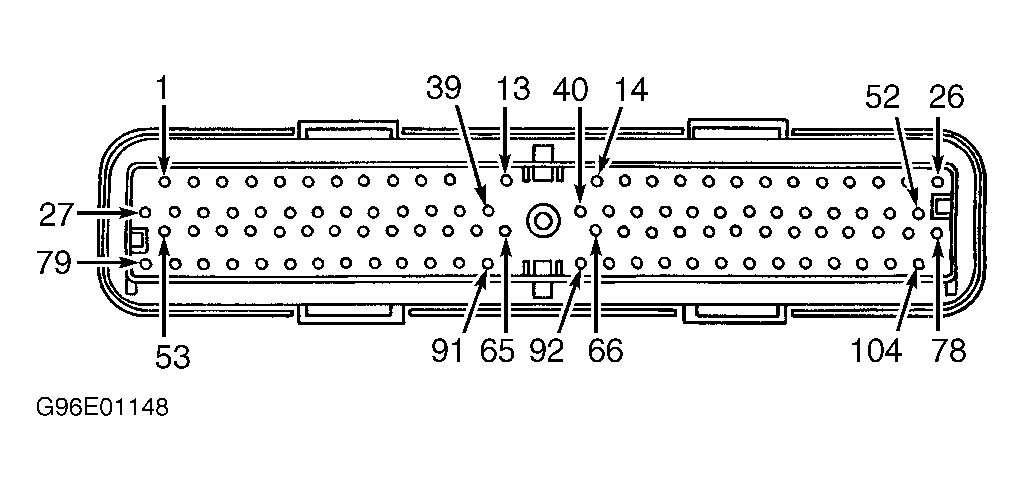
- Disconnect battery. Disconnect PCM wiring harness connector. Measure resistance between ground and PCM connector pin No. 16 (Tan/Orange wire). See Fig 2
. If resistance is more than 3 ohms, go to next step. If resistance is 3 ohms or less, go to step 13).
- Measure resistance between PCM connector pin No. 16 and all other PCM connector pins. If all resistance measurements are more than 3 ohms, go to next step. If any resistance measurement is 3 ohms or less, go to step 13).
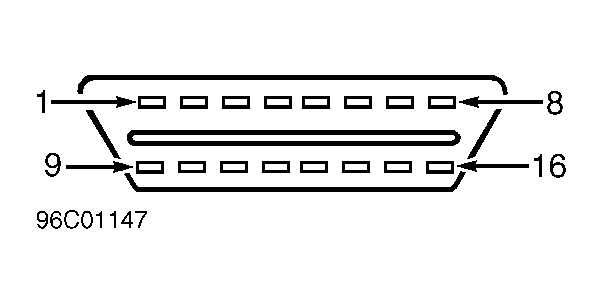
- Measure resistance between PCM connector pin No. 16 and Data Link Connector (DLC) pin No. 2 (Tan/Orange wire). If resistance is more than 3 ohms, go to next step. If resistance is 3 ohms or less, replace the PCM.
- Disconnect the headlight dash panel junction wire to engine control sensor and fuel charge connection. Measure resistance of Tan/Orange wire between component connector and PCM connector. If resistance is more than 3 ohms, replace Tan/Orange wire circuit. If resistance is 3 ohms or less, go to next step.
- Disconnect the main headlight dash panel junction wire connector. Measure resistance of Tan/Orange wire between main headlight dash panel junction wire connector and engine control sensor and fuel charge connection. If resistance is more than 3 ohms, replace Tan/Orange wire circuit. If resistance is 3 ohms or less, go to next step.
- Measure resistance of Tan/Orange wire between main headlight dash panel junction wire connector and all other headlight dash panel junction wire connectors. If any resistance measurement is more than 3 ohms, replace Tan/Orange wire circuit. If all resistance measurements are 3 ohms or less, go to next step.
- Measure resistance of Tan/Orange wire between main headlight dash panel junction wire connector and DLC pin No. 2. See Fig 1
. If resistance is more than 3 ohms, replace Tan/Orange wire circuit. If resistance is 3 ohms or less, go to next step.
- Measure resistance of Tan/Orange wire to all other circuits in the main wiring harness. If any resistance measurement is more than 3 ohms, replace Tan/Orange wire circuit. If all resistance measurements are 3 ohms or less, replace PCM.
- If vehicle is equipped with passive anti-theft, go to next step. If vehicle is not equipped with passive anti-theft, go to step 22).
- Measure resistance of Tan/Orange wire between passive anti-theft connector and DLC pin No. 2. If resistance is more than 3 ohms, replace Tan/Orange wire circuit. If resistance is 3 ohms or less, go to next step.
- Reconnect battery (if disconnected). Reconnect passive anti-theft module. Repeat ON-DEMAND SELF TEST. If fault code 0007 is present, replace passive anti-theft module. If fault code 0007 is not present, go to next step.
- Repeat ON-DEMAND SELF TEST. If fault code 0006 is present, replace passive anti-theft module. If code 0006 is not present, go to next step.
- If vehicle is equipped with remote climate control, go to next step. If vehicle is not equipped with remote climate control, all modules are communicating and testing is complete.
- Measure resistance of Tan/Orange wire between the automatic temperature control switch connector and DLC pin No. 2. If resistance is more than 3 ohms, repair Tan/Orange wire circuit. If resistance is 3 ohms or less, go to next step.
- Disconnect the remote climate control module from the automatic temperature control switch jumper wire wiring harness connector. Measure resistance of Tan/Orange wire. If resistance is more than 3 ohms, repair Tan/Orange wire circuit. If resistance is 3 ohms or less, go to next step.
- Measure resistance of Tan/Orange wire to all other circuits in the automatic temperature control switch jumper wire wiring harness. If any resistance measurement is less than 3 ohms, replace Tan/Orange wire circuit. If all resistance measurements are 3 ohms or more, go to next step.
- Reconnect automatic temperature control switch jumper wire and remote climate control module. Repeat ON-DEMAND SELF TEST. If fault code 0007 is present, replace remote climate control module. If fault code 0007 is not present, go to next step.
- If fault code 0004 or 0006 is present, replace remote climate control module. If code 0004 or 0006 is not present, all modules are communicating and testing is complete.
 Courtesy of FORD MOTOR CO.
 Courtesy of FORD MOTOR CO.
 Courtesy of FORD MOTOR CO.