Starter No-Load Test
- Connect a tachometer, ammeter and voltmeter into starter circuit. See Fig 1. Using carbon pile, adjust voltage to 10 volts and engage starter motor.
- Read amperage draw and armature speed to ensure they are within specification. See the STARTER NO-LOAD SPECIFICATIONS table. If exact voltage cannot be obtained and voltage is slightly higher than specification, RPM should also be slightly higher. Alternatively, carbon pile may be adjusted to reduce voltage.
- Low free speed (no load) and high current draw indicates too much friction, shorted armature, or grounded armature or fields. Failure to operate with high current draw indicates a direct ground in terminal or fields, or frozen bearings.
- Failure to operate with no current draw indicates an open field, open armature coils, broken brush springs, worn brushes, or high commutator insulation.
- If free speed (no load) is low and low current draw exists, suspect high internal resistance due to poor connection, defective leads or dirty commutator. A high free speed and high current draw usually indicates shorted fields.
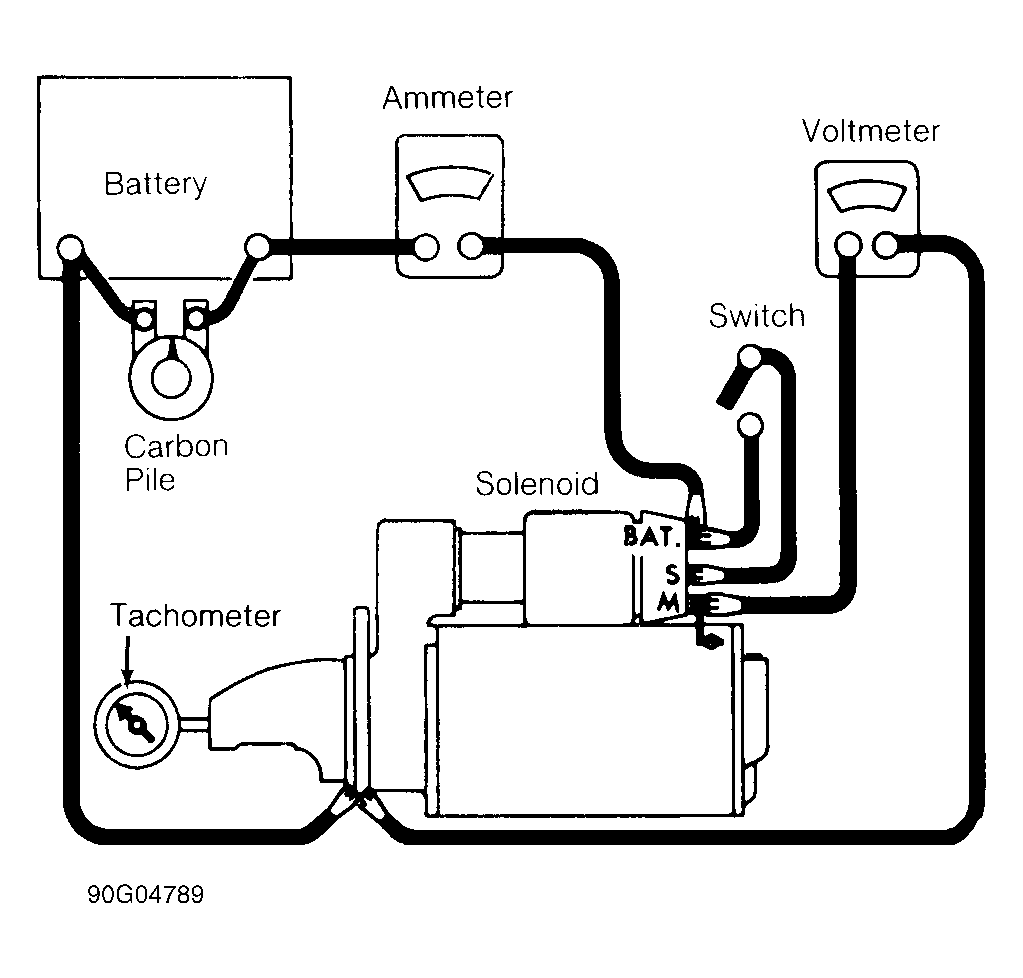 Courtesy of GENERAL MOTORS CORP.