Fuel Pressure Test
- Relieve fuel system pressure. See FUEL PRESSURE RELEASE. Remove air cleaner assembly. Remove fuel inlet hose from throttle body and install Fuel Pressure Gauge (J-34730-1) with "T" Fitting Adapter (J-34730-75). See Fig 1
.
- Start engine. Check for leaks and repair if necessary. Allow engine to warm to normal operating temperature. Turn engine off.
NOTE:
If engine does not start, disengage fuel pump relay from main fuse box and attach jumper wire between Pink wire of connector and ground. See Fig 1
. Fuel pump should operate when ignition switch is turned to ON position.
- With ignition switch on and engine off, measure and record fuel pressure with pump operating. Fuel pressure should be 23-30 psi (1.6-2.1 kg/cm2
). Start engine. Measure and record fuel pressure with engine idling. See FUEL PUMP REGULATED PRESSURE table. Fuel pressure should be 13.0-20.0 psi (0.9-1.4 kg/cm2
). Turn ignition off.
- Fuel pressure should maintain 13.0 psi (0.9 kg/cm2
) for one minute and slowly drop after fuel pump operation stops. If pressure is not within specification, check for defective fuel pump, pressure regulator or restriction in fuel system. Repair as necessary. Start engine and ensure no fuel leaks exist.
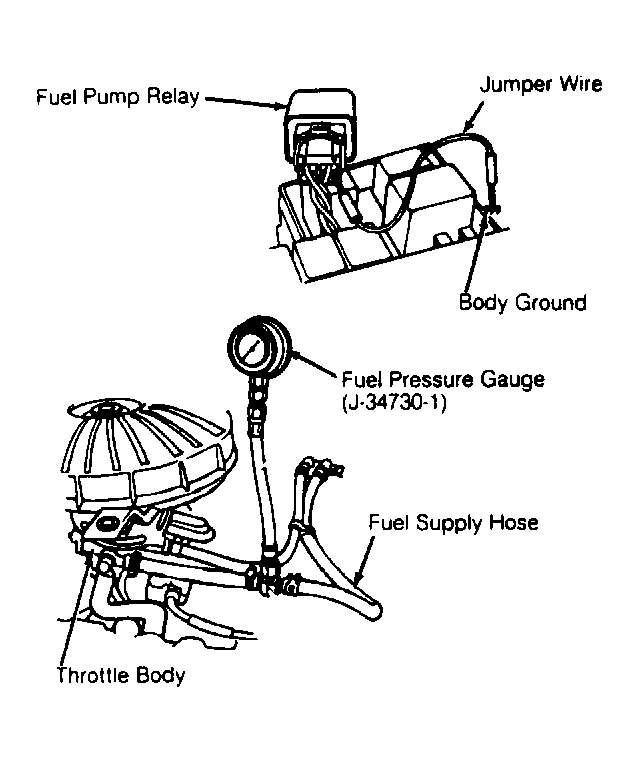 Courtesy of GENERAL MOTORS CORP.
 REGULATED FUEL PRESSURE
| Application |
Pressure psi (kg/cm2
) |
| Metro |
13-20 (0.9-1.4) |
UNREGULATED FUEL PRESSURE
| Application |
Pressure psi (kg/cm2
) |
| Metro |
23-30.5 (1.6-2.1) |
MAXIMUM FUEL PRESSURE
| Application |
Pressure psi (kg/cm2
) |
| Metro |
More Than 30.5 (2.1) |
REST FUEL PRESSURE
| Application |
Pressure psi (kg/cm2
) |
| Metro |
Less Than 13 (1.9) |