Fuel Pressure
- Release fuel pressure. See FUEL SYSTEM PRESSURE RELEASE
. Disconnect negative battery cable. Remove bolt and fuel inlet hose from fuel rail.
- Install Adapter (J-39802-A) with gaskets and fuel inlet hose to fuel rail. See Fig 1
. Tighten adapter retaining bolt to 22 ft. lbs. (29 N.m). Install Fuel Pressure Gauge (J-34730-1A) to adapter. Reconnect negative battery cable. Connect a fused jumper wire between terminal Fp and terminal +B on underhood DLC. Turn ignition switch to ON position and allow fuel pressure to increase.
- Check fuel pressure. See FUEL PUMP PERFORMANCE
table. If fuel pressure is more than specified, ensure fuel return line is not plugged. If fuel return line is okay, replace fuel pressure regulator. If fuel pressure is less than specified, check for leaks in fuel line, fuel pump or fuel pressure regulator. Repair as necessary. If no leaks are found, go to next step.
- Start engine. Disconnect and plug fuel pressure regulator vacuum hose. Check fuel pressure. Reconnect fuel pressure regulator vacuum hose. Check fuel pressure. See FUEL PUMP PERFORMANCE
table. If fuel pressure is not as specified, repair or replace fuel pressure regulator and/or vacuum hose as necessary. Turn engine OFF and go to next step.
- Check fuel pressure with ignition off. Pressure should hold at more than specification for at least 5 minutes after engine is turned off. See FUEL PUMP PERFORMANCE
table. If pressure is less than specified, check for a leaking fuel pump, pressure regulator and/or fuel injectors. Replace or repair as necessary.
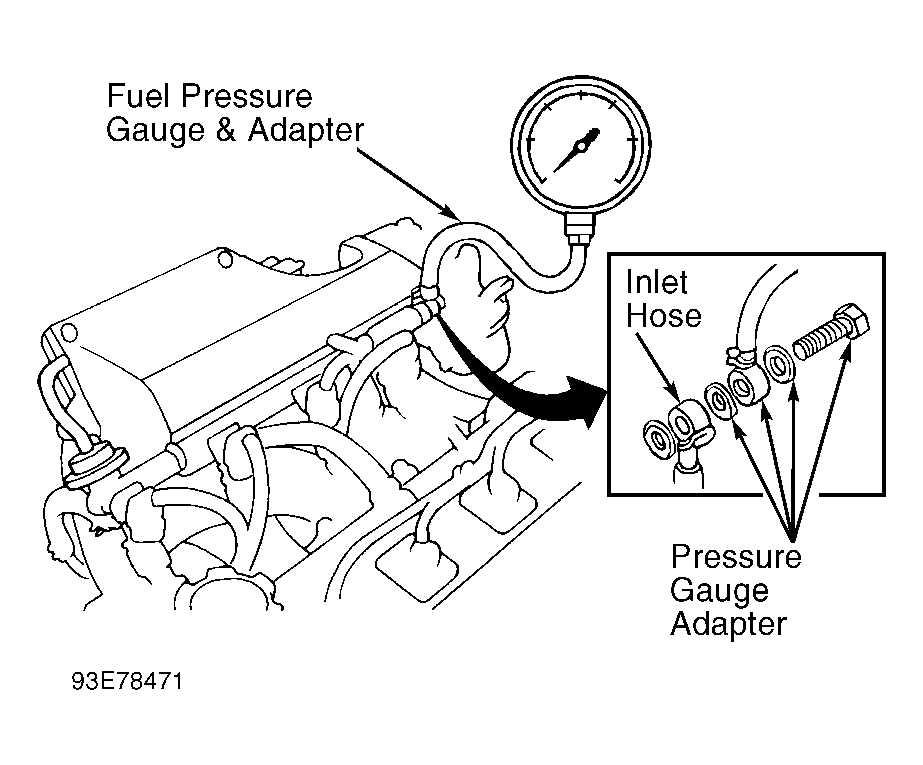 Courtesy of GENERAL MOTORS CORP.
 FUEL PUMP PERFORMANCE
| KOEO
psi (kg/cm2
) |
Engine @ Idlepsi (kg/cm2
) |
Hold Pressure psi (kg/cm2
) |
| 38-44 (2.7-3.1) |
38-44 (2.7-3.1) |
21 (1.5) |