DTC P1259: VTEC System Malfunction
- Clear Diagnostic Trouble Codes. See CLEARING DIAGNOSTIC TROUBLE CODES
. Start engine and warm to normal operating temperature (radiator fan comes on). Road test vehicle by accelerating in 1st gear to an engine speed over 6000 RPM. Hold engine speed at 6000 RPM for at least 2 seconds. If DTC P1259 is not indicated during first road test, repeat road test 2 more times. If DTC P1259 is indicated, go to next step. If DTC P1259 is not indicated, problem is intermittent. System is okay at this time. Check for poor connections or loose wires at VTEC pressure switch, VTEC solenoid valve and PCM connectors. See WIRING DIAGRAMS article. Repair as necessary.
- Turn ignition off. Disconnect VTEC oil pressure switch 2-pin connector. Check for continuity across VTEC oil pressure switch terminals. If continuity exists, go to next step. If continuity does not exist, replace VTEC oil pressure switch.
- Turn ignition on. Measure voltage between ground and VTEC oil pressure switch harness connector terminal No. 1 (Blue/Black wire). If battery voltage exists, go to next step. If battery voltage does not exist, check for an open or short in Blue/Black wire between VTEC oil pressure switch and PCM connectors. See WIRING DIAGRAMS article. Repair as necessary. If wire is okay, substitute a known-good PCM and retest. See SUBSTITUTING POWERTRAIN CONTROL MODULE
. If symptom or indication goes away, replace original PCM. Perform final procedure. See FINAL PROCEDURE
.
- Measure voltage across VTEC oil pressure switch harness connector terminals. If battery voltage exists, go to next step. If battery voltage does not exist, repair open in Brown/Black wire between VTEC oil pressure switch and ground point located at right side of engine, below VTEC oil pressure switch. See WIRING DIAGRAMS article. If Brown/Black wire is okay, substitute a known-good PCM and retest. See SUBSTITUTING POWERTRAIN CONTROL MODULE
. If symptom or indication goes away, replace original PCM. Perform final procedure. See FINAL PROCEDURE
.
- Turn ignition off. Disconnect VTEC solenoid valve single-pin connector. Measure resistance between ground and VTEC solenoid valve single-pin connector. If resistance is 14-30 ohms, go to next step. If resistance is not 14-30 ohms, replace VTEC solenoid valve and retest.
- Turn ignition off. Remove VTEC oil pressure switch and install Gauge Joint Adapter (Snap-on MT2617) and an oil pressure gauge. See Fig 1
. Reinstall VTEC oil pressure switch. Reconnect electrical connectors at VTEC oil pressure switch and VTEC solenoid valve. Reconnect VTEC pressure switch and solenoid valve connectors.
- Connect tachometer. Start engine and warm to normal operating temperature (radiator fan comes on). Because engine is running with no load, oil pressure must be checked within one minute. Check oil pressure at engine speeds of 1000, 3000 and 5000 RPM. If oil pressure is less than 7 psi (48 kPa), go to next step. If oil pressure is not less than 7 psi (48 kPa), check VTEC solenoid valve. See VTEC SOLENOID VALVE under RELAYS & SOLENOIDS in SYSTEM & COMPONENT TESTING article.
- Turn ignition off. Disconnect VTEC solenoid valve single-pin connector. Connect a jumper wire between positive battery voltage and VTEC solenoid valve terminal. Start engine. Check oil pressure at 5000 RPM. If oil pressure is more than 57 psi (390 kPa), go to next step. If oil pressure is not more than 57 psi (390 kPa), check VTEC solenoid valve. See VTEC SOLENOID VALVE under RELAYS & SOLENOIDS in SYSTEM & COMPONENT TESTING article.
- With jumper wire still connected to VTEC solenoid valve and engine running, measure voltage between PCM connector "C" (31-pin connector) terminal No. 15 (Blue/Black wire) and body ground with engine speed above 5000 RPM. See Figure
. If battery voltage exists at more than 5000 RPM, go to next step. If battery voltage does not exist at more than 5000 RPM, replace VTEC oil pressure switch.
- Turn ignition off. Disconnect jumper wire from VTEC solenoid valve terminal. Check continuity of Green/Yellow wire between VTEC solenoid valve single-pin harness connector and PCM connector "A" (32-pin connector) terminal No. 8. See Figure
. If continuity exists, go to next step. If continuity does not exist, repair open in Green/Yellow wire between VTEC solenoid valve and PCM connectors. See WIRING DIAGRAMS article.
- Check continuity of Green/Yellow wire between ground and VTEC solenoid valve single-pin harness connector. If continuity exists, repair short in Green/Yellow wire between VTEC solenoid valve and PCM connectors. See WIRING DIAGRAMS article. If continuity does not exist, substitute a known-good PCM and retest. See SUBSTITUTING POWERTRAIN CONTROL MODULE
. If symptom or indication goes away, replace original PCM. Perform final procedure. See FINAL PROCEDURE
.
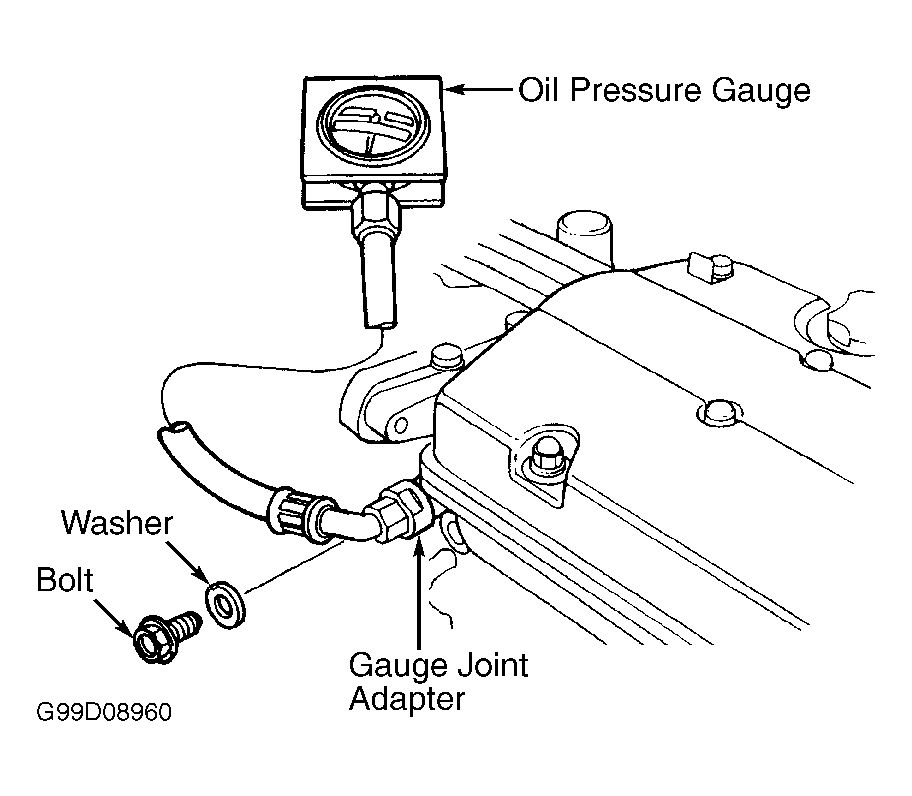 Courtesy of AMERICAN HONDA MOTOR CO., INC.