EGR System
- Check vacuum hose for routing and installation. Start engine when cold and run at idle speed. Ensure increasing engine RPM (idle to 2500 RPM) does not cause EGR valve to operate. If EGR valve operates, replace thermo valve.
- Warm up engine to normal operating temperature 185-205°F (85-95°C). Ensure when engine is at 2500 RPM, EGR valve operates. If EGR valve does not operate, inspect EGR control valve or thermo valve.
- Disconnect Green striped hose from thermo valve. Connect a vacuum pump to thermo valve. Apply 10 in. Hg at thermo valve. If no vacuum is available, thermo valve is defective. Replace thermo valve. See Fig 1
.
- Remove vacuum pump from thermo valve and reconnect Green striped hose to thermo valve. Disconnect Green striped hose from nipple of carburetor and connect a vacuum pump to hose end.
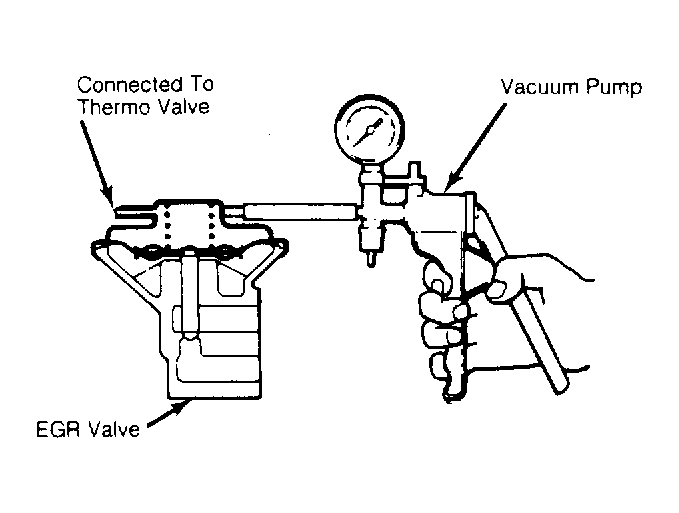 Courtesy of HYUNDAI MOTOR CO.
- Open sub EGR valve by pulling it by hand. Using vacuum pump, apply 10 in. Hg. If idling speed becomes rough, then EGR valve is operating properly. If idling speed is unchanged, then valve is not operating. Replace EGR valve.
- Remove vacuum pump from Green striped hose end and reconnect Green striped hose to carburetor. Disconnect Yellow striped hose from EGR control valve. Connect a vacuum pump to nipple of EGR control valve.
- Operate sub EGR valve by pulling it by hand and apply minus 6 in. Hg with vacuum pump. If idling speed becomes rough or erratic, then EGR valve is operating properly.
- If idling speed remains unchanged, valve is not operating. Replace EGR valve. Remove vacuum pump from EGR control valve and reconnect Yellow stripe hose to nipple of EGR control valve.