Base Idle Speed
NOTE:
Before checking engine idle speed, ensure spark plugs, injectors, and Idle Speed Control (ISC) actuator are operating properly. Check engine mechanical condition and ensure compression is within specification. Idle speed is controlled by ISC actuator and is not adjustable.
- Ensure coolant temperature is 176-205°F (80-95°C). Turn lights and all accessories off. DO NOT check base idle speed while cooling fan is operating. Set transaxle in Park or Neutral (A/T) or Neutral (M/T). On vehicles equipped with power steering, ensure front wheels are pointed straight-ahead. Connect a tachometer to the primary coil side or a Hi-Scan Pro tool or equivalent to OBD-II Data Link Connector (DLC). Located at lower crash pad, below steering column. See Fig 1.
- Start engine and allow it to idle. Increase engine speed to 2000-3000 RPM for at least 5 seconds and then allow to idle. Check and ensure timing is as specified. See IGNITION TIMING SPECIFICATIONS table.
- Operate engine at idle for at least 2 minutes before checking idle speed. See BASE IDLE SPEED SPECIFICATIONS table. If idle speed is not within specification, check for Diagnostic Trouble Codes (DTCs). If there are DTCs present, see appropriate DTC testing procedure under DIAGNOSTIC TEST in SELF-DIAGNOSTICS article. If no codes are present, go to TROUBLE SHOOTING - NO CODES article.
IDLE SPEED
| Application |
RPM |
| Accent |
| 1.5L |
700-900 |
| 1.6L |
650-850 |
| Elantra |
600-800 |
| Santa Fe |
| 2.4L |
700-900 |
| 2.7L |
600-800 |
| Sonata |
| 2.4L |
700-900 |
| 2.7L |
600-800 |
| XG350 |
600-800 |
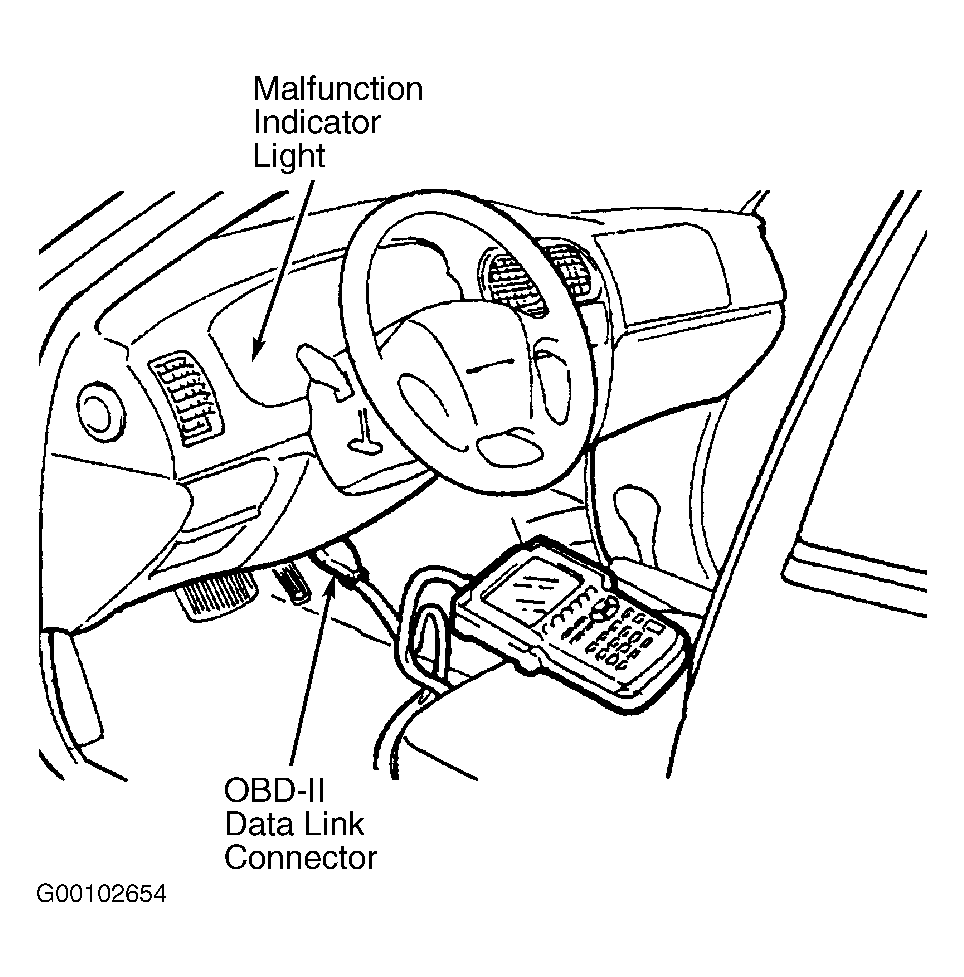 Courtesy of HYUNDAI MOTOR CO.