Power & Ground Circuits (Q45)
- Start engine. If engine starts, go to step 3. If engine does not start, crank engine for at least 5 seconds, then check for DTCs. DTC P1320 is present, perform diagnosis for DTC P1320. See SELF-DIAGNOSTICS - Q45 article. If DTC P1320 is not present, go to next step.
- Turn ignition on. Measure voltage between ground and ECM terminal No. 78 by backprobing. See Fig 1 and Fig 2
. If battery voltage exists, go to step 9. If battery voltage does not exist, repair open or short circuit and retest system. See appropriate wiring diagram in WIRING DIAGRAMS article.
- Turn ignition off. Measure voltage between ground and ECM terminals No. 56 and 123 by backprobing. See Fig 1 and Fig 2
. If battery voltage exists, go to next step. If battery voltage does not exist, repair open or short circuit and retest system. See appropriate wiring diagram in WIRING DIAGRAMS article.
- Measure voltage between ground and ECM terminals No. 130 and 131 by backprobing. While observing voltmeter, turn ignition on and off. Battery voltage should exist for a few seconds after turning ignition off. After a few seconds, voltage should drop to about zero volts. If voltage is as specified, or if battery voltage exists for more than a few seconds, go to step 8. If battery voltage does not exist, go to next step.
- Disconnect ECM and ECCS relay harness connectors. See Fig 3. Check continuity of Red/Green wire between ECCS relay harness connector terminal No. 3 and ECM harness connector terminals No. 130 and 131. Also check circuit for short to ground and short to voltage. Repair as necessary and retest system. If circuit is okay, go to next step.
- Measure voltage between ground and ECCS relay harness connector terminals No. 2 and 5 (White/Blue wires). If battery voltage exists, go to next step. If battery voltage does not exist, repair open or short circuit and retest system. See appropriate wiring diagram in WIRING DIAGRAMS article.
- Check continuity of White/Black wire between ECCS relay harness connector terminal No. 1 and ECM harness connector terminal No. 124. Also check circuit for short to ground and short to voltage. Repair as necessary and retest system. If circuit is okay, go to next step.
- Check ECCS relay. See RELAYS & SOLENOIDS . Replace if necessary. If ECCS relay is okay, go to next step.
- Turn ignition off. Loosen and retighten engine ground bolts. See Fig 4. Disconnect ECM harness connector. See Fig 1. Check continuity between engine ground and ECM harness connector terminals No. 121, 122, 125, 126, 127 and 128. Also check circuits for short to voltage. Repair as necessary and retest system. If ground circuits are okay, go to next step.
- No problem is indicated at this time. Problem may be intermittent. See TESTING PROCEDURE under SELF-DIAGNOSTIC SYSTEM in SELF-DIAGNOSTICS - INTRODUCTION article.
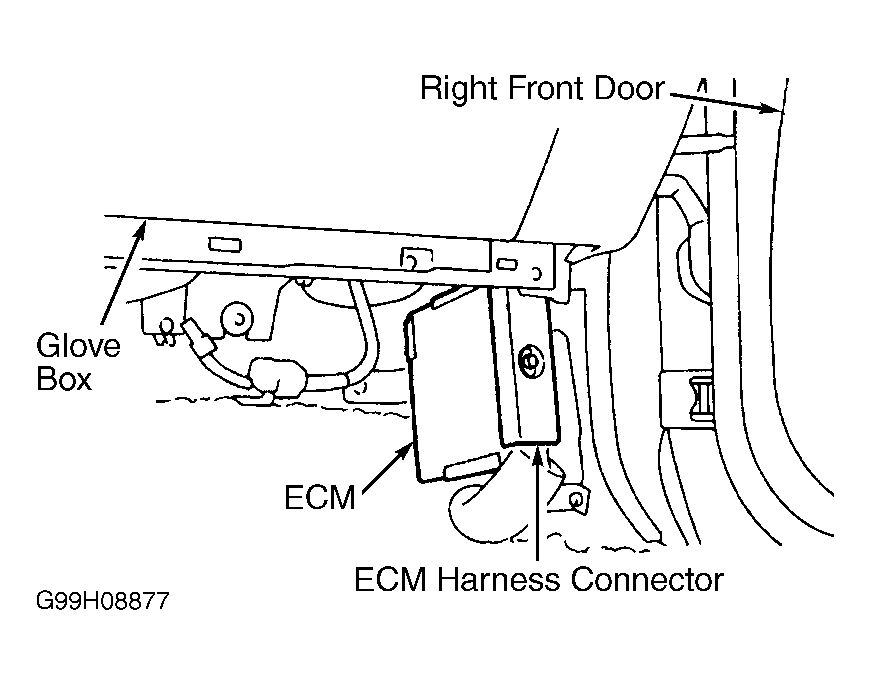 Courtesy of NISSAN MOTOR CO., U.S.A.
 Courtesy of NISSAN MOTOR CO., U.S.A.
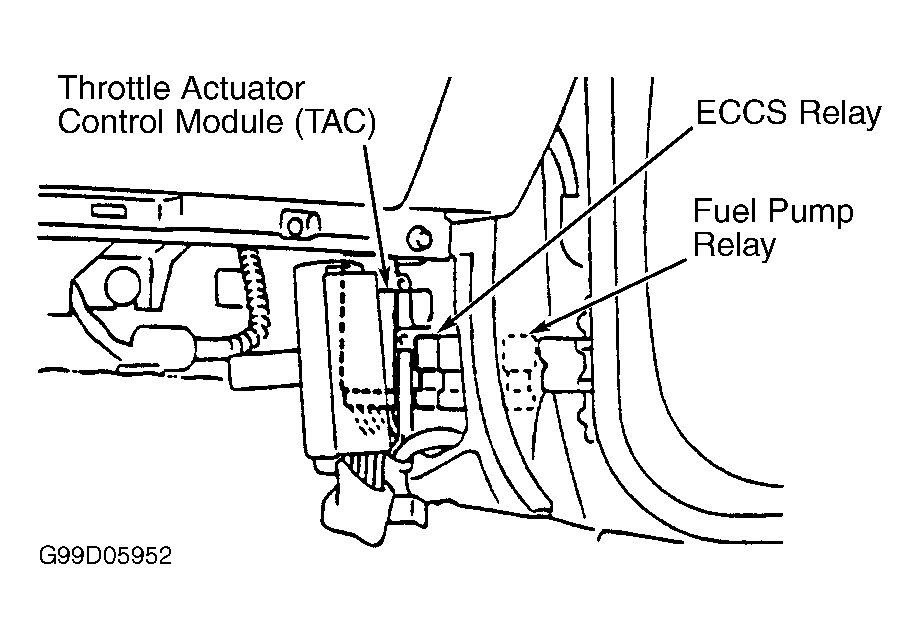 Courtesy of NISSAN MOTOR CO., U.S.A.
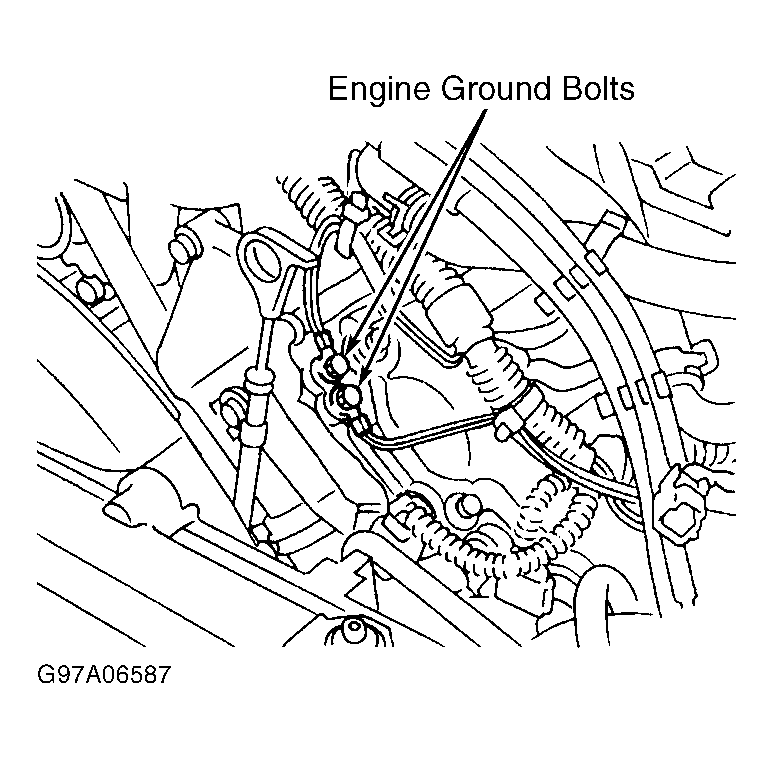 Courtesy of NISSAN MOTOR CO., U.S.A.