Power & Ground Circuits (Pathfinder)
- Start engine. If engine starts, go to step 6. If engine does not start, go to next step.
- Turn engine off and leave ignition on. Measure voltage between PCM harness connector terminal No. 31 (Black/White wire) and ground by backprobing. See Figure and Fig 1
. If battery voltage exists, go to next step. If battery voltage does not exist, repair open or short circuit.
See appropriate wiring diagram in WIRING DIAGRAMS article.
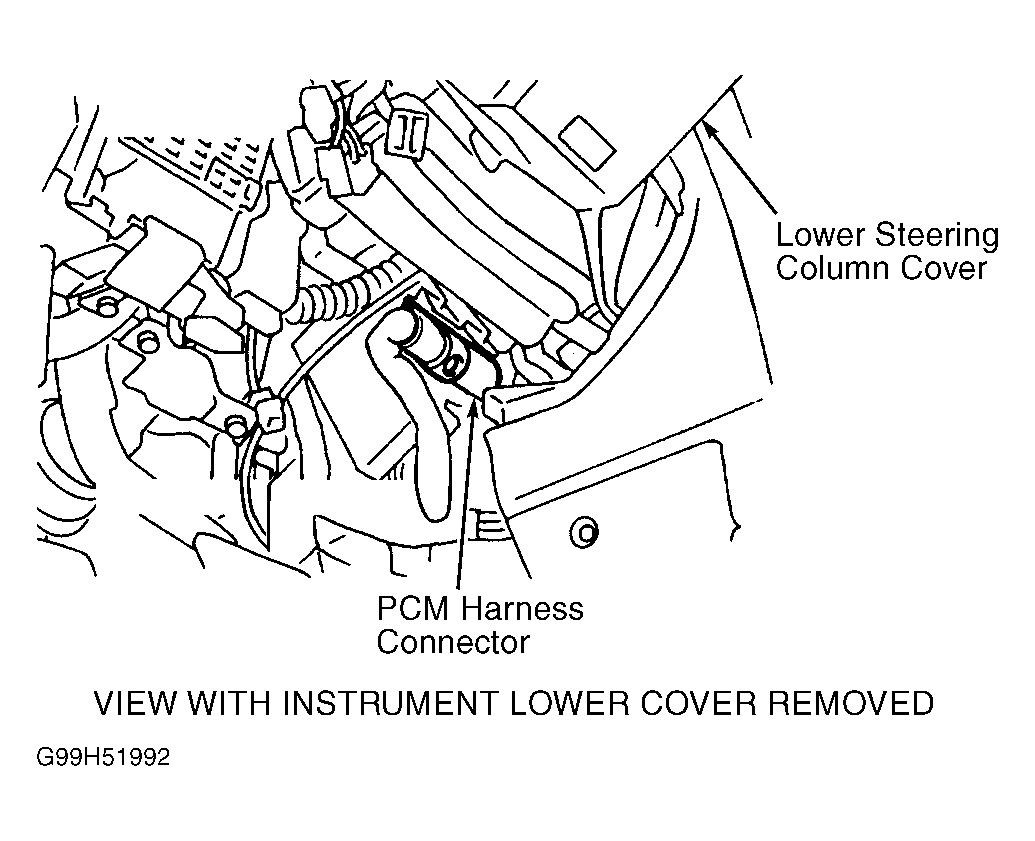 Courtesy of NISSAN MOTOR CO., U.S.A.
- Turn ignition off. Disconnect PCM harness connector. Check continuity between ground and PCM harness connector terminals No. 10, 19, 25, 32, 116 and 124 (Black wires). See Figure. If continuity exists on all wires, go to next step. If continuity does not exist on any wire, repair open ground circuit(s).
- Turn ignition off. Remove ECCS relay. See Fig 2. Check voltage between ground and fuse block relay cavities No. 1 and 7 (White/Red wires). If voltage exists, go to next step. If voltage does not exist, check 7.5-amp fuse and harness for open or short between relay and battery.
See appropriate wiring diagram in WIRING DIAGRAMS article.
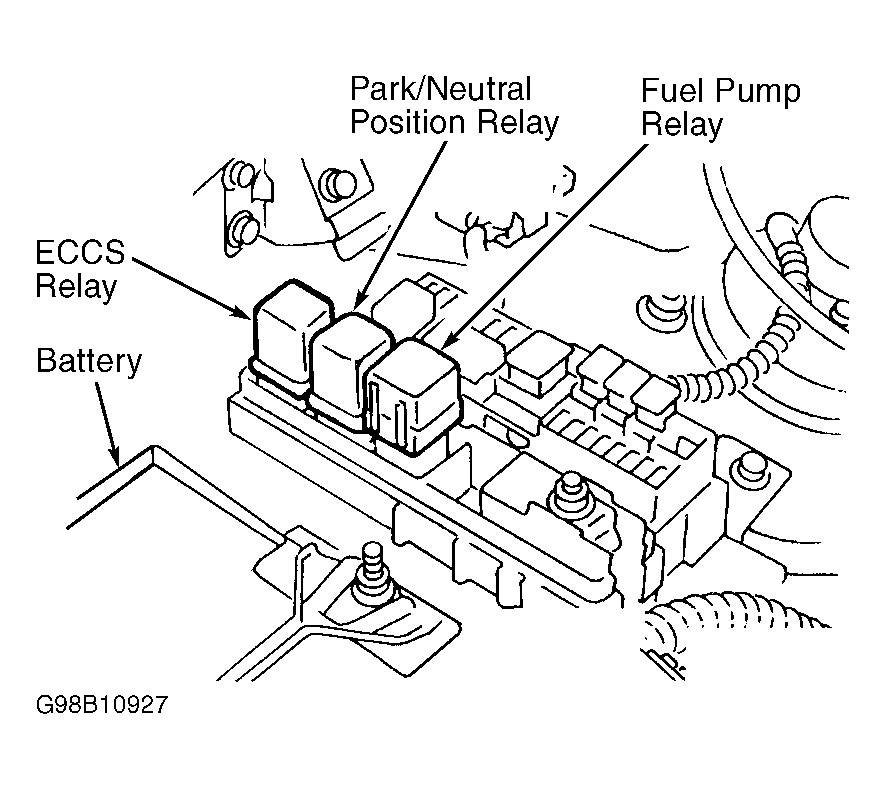 Courtesy of NISSAN MOTOR CO., U.S.A.
- Turn ignition off. Disconnect PCM harness connector. With ECCS relay removed, check continuity of Blue/Black wire between PCM harness connector terminal No. 4 and ECCS relay harness connector terminal No. 2. See Figure and Figure
. If continuity exists, check injector circuits. See FUEL INJECTOR CIRCUITS (PATHFINDER) . If continuity does not exist, repair open or short circuit.
See appropriate wiring diagram in WIRING DIAGRAMS article.
- Turn ignition off. Measure voltage between ground and PCM harness connector terminal No. 80 (White/Red wire) by backprobing. See Figure. If battery voltage exists, go to next step. If battery voltage does not exist, repair open or short circuit.
See appropriate wiring diagram in WIRING DIAGRAMS article.
- While turning ignition on then off, measure voltage between ground and PCM harness connector terminals No. 67, 72 and 117 (Black/White wires) by backprobing. Battery voltage should exist for a few seconds after ignition is turned off. If voltage is as specified, go to step 12. If battery voltage does not exist, go to next step. If battery voltage exists for more than a few seconds after ignition is turned off, go to step 11.
- Turn ignition off. Disconnect PCM harness connector. Disconnect ECCS relay. See Fig 2. Check continuity of Black/White wires between ECCS relay harness connector terminal No. 6 and PCM harness connector terminals No. 67, 72 and 117. See Figure and Figure
. If continuity exists on all wires, go to next step. If continuity does not exist on any wire, repair open in Black/White wire(s).
See appropriate wiring diagram in WIRING DIAGRAMS article.
- Measure voltage between ground and ECCS relay harness connector terminals No. 1 and 7 (White/Red wires). See Figure. If battery voltage exists, go to next step. If battery voltage does not exist, repair open or short circuit.
- Turn ignition off. Check continuity of Blue/Black wire between PCM harness connector terminal No. 4 and ECCS relay harness connector terminal No. 2. See Figure and Figure
. If continuity exists, go to next step. If continuity does not exist, repair open in Blue/Black wire.
- Check ECCS relay. See RELAYS under RELAYS & SOLENOIDS. Replace, if necessary and retest system. If relay is okay, go to next step.
- Turn ignition off. Disconnect PCM harness connector. Check continuity between ground and PCM harness connector terminals No. 10, 19, 25, 32, 116 and 124 (Black wires). See Figure. If continuity exists, go to next step. If continuity does not exist, repair open ground circuit(s).
- Check PCM harness connector terminals for damage or corrosion. Repair as necessary, reconnect all connectors and retest system.