- Ensure battery voltage is at least 11 volts with engine off. If battery voltage is not to specification, replace battery. If battery voltage is to specification, go to next step.
- Crank engine. If engine cranks, go to next step. If engine does not crank, see in DIAGNOSIS BY SYMPTOM in TESTS W/O CODES
article.
- Start engine. If engine starts, go to next step. If engine does not start, go to step 12).
- Remove air filter. Inspect air filter for excessive dirt and oil. Replace if necessary. Reinstall air filter if okay and go to next step.
- Check air intake system between airflow meter and cylinder head for air leaks. If air leaks are found, repair as necessary. If no air leaks are found, go to next step.
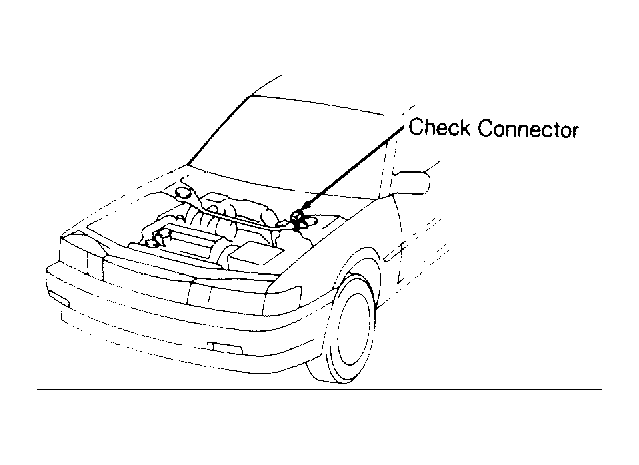
- Check idle speed. Start and warm engine to operating temperature. Place transmission in Neutral. Turn off all accessories. Connect a tachometer to terminal IG- of check connector. For location of check connector, see Fig 1.
- See IDLE SPEED SPECIFICATIONS table. If idle speed is okay, go to next step. If idle speed is not within specification, see DIAGNOSIS BY SYMPTOM in TESTS W/O CODES
article.
CAUTION:
DO NOT ground check connector terminal IG-. Damage to ignitor and/or ignition coil may result.
NOTE:
Ensure tachometer is compatible with this system before use.
IDLE SPEED SPECIFICATIONS
| Application |
RPM |
| ES250 |
650-750 |
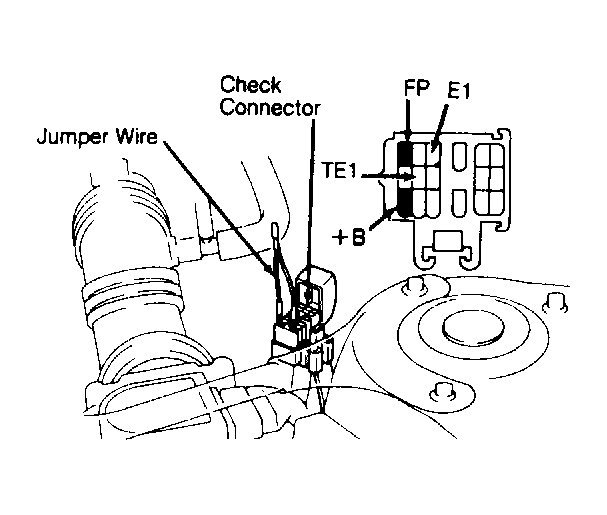
- Check ignition timing. Start and warm engine to operating temperature. Ensure idle speed is within specification. Using a jumper wire, connect check connector terminals E1 and TE1. See Fig 3.
- Connect timing light to No. 1 cylinder. Check ignition timing. See IGNITION TIMING SPECIFICATIONS table.
 Courtesy of © TOYOTA, LICENSE AGREEMENT TMS1002
 IGNITION TIMING SPECIFICATIONS (Degrees BTDC @ RPM)
| Application |
Specification |
| ES250 |
10 @ 650-750 |
- Disconnect jumper wire from check connector. With transmission in Neutral, timing should move within a range of approximately 13-27 degrees BTDC.
- If ignition timing is not within specification, loosen distributor hold-down bolts and adjust as necessary.
- If ignition timing is within specification and a normal code is displayed by CHECK engine light, see DIAGNOSIS BY SYMPTOM in TESTS W/O CODES
article. If a code is displayed by CHECK engine light, see appropriate code chart.
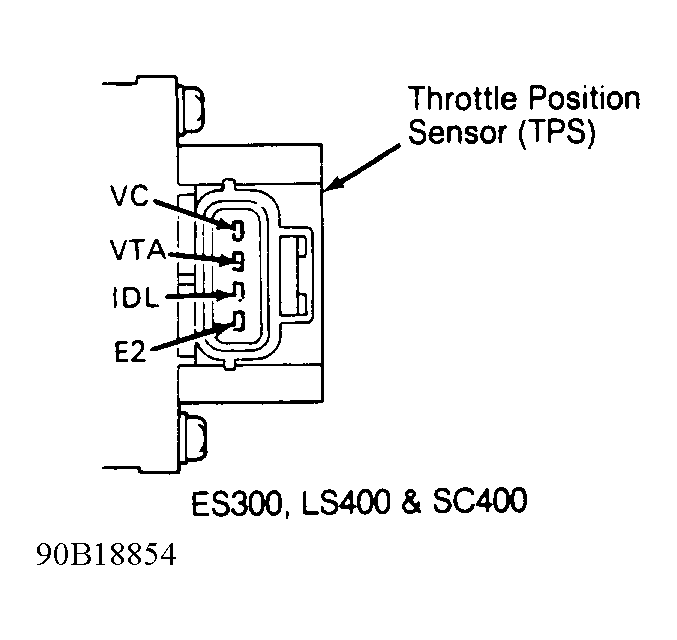
- Ensure throttle valve is fully closed. Ensure continuity is present between Throttle Position Sensor (TPS) terminals IDL and E2. See Fig 2. Ensure engine valve timing is correct.
 Courtesy of © TOYOTA, LICENSE AGREEMENT TMS1002
WARNING:
ALWAYS relieve fuel pressure before disconnecting any fuel injection-related component. DO NOT allow fuel to contact engine or electrical components.
- Check fuel pressure. Ensure a sufficient amount of fuel is in fuel tank. Turn ignition off. Using a jumper wire, connect check connector terminals +B and FP. See Fig 3. Turn ignition on.
- Using fingers, ensure fuel pressure is felt in hose from fuel filter. When fuel system is pressurized, fuel return noise will also be heard. Turn ignition off.
- If no fuel pressure was felt, check fusible links, fuses (EFI 15-amp and IGN 7.5-amp), EFI main relay, fuel pump, ECU and wiring connections.
CAUTION:
SLOWLY loosen cold start injector fuel line to avoid fuel spraying onto skin, eyes and vehicle finish.
- Connect fuel pressure gauge to cold start injector fuel line. Using a jumper wire, connect terminals FP and +B of check connector. See Fig 3. Turn ignition on. Check fuel pressure.
- See FUEL PRESSURE SPECIFICATIONS table. If fuel pressure is more than specification, replace fuel pressure regulator. If fuel pressure is less than specification, check fuel hoses, hose connections, fuel pump, fuel filter and fuel pressure regulator.
FUEL PRESSURE SPECIFICATIONS
| Application |
psi (kg/cm2
) |
| Ignition On, Engine Off |
38-44 (2.7-3.1) |
| Engine Idling |
38-44 (2.7-3.1) |
| Engine Idling |
33-37 (2.3-2.6) |
| Ignition Off, Engine Off |
21 (1.5) |
 Courtesy of © TOYOTA, LICENSE AGREEMENT TMS1002
CAUTION:
DO NOT confuse check connector terminal connection as this may create additional malfunctions.
- Start engine. Disconnect and plug vacuum hose from fuel pressure regulator. Check fuel pressure. See FUEL PRESSURE SPECIFICATIONS table. Unplug and reconnect vacuum hose to fuel pressure regulator.
- Check fuel pressure. See FUEL PRESSURE SPECIFICATIONS table. If fuel pressure is not within specification, check fuel pressure regulator and vacuum hose.
- Turn engine off. Ensure fuel pressure does not drop less than specified value for 5 minutes after engine is turned off. See FUEL PRESSURE SPECIFICATIONS table. If fuel pressure is not as specified, check fuel pump, fuel pressure regulator and fuel injectors. Remove fuel pressure gauge.
- On all models, check for spark. Remove coil wire from distributor. Using insulated pliers, hold end of coil wire 1/2" from ground. Crank engine. If spark is present, see DIAGNOSIS BY SYMPTOM in appropriate TESTS W/O CODES
article. If spark is not present, see SPARK TEST in this article.