Normal Mode
- Normal mode is used for routine testing of vehicle. To read diagnostic codes, ensure battery voltage is at least 11 volts, throttle valve is fully closed, transaxle/transmission is in Neutral and all accessories are off.
- Total Diagnostic Communication Link (TDCL) connector is located under left side of instrument panel. See Fig 1. Diagnostic codes can be obtained through TDCL connector or check connector. Check connector is located near top front of engine. See Fig 2.
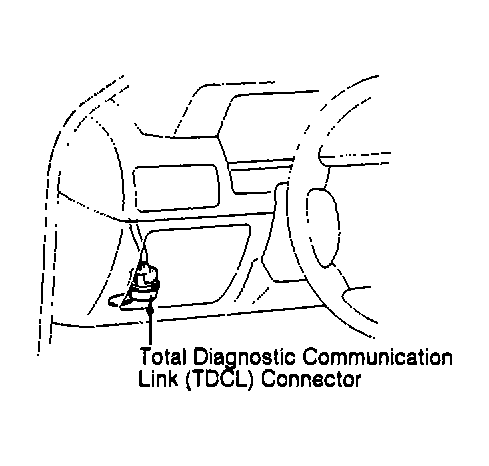 Courtesy of © TOYOTA, LICENSE AGREEMENT TMS1002
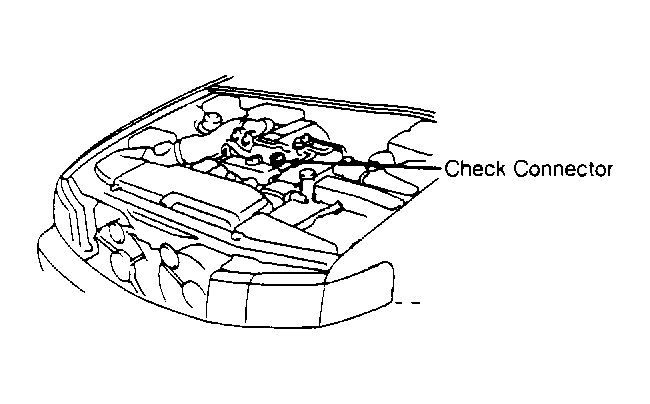 Courtesy of © TOYOTA, LICENSE AGREEMENT TMS1002
- On all models, turn ignition on. DO NOT
start engine. Using a jumper wire, connect terminals E1 and TE1 together either on TDCL connector or check connector. See Fig 3. Count number of flashes from CHECK ENGINE light.
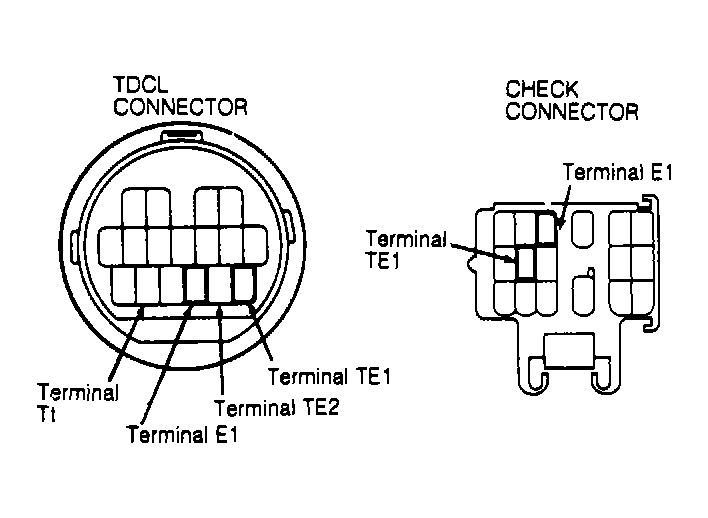 Courtesy of © TOYOTA, LICENSE AGREEMENT TMS1002
- If CHECK ENGINE light flashes 2 times every second, system is normal. If a diagnostic code is displayed, first group of flashes will indicate first digit of a 2-digit diagnostic code. After a 1.5 second delay, second group of flashes will indicate second digit of diagnostic code.
- If more than one code is stored, a 2.5 second delay will occur between diagnostic codes. After all diagnostic codes have been displayed, a 4.5 second delay will occur, and then diagnostic codes will be repeated until jumper wire connecting terminals E1 and TE1 is disconnected. Diagnostic codes will display from smallest to largest number.
- Record diagnostic codes. Refer to DIAGNOSTIC CODE IDENTIFICATION table for identification. After reading diagnostic code description, see appropriate diagnostic code chart. To clear codes, see CLEARING CODES .