Spark Test
NOTE:
ES300 uses a Distributorless Ignition System (DIS). Separate ignition coil for each cylinder is located on valve covers.
CAUTION:
To prevent fuel from being injected during cranking in the following procedure, crank engine for no more than 1-2 seconds at a time.
- Unplug ignition coil connector. Remove ignition coil. Remove spark plug. Connect spark plug to coil and reconnect ignition coil connector. Ground the spark plug.
- Check plug for spark while cranking engine. If spark is not present, turn ignition off. Check ignition coil, ignitor and distributor connectors. Repair as necessary. If connections are good, check for voltage at positive terminal (Black/Orange wire) of ignition coil connector and ignitor.
- If battery voltage is not present, repair circuit. If battery voltage is present, check resistance between terminals of ignition coil connector (ignition coil primary resistance). If resistance is not as specified, replace ignition coil. See IGNITION COIL RESISTANCE table.
- If resistance is as specified, check resistance between terminals of camshaft position sensor. See SENSOR RESISTANCE table. If resistance is not as specified, replace camshaft position sensor. If resistance is as specified, check resistance between terminals of crankshaft position sensor. See SENSOR RESISTANCE table.
- If resistance is not as specified, replace crankshaft position sensor. If resistance is as specified, check for ignitor circuit malfunction. See procedure for Code P1300 in TESTS W/CODES - OBD-II
article in the ENGINE PERFORMANCE section. If ignitor circuit is okay, replace ignitor.
IGNITION COIL RESISTANCE - Ohms
| Application |
Primary |
Secondary |
| Cold |
.54-.84 |
|
| Hot |
.68-.98 |
|
SENSOR RESISTANCE
| Application |
Ohms |
| Camshaft Sensor |
| Cold |
835-1400 |
| Hot |
1060-1645 |
| Crankshaft Sensor |
| Cold |
1630-2740 |
| Hot |
2060-3225 |
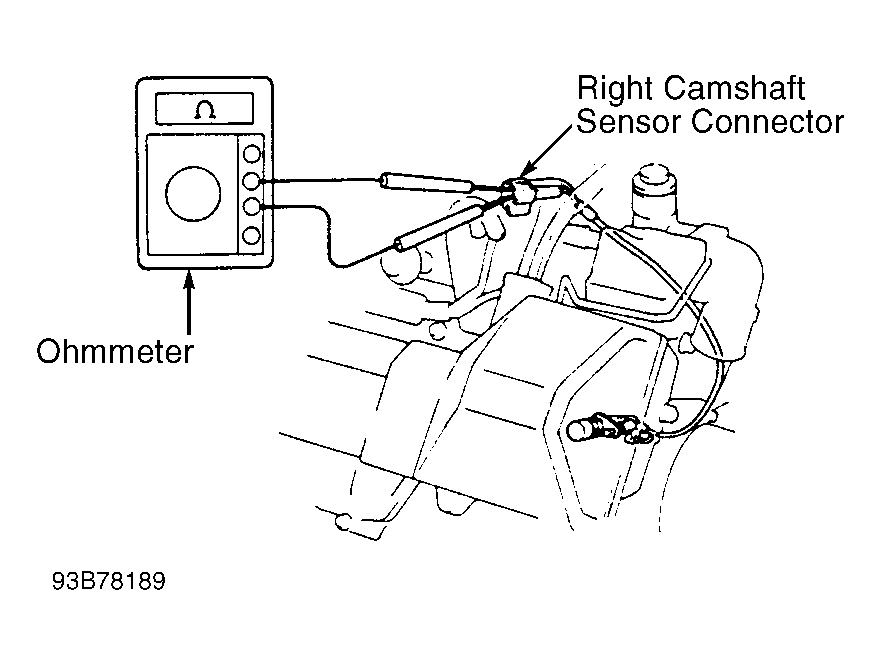 Courtesy of © TOYOTA, LICENSE AGREEMENT TMS1002
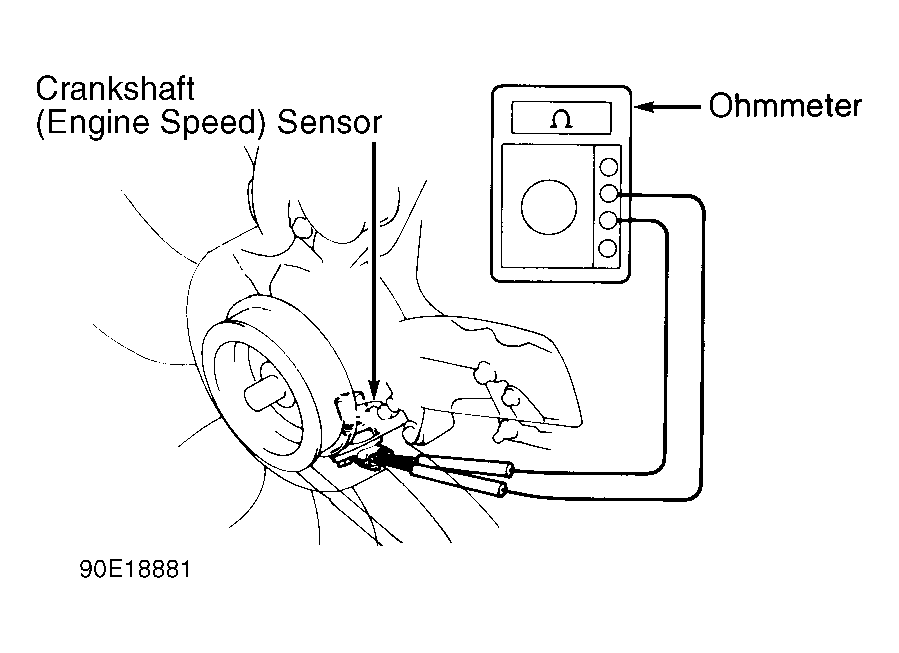 Courtesy of © TOYOTA, LICENSE AGREEMENT TMS1002