System Inspection
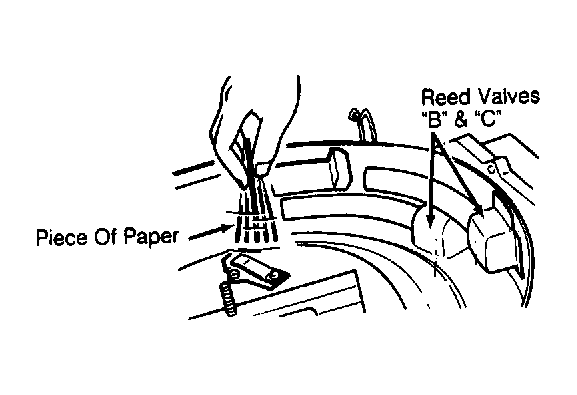
- Warm engine to normal operating temperature. Hold thin piece of paper over inlet port of reed valves "B" and "C". Increase engine speed to 1500 RPM and verify air is being pulled into inlet port. Increase engine speed to 3000 RPM and verify exhaust gas is not leaking from inlet port. If system is not working correctly, replace defective reed valve. See Fig 1
.
 Courtesy of MAZDA MOTORS CORP.
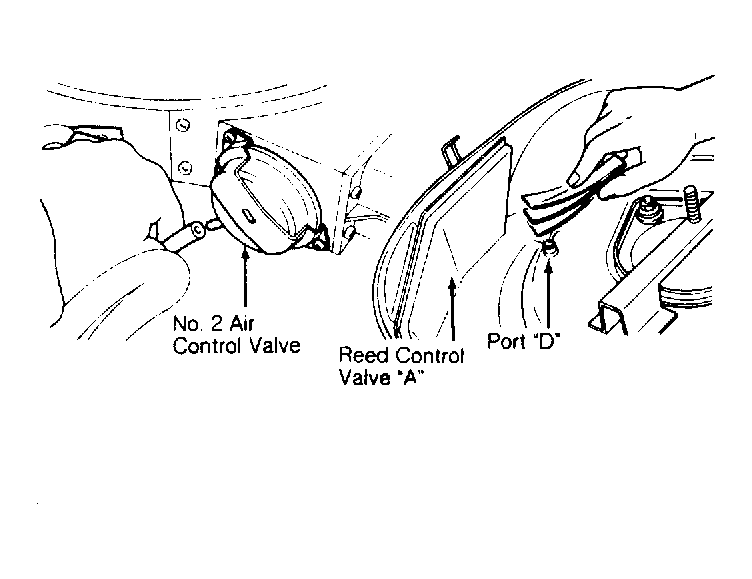
- Disconnect vacuum hose from No. 2 air control valve and plug it. Hold a piece of paper over inlet port "D" of reed control valve "A". See Fig 2
. Increase engine speed to 1500 RPM. Verify air is drawn in. If it is not, check No. 1 air control valve and reed valve "A".
 Courtesy of MAZDA MOTORS CORP.
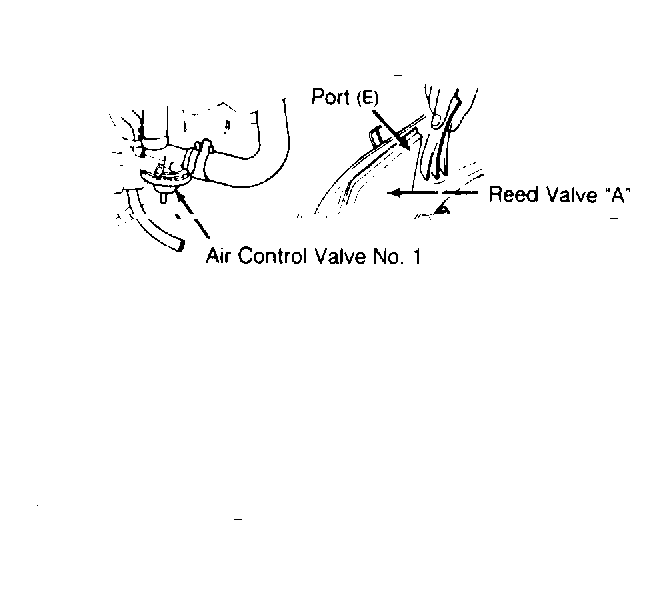
- Disconnect vacuum hose from No. 1 air control valve and plug hose. Apply 3.54 in. Hg to No. 2 air control valve. Place a thin paper over inlet port "E" of reed valve "A". See Fig 3
. Increase engine speed to 1500 RPM and verify air is being pulled in. If it is not, check No. 2 air control valve and also the reed valve.
 Courtesy of MAZDA MOTORS CORP.
- Stop engine and disconnect coolant temperature switch connector. Run engine at idle and verify no vacuum is evident at No. 2 air control valve vacuum hose. See Fig 2
. Increase engine speed to 1500 RPM and verify vacuum is present at vacuum hose. If system is not functioning correctly, check ACV solenoid valve. Reconnect vacuum hoses to the No. 1 and No. 2 control valves. Reconnect coolant temperature switch connector.