Vehicle Speed Sensor (VSS) Signal Intermittent
DTC P0503, P1500, P1501 DETECTION CONDITION AND POSSIBLE CAUSE
| DTC P0503, P1500, P1501 |
VEHICLE SPEED SENSOR (VSS) SIGNAL INTERMITTENT |
| DETECTION CONDITION |
- P0503 indicates poor or noisy VSS performance.
- P1500 indicates the VSS input signal was intermittent. This DTC is set when a VSS fault interferes with other OBDII tests, such as Catalyst efficiency monitor, EVAP monitor, HO2S monitor, etc.
- P1501 indicates the VSS input signal is out of Self Test range. If the PCM detects a VSS input signal any time during Self Test (vehicle stopped), a DTC P1501 will be set and the test will abort.
|
| POSSIBLE CAUSE |
- Noisy VSS input signal from Radio Frequency Interference/Electro-Magnetic Interference (RFI/EMI) external sources such as ignition components or charging circuit (P0503, P1501).
- Damaged wiring harness or connectors (P0503).
- Malfunction in module(s) or circuit connected to VSS/TCSS circuit (P0503).
- Aftermarket add on (P0503).
- Intermittent VSS connections (P0500).
- Intermittent open in VSS harness circuit (P1500).
- Intermittent short in VSS harness circuit (P1500).
- Damaged VSS or driven gear (P0503, P1500). Damaged PCM (P1500).
- Damaged TCCS (P0503).
|
| HINT |
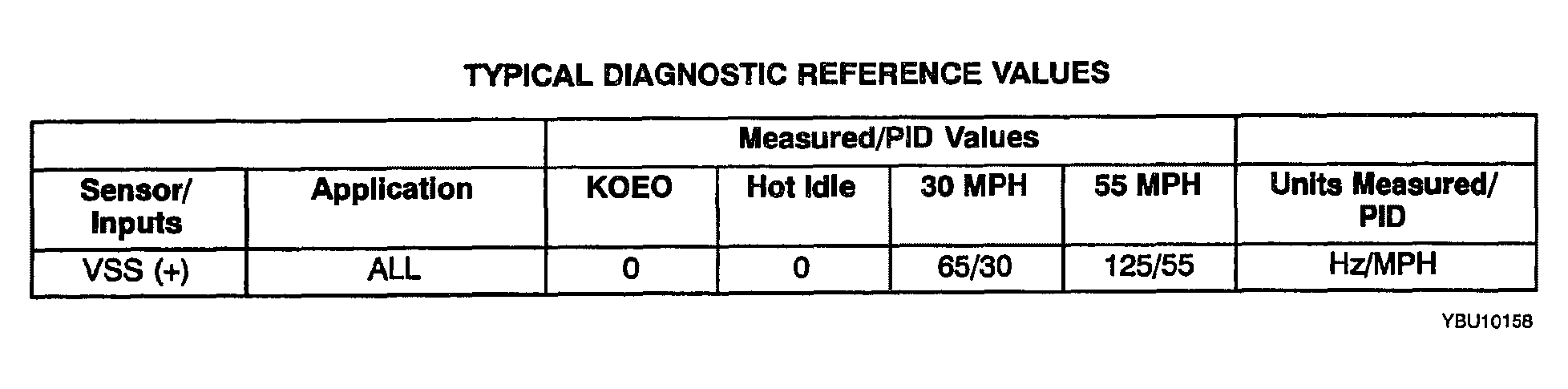
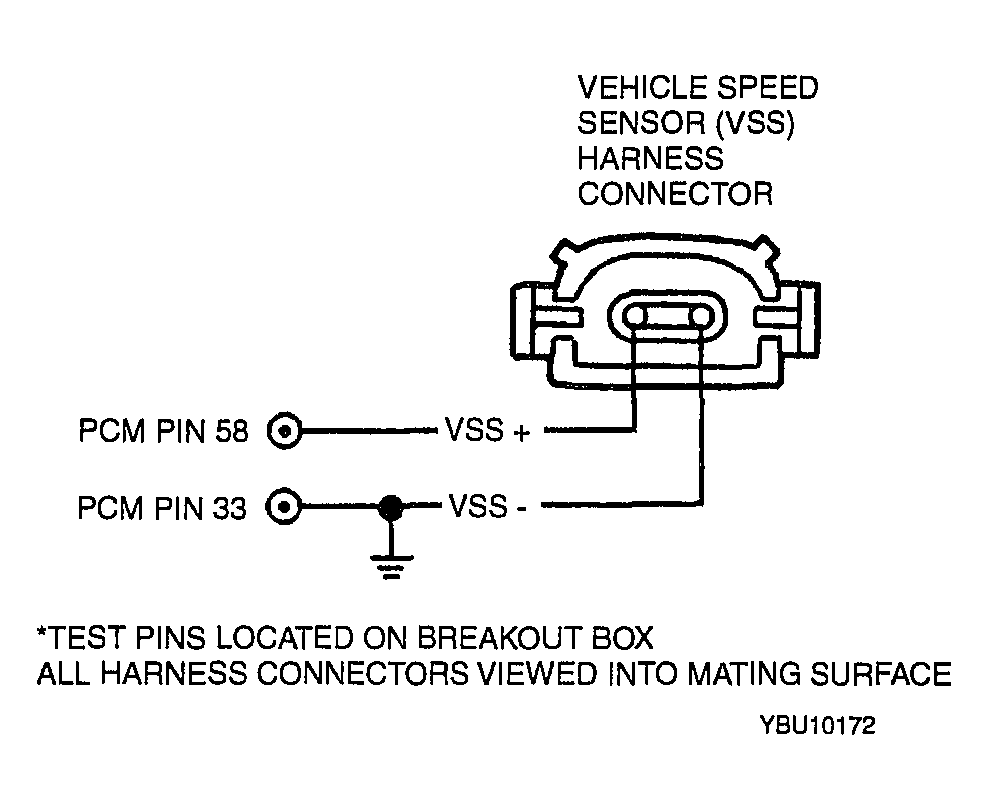
VSS Description
- Variable reluctance or Hall-effect sensor.
- Generates a waveform with a frequency that is proportional to the speed of the vehicle.
- The lower the speed, the lower the frequency.
- The higher the speed, the higher the frequency.
- The PCM uses the frequency signal to control such parameters as fuel injection, ignition control, transmission shift scheduling and torque converter clutch scheduling.
|
 Courtesy of MAZDA MOTORS CORP. Courtesy of MAZDA MOTORS CORP.
|
 Courtesy of MAZDA MOTORS CORP. Courtesy of MAZDA MOTORS CORP.
|
DTC P0503, P1500, P1501 INSPECTION
| STEP |
INSPECTION |
ACTION |
| 1 |
- Was PCM Quick Test performed?
|
Yes |
For P0503:
Go to step 2.
For DTC P1500:
Go to step 5.
For DTC P1501:
Go to step 6. |
| No |
Perform PCM Quick Test. |
| 2 |
DTC P0503: INSPECT VSS AND CIRCUIT FOR AN INTERMITTENT
- Check for harness intermittents by verifying the pins are properly seated in connector shell, wiring is properly crimped, no corrosion exists in the harness and sensor is securely mounted.
- Are there any indications of harness intermittents?
|
Yes |
Repair as necessary.
Go to step 7. |
| No |
Go to next step. |
| 3 |
CHECK PCM VSS PID FOR INPUT SIGNAL
|
Yes |
Go to next step. |
| No |
Unable to duplicate or identify fault at this time. Repair any other DTCs. |
| 4 |
CHECK RESISTANCE OF VSS SIG HARNESS
- Disconnect PCM and VSS sensor harness connector.
- Install Breakout Box, leave PCM disconnected.
- Measure resistance of VSS SIG (VSS+) circuit between PCM test pin 58 and VSS sensor harness connector.
- Is the resistance less than 5.0 ohms?
|
Yes |
Unable to duplicate or identify fault at this time.
See
TEST 4: INTERMITTENT
. |
| No |
Repair high resistance.
Go to step 7. |
| 5 |
DTC P1500: VISUAL INSPECTION
- Visually inspect the VSS SIG (VSS+) circuit harness.
- Did the visual inspection reveal potential failure?
|
Yes |
Repair fault as necessary. Go to step 7. |
| No |
Unable to duplicate or identify fault at this time.
See
TEST 4: INTERMITTENT
. |
| 6 |
KOER DTC P1501: CHECK PCM VSS PID FOR INPUT SIGNAL
- Start the engine and idle in NEUTRAL.
- Access the VSS PID with NGS Tester and observe for vehicle speed input to the PCM.
- Increase the engine speed, not greater than 2000 rpm, several times while observing the VSS PID.
- Is the reading on the VSS PID less than 5 km/h (3 mph)?
|
Yes |
Unable to duplicate or identify fault at this time. If DTC P1501 still exists, refer to
DRIVE CYCLES
. |
| No |
Go to step 4. |
| 7 |
DRIVE CYCLE
- Make sure to reconnect all disconnected connectors.
- Clear DTCs from PCM memory using NGS tester generic OBD-II function.
- Perform OBD II Drive Cycle.
See
DRIVE CYCLES
.
- Retrieve pending code.
- Is same DTC present?
|
Yes |
Replace PCM. See COMPUTERIZED ENGINE CONTROLS
.
Go to next step. |
| No |
Go to next step. |
| 8 |
VERIFY REPAIR
- Perform PCM Quick Test.
- Is any DTC present?
|
Yes |
Go to applicable DTC inspection. |
| No |
Troubleshooting complete. |