Engine Does Not Crank
- Observe anti-theft indicator. If anti-theft indicator is off, go to next step. If anti-theft indicator is ON or flashing, see
ACTIVE ANTI-THEFT SYSTEMS - VILLAGER article in ACCESSORIES & EQUIPMENT.
- Verify battery condition. Battery voltage should be 12 volts or more. Load test battery at approximately one-half cold cranking amperage rating. See load tester manufacturer's instructions. If battery is okay, go to next step. If battery voltage is less than 12 volts or loaded battery voltage is less than 9.6 volts, service battery or charging system as necessary.
- Measure voltage between battery positive terminal and ground cable connection at engine block. If battery voltage is present, go to next step. If battery voltage is not present, clean and tighten ground cable connections and recheck voltage. If battery voltage is still not present, replace battery ground cable and check system operation.
- Measure voltage between battery positive terminal and starter motor case. If battery voltage is present, go to next step. If battery voltage is not present, clean starter mounting surface and verify proper installation. Check system operation.
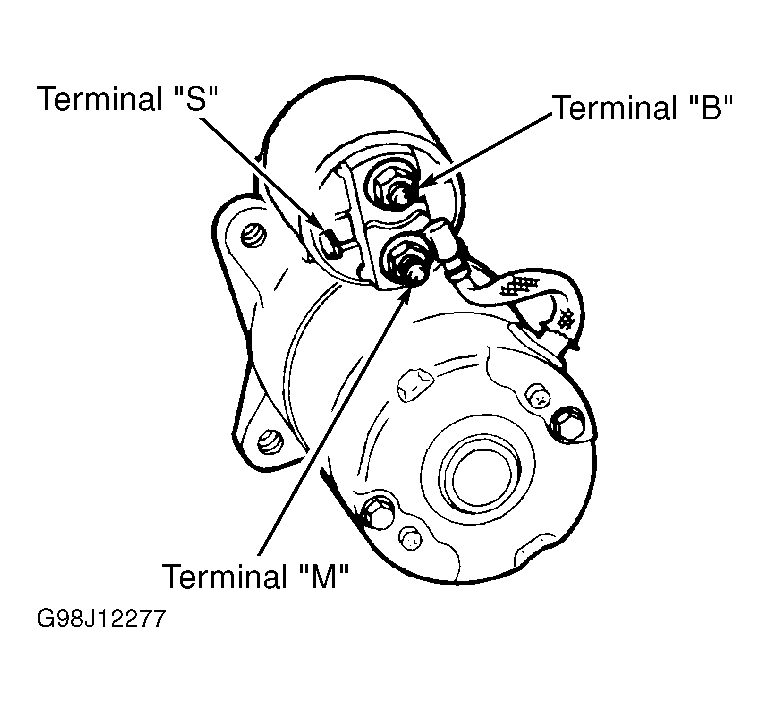
- Measure voltage between starter solenoid terminal "B" and ground. See Fig 1
. If battery voltage is present, go to next step. If battery voltage is not present, clean and tighten positive battery cable connections, and recheck voltage. If battery voltage is still not present, replace positive battery cable.
 Courtesy of FORD MOTOR CO.
- Disconnect starter solenoid terminal "S". Momentarily connect a 30-amp fused jumper wire between starter solenoid terminals "B" and "S". See Fig 1
. If starter motor operates and engine cranks, go to next step. If starter motor does not engage, or engine does not crank, replace starter motor. See STARTER MOTOR
under REMOVAL & INSTALLATION. Check system operation.
- Measure voltage between starter solenoid terminal "S" connector (Red/White wire) and ground with ignition in START position. If battery voltage is not present, go to next step. If battery voltage is present, check connector for looseness or corrosion. Repair as necessary. Restore connections and check system operation.
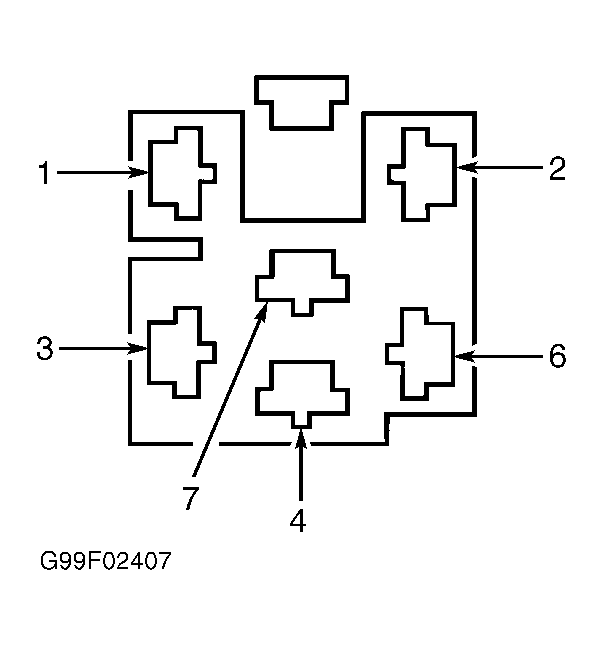
- Turn ignition off. Remove start inhibit relay. Measure voltage between start inhibit relay connector terminal No. 7 (Red wire) and ground with ignition in START position. See Fig 2
. If battery voltage is present, go to next step. If battery voltage is not present, test ignition switch. See
STEERING COLUMN SWITCHES - VILLAGER article in ACCESSORIES & EQUIPMENT.
 Courtesy of FORD MOTOR CO.
- Connect a jumper wire between start inhibit relay connector terminals No. 6 and 7. See Fig 2
. Turn ignition switch to START position. If starter motor operates, remove jumper wire and go to next step. If starter motor does not operate, repair engine compartment relay box or Red/White wire between start inhibit relay terminal No. 6 and starter solenoid terminal "S". See WIRING DIAGRAMS
.
- Measure resistance between start inhibit relay connector terminal No. 2 and ground. See Fig 2
. If resistance is 5 ohms or less, go to next step. If resistance is more than 5 ohms, repair Black wire between relay terminal and ground. See WIRING DIAGRAMS
.
- With ignition switch in START or RUN position, and transmission in Park or Neutral, measure resistance between start inhibit relay terminal No. 1 and ground. If battery voltage is present, replace start inhibit relay and check system operation. If battery voltage is not present, and vehicle is equipped with anti-theft system, go to next step. If battery voltage is not present, and vehicle is not equipped with anti-theft system, go to step 14
.
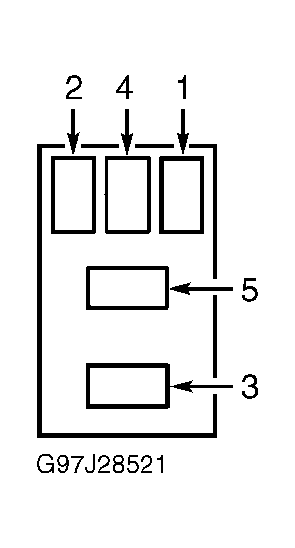
- Remove anti-theft relay. Measure voltage between anti-theft relay connector terminal No. 2 and ground. See Fig 3
. If battery voltage is present, go to next step. If battery voltage is not present, repair Green/Red wire between anti-theft relay connector and battery. See WIRING DIAGRAMS
.
 Courtesy of FORD MOTOR CO.
- With ignition switch in START or RUN position, and transmission in Park or Neutral, measure resistance between anti-theft relay connector terminal No. 4 and ground. If battery voltage is present, go to step 16
. If battery voltage is not present, go to next step.
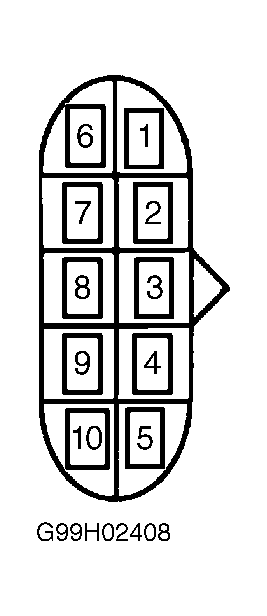
- Disconnect Transmission Range (TR) sensor connector. Measure voltage between TR sensor connector terminal No. 3 (Light Green wire) and ground with ignition switch in START or RUN position. See Fig 4
. If battery voltage is present, go to next step. If battery voltage is not present, repair Light Green wire or connections between TR sensor and power supply. See WIRING DIAGRAMS
.
 Courtesy of FORD MOTOR CO.
- Measure resistance of Light Green/Black wire between anti-theft relay terminal No. 4 and TR sensor terminal No. 2. See Fig 4
. Resistance should be less than 5 ohms. Measure resistance of Light Green/Black wire between TR sensor connector terminal No. 2 and ground. Resistance should be more than 10 k/ohms. If resistance is as specified for both measurements, replace TR sensor and check system operation. If resistance is not as specified for either measurement, repair open or short in Light Green/Black wire. See WIRING DIAGRAMS
.
- Measure resistance of Blue/White wire between anti-theft relay connector terminal No. 3 and start inhibit relay connector terminal No. 1. See Fig 2
and Fig 3
. Resistance should be less than 5 ohms. Measure resistance of Blue/White wire between anti-theft relay connector terminal No. 3 and ground. Resistance should be more than 10 k/ohms. If resistance is as specified for both measurements, fault is in anti-theft system. See
ACTIVE ANTI-THEFT SYSTEMS - VILLAGER article in ACCESSORIES & EQUIPMENT. If resistance is not as specified for either measurement, repair open or short in Blue/White wire. See WIRING DIAGRAMS
.