Diagnostic Procedures
- If powertrain diagnostic system check has been performed, go to next step. If powertrain diagnostic system check has not been performed, see DIAGNOSTIC SYSTEM CHECK - ENGINE CONTROLS
under SELF-DIAGNOSTIC SYSTEM in SELF-DIAGNOSTICS - 2.2L CAVALIER - CNG article. After performing powertrain diagnostic system check, go to next step.
- Turn ignition off. Locate and disconnect Low Pressure Lock-Off (LPL) solenoid connector. See Fig 1. Connect test light between LPL solenoid connector terminal "A" (Purple wire) and ground. Attempt to start engine. If test light illuminates while engine is cranking or running, go to next step. If test light does not illuminate while engine is cranking or running, go to step 6.
- Turn ignition off and wait 30 seconds. Turn ignition on. Using scan tool, clear any DTCs from AF ECM. Connect test light between LPL solenoid connector terminals "A" (Purple wire) and "B" (Light Blue wire). Attempt to start engine. If test light illuminates while engine is cranking or running, go to next step. If test light does not illuminate while engine is cranking or running, go to step 10.
- Turn ignition off. Remove CNG fuel tank cover from inside trunk. Locate and disconnect High Pressure Lock-Off (HPL) solenoid connector. See Fig 1. Connect test light between HPL solenoid connector terminal "A" (White wire) and ground. Attempt to start engine. If test light illuminates while engine is cranking or running, go to next step. If test light does not illuminate while engine is cranking or running, go to step 11.
- Turn ignition off and wait 30 seconds. Connect test light between HPL solenoid connector terminals "A" (White wire) and "B" (Light Green wire). Turn ignition on. If test light illuminates when ignition is turned on, go to step 20. If test light does not illuminate when ignition is turned on, go to step 10.
- Ensure engine is idling or cranking. Using a test light connected to ground, backprobe lock-off relay connector terminal No. 87 (Purple wire). Lock-off relay is located behind left front fascia, below headlight (18). See Fig 1. If test light illuminates while engine is running or cranking, go to step 12. If test light does not illuminate while engine is running or cranking, go to next step.
- Disconnect lock-off relay connector. Ensure engine is idling or cranking. Connect test light between lock-off relay connector terminals No. 85 (Gray wire) and No. 86 (Black wire). If test light illuminates while engine is running or cranking, go to next step. If test light does not illuminate while engine is running or cranking, go to step 9.
- Ensure engine is idling or cranking. Connect test light between ground and lock-off relay connector terminal No. 30 (Orange wire). If test light illuminates while engine is running or cranking, go to step 16. If test light does not illuminate while engine is running or cranking, go to step 13.
- Turn ignition off. Connect test light between ground and lock-off relay connector terminal No. 85 (Gray wire). Observe test light. Turn ignition on. Attempt to start engine. If test light illuminates while engine is running or cranking, go to step 14. If test light does not illuminate while engine is running or cranking, go to step 15.
- Check for open or high resistance in Gray wire between lock-off relay connector terminal No. 85 and splice S004. Check for poor connections at lock-off solenoid and AF ECM. Repair as necessary. After repairs, go to step 20. If circuit and connections are okay, go to step 19.
- Repair open in Purple wire between splice S005 and connector C454 terminal "A". Purple wire changes to White wire at C454. S005 is located approximately 24" (60 cm) from harness pass-through located below steering column (engine side). Repair open in White wire between connector C454 terminal "A" and HPL solenoid connector terminal "A". After repairs, go to step 20.
- Repair open in Purple wire between LPL solenoid connector terminal "A" and lock-off relay connector terminal No. 87. After repairs, go to step 20.
- Repair open in Orange wire between lock-off relay connector terminal No. 30 and splice S001, located approximately 1.5" (3.5 cm) from 4 relay break outs, toward AF ECM connector break outs below left front headlight. After repairs, go to step 20.
- Repair open in Black wire between lock-off relay connector terminal No. 86 and ground connection located on left side of engine/transmission. After repairs, go to step 20.
- If test light illuminated for 2 second bulb-check when ignition was first turned on, go to next step. If test light did not illuminate for 2 second bulb-check when ignition was first turned on, go to step 17.
- Check for open or short in Purple/White wire between Ignition Control Module (ICM) connector C2 terminal "D" and PCM connector C1 terminal No. 8. For connector terminal identification, see CONNECTOR IDENTIFICATION
in SELF-DIAGNOSTICS - 2.2L CAVALIER - CNG article. See Fig 2. Check for poor connections at PCM and ICM connectors. Repair as necessary. After repairs, go to step 20. If circuit and connections are okay, see DIAGNOSTIC SYSTEM CHECK - ENGINE CONTROLS
under SELF-DIAGNOSTIC SYSTEM in SELF-DIAGNOSTICS - 2.2L CAVALIER - CNG article.
- Repair open in Gray wire between lock-off relay connector terminal No. 85 and splice S004. After repairs, go to step 20.
- Replace lock-off relay. After repairs, go to step 20.
- Replace AF ECM. See ALTERNATE FUEL ENGINE CONTROL MODULE
under COMPUTERIZED ENGINE CONTROLS in REMOVAL, OVERHAUL & INSTALLATION - CAVALIER & SUNFIRE article. Program (flash) AF ECM with correct vehicle software and calibration. See ALTERNATE FUEL ENGINE CONTROL MODULE
under PROGRAMMING in SELF-DIAGNOSTICS - 2.2L CAVALIER - CNG article. After performing repairs and procedures, go to next step.
- Turn ignition off. Remove all test equipment. Reconnect any disconnected components and/or connectors. Using scan tool, clear DTCs from AF ECM and PCM. Turn ignition off for 30 seconds. Start engine and allow to idle. Start engine and operate vehicle noting operation of Fuel Indicator Light (FIL) and Malfunction Indicator Light (MIL). Observe vehicle performance and driveability in gasoline and alternate fuel modes. If FIL or MIL do not illuminate and vehicle performs normally, system is okay at this time. If FIL or MIL illuminate or vehicle does not performs normally, see DIAGNOSTIC SYSTEM CHECK - ENGINE CONTROLS
under SELF-DIAGNOSTIC SYSTEM in SELF-DIAGNOSTICS - 2.2L CAVALIER - CNG article.
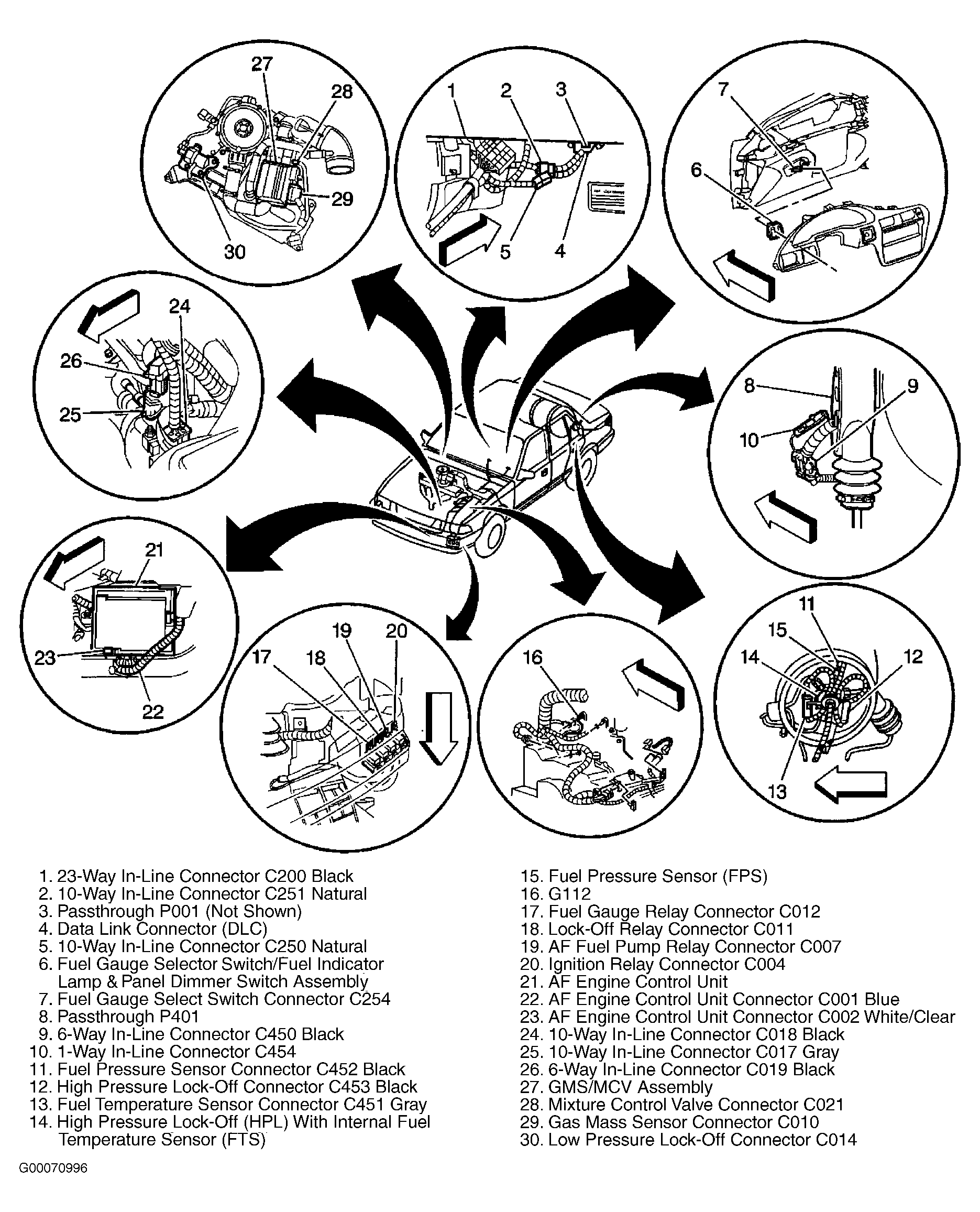 Courtesy of GENERAL MOTORS CORP.
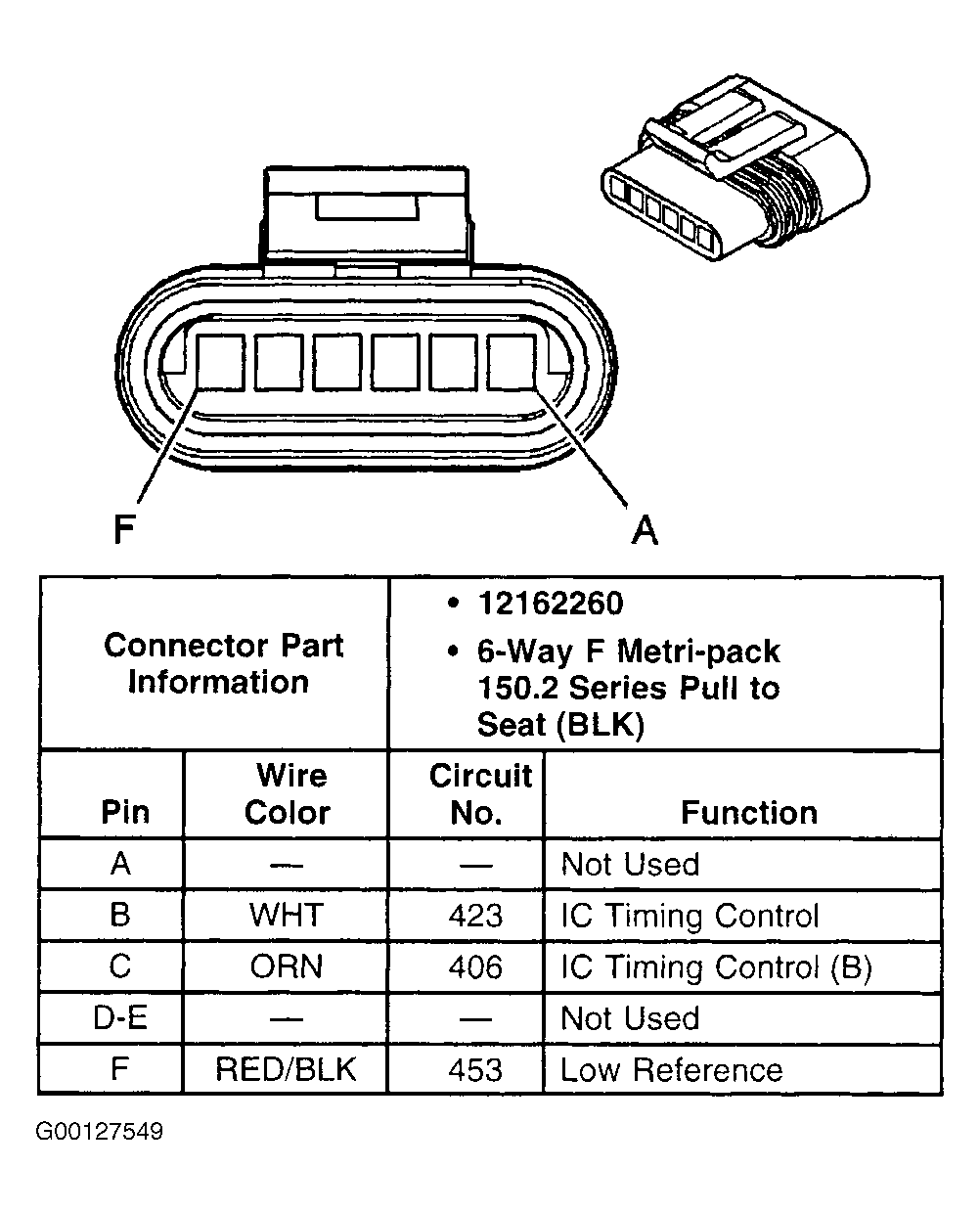 Courtesy of GENERAL MOTORS CORP.