Fuel Injector Circuit Tests
- Check Fuel Injector Operation
Start and run engine at idle. Listen for clicking noise at each injector. If each injector clicks, injectors are okay, check fuel pressure. See ON-VEHICLE ADJUSTMENTS
and BASIC DIAGNOSTIC PROCEDURES
articles. If clicking is not present at any injector, go to next step.
- Check Fuel Injector Power Supply
Turn ignition off. Disconnect connector at each fuel injector one at a time. Turn ignition on. Using a voltmeter, measure voltage between connector terminal No. 2 and engine ground. See Fig 1. If voltage is more than 10 volts on any injector circuit, go to next step. If voltage is 10 volts or less on any injector circuit, repair open circuit in harness between main relay and fuel injector and check for poor contact in all connectors between main relay and injector. See appropriate wiring diagram in WIRING DIAGRAMS
article.
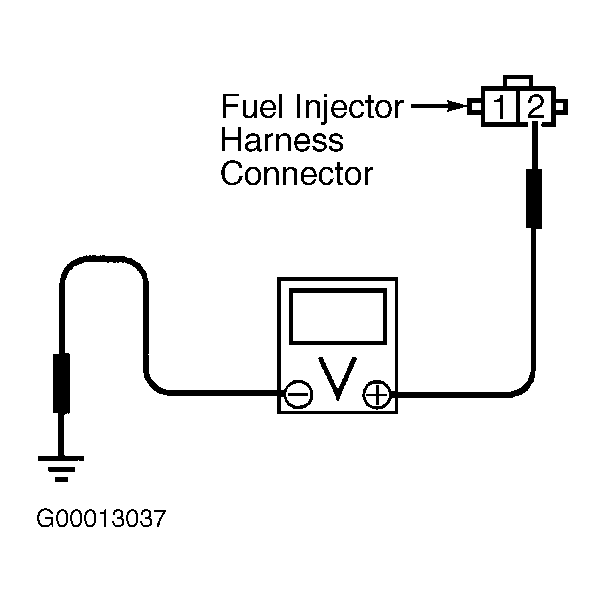 Courtesy of SUBARU OF AMERICA, INC.
- Check Harness Between ECM & Fuel Injector
Turn ignition off. Disconnect ECM connectors B134 (35-pin connector) and B136 (30-pin connector). Backprobing connectors, measure resistance between ECM connector B134 (35-pin connector) terminal No. 4 and ECM connector B136 (30-pin connector) terminal No. 2. See Fig 2. If resistance is 5-20 ohms, leave connectors disconnected and go to next step. If resistance is not 5-20 ohms, repair open circuit in harness and check for poor contact in connectors.
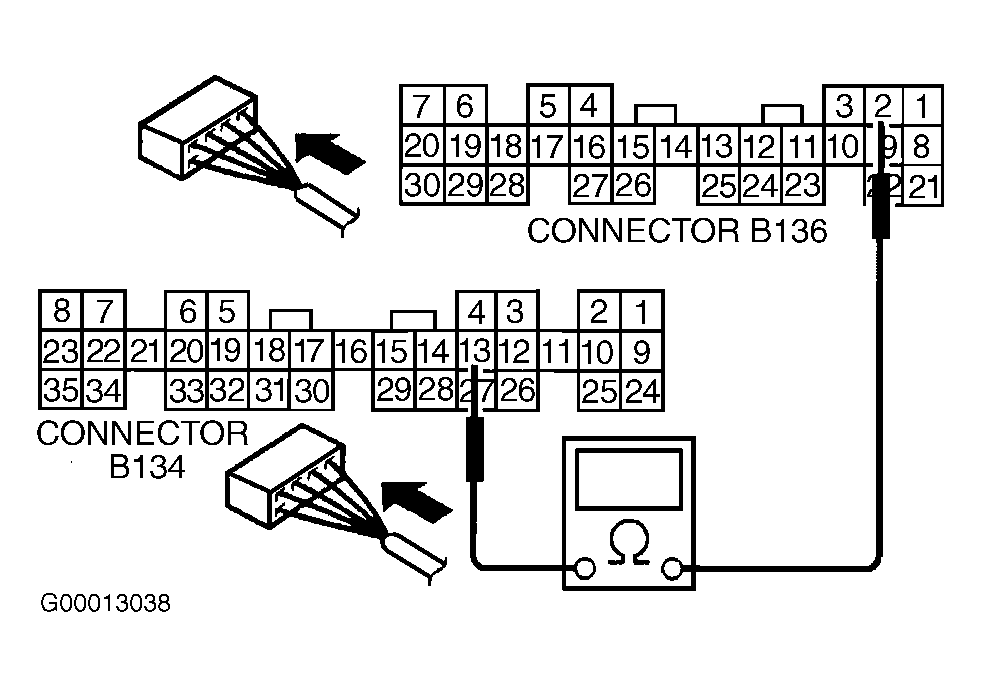 Courtesy of SUBARU OF AMERICA, INC.
- Measure resistance between ECM connector B134 (35-pin connector) terminal No. 4 and ground. See Fig 2. If resistance is less than 1 ohm, repair short to ground in circuit between ECM and fuel injector. If resistance is 1 ohm or more, measure resistance between ECM connector B134 (35-pin connector) terminal No. 13 and ECM connector B136 (30-pin connector) terminal No. 2. If resistance is 5-20 ohms, go to next step. If resistance is not 5-20 ohms, repair open circuit in harness between ECM and fuel injector. Also check contact of all connector terminals between ECM and fuel injector.
- Measure resistance between ECM connector B134 (35-pin connector) terminal No. 13 and ground. See Fig 2. If resistance is less than 1 ohm, repair short to ground in circuit between ECM and fuel injector. If resistance is 1 ohm or more, measure resistance between ECM connector B134 (35-pin connector) terminal No. 14 and ECM connector B136 (30-pin connector) terminal No. 2. If resistance is 5-20 ohms, go to next step. If resistance is not 5-20 ohms, repair open circuit in harness between ECM and fuel injector. Also check contact of all connector terminals between ECM and fuel injector.
- Measure resistance between ECM connector B134 (35-pin connector) terminal No. 14 and ground. See Fig 2. If resistance is less than 1 ohm, repair short to ground in circuit between ECM and fuel injector. If resistance is 1 ohm or more, measure resistance between ECM connector B134 (35-pin connector) terminal No. 15 and ECM connector B136 (30-pin connector) terminal No. 2. If resistance is 5-20 ohms, go to next step. If resistance is not 5-20 ohms, repair open circuit in harness between ECM and fuel injector. Also check contact of all connector terminals between ECM and fuel injector.
- Measure resistance between ECM connector B134 (35-pin connector) terminal No. 15 and ground. See Fig 2. If resistance is less than 1 ohm, repair short to ground in circuit between ECM and fuel injector. If resistance is 1 ohm or more, go to next step.
- Turn ignition off. Disconnect electrical connector at each injector. Using an ohmmeter, measure resistance across terminals of each fuel injector. If injector resistance is 5-20 ohms, check for poor contact in ECM connectors and repair as required. If connectors are okay, check crankshaft position sensor circuit. See SELF-DIAGNOSTICS - 2.2L & 2.5L
article. If resistance is not 5-20 ohms, replace faulty fuel injector.