Starter Circuit: Forester
- Using Customer Complaint Check List, attempt to start engine. See Figure
. If starter operates when ignition switch is turned but engine does not start, go to next step. If starter does not operate when ignition switch is turned, go to step 3
.
- Check for Diagnostic Trouble Codes (DTCs) stored in memory. If DTCs are present, repair cause of problem and retest system. See appropriate SELF-DIAGNOSTICS article. If DTCs are not present, check Engine Control Module (ECM) power feed and ground circuits. See ENGINE CONTROL MODULE POWER SUPPLY & GROUND CIRCUITS
.
- Turn ignition off. Disconnect starter single-pin electrical harness connector. Using a DVOM, measure voltage of Yellow/Blue wire between starter single-pin electrical harness connector and good engine ground point while holding ignition switch in ST position. Ensure gear selector is in Park or Neutral on automatic transaxles or clutch pedal is depressed on manual transaxles while activating starter. If voltage is greater than 10 volts, go to next step. If voltage is not greater than 10 volts, go to step 5
.
- Turn ignition off. Disconnect ground cable from starter. Using a DVOM, measure resistance of ground cable between ground cable terminal and engine ground point. If resistance is less than 5 ohms, check starter. See appropriate STARTERS article in ENGINE. If resistance is not less than 5 ohms, repair open in ground circuit. See appropriate STARTING/CHARGING wiring diagram in SYSTEM WIRING DIAGRAMS article in ELECTRICAL.
- Turn ignition off. Access ignition switch and disconnect ignition switch Black 4-pin electrical harness connector. Using a DVOM, measure voltage on White wire between ignition switch Black 4-pin electrical harness connector terminal No. 1 and good body ground point. If voltage is greater than 10 volts, go to next step. If voltage is not greater than 10 volts, check slow blow fuses No. 1 (100-amp) and No. 4 (50-amp) located in main fuse box at left side of engine compartment at shock tower. If fuses are blown, replace fuses and locate and repair open in power feed circuit between ignition switch and battery. See appropriate STARTING/CHARGING wiring diagram in SYSTEM WIRING DIAGRAMS article in ELECTRICAL.
- Check ignition switch. See IGNITION SWITCH under COMPONENT TESTS in appropriate STEERING COLUMN SWITCHES article in ACCESSORIES & EQUIPMENT. If ignition switch is okay, go to next step.
- If vehicle is equipped with manual transaxle, go to step 9
. On vehicles with automatic transaxle, turn ignition off and reconnect ignition switch Black 4-pin electrical harness connector. Separate 12-pin transaxle electrical harness connector on top of transaxle assembly. Using a DVOM, measure voltage of White/Red wire between harness side of 12-pin transaxle electrical harness connector terminal No. 12 and good engine ground point while turning ignition to ST position. See Figure
. If voltage is greater than 10 volts, go to next step. If voltage is not greater than 10 volts, check anti-theft system (if equipped). See appropriate ANTI-THEFT article in ACCESSORIES & EQUIPMENT. If anti-theft system is okay, repair White/Red wire between 12-pin transaxle electrical harness connector and ignition switch. See appropriate STARTING/CHARGING wiring diagram in SYSTEM WIRING DIAGRAMS article in ELECTRICAL.
- With ignition off, place transaxle selector lever in Park or Neutral. Using a DVOM, measure resistance on transaxle side of 12-pin transaxle electrical harness connector between terminals No. 11 (Black/White wire) and No. 12 (Black/Yellow wire). See Figure
. If resistance is less than one ohm, repair open or short to ground in Yellow/Blue wire between inhibitor switch and starter. See appropriate STARTING/CHARGING wiring diagram in SYSTEM WIRING DIAGRAMS article in ELECTRICAL. If resistance is not less than one ohm, replace inhibitor switch.
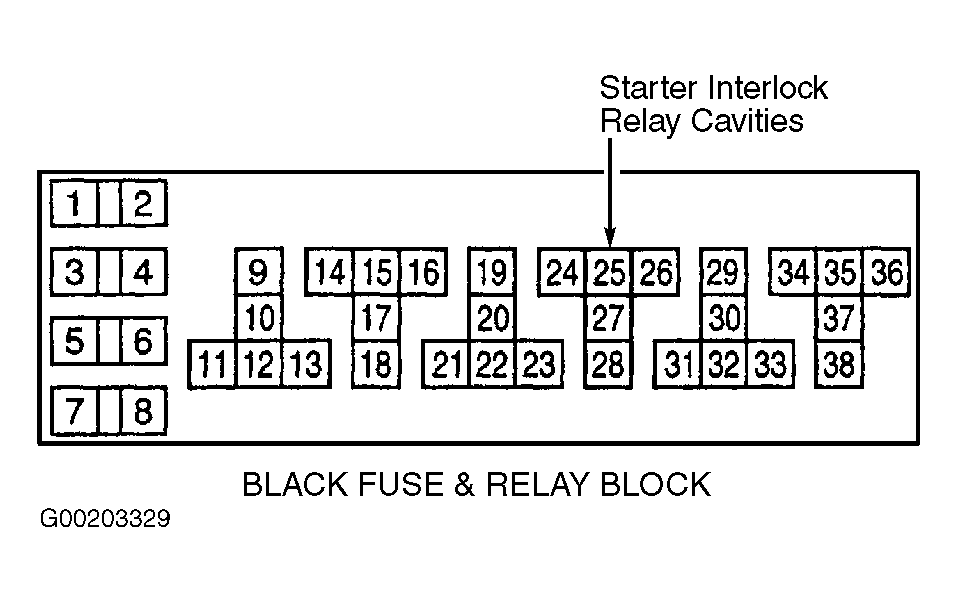
- On manual transaxle vehicles, turn ignition off. Reconnect ignition switch Black 4-pin electrical harness connector. Remove starter interlock relay from Black fuse and relay block located on bulkhead under left side of instrument panel. Using a DVOM, measure voltage between starter interlock relay cavities No. 26 and 28 and good chassis ground point while turning ignition switch to ST position. See Fig 1
. If voltage is more than 10 volts at both test points, go to next step. If voltage is not more than 10 volts at both test points, repair open or short to ground in power feed circuit (White/Red wires) between starter interlock relay and ignition switch. See appropriate STARTING/CHARGING wiring diagram in SYSTEM WIRING DIAGRAMS article in ELECTRICAL. Check anti-theft system, if equipped. See appropriate ANTI-THEFT SYSTEMS article in ACCESSORIES & EQUIPMENT.
 Courtesy of SUBARU OF AMERICA, INC.
 Courtesy of SUBARU OF AMERICA, INC.
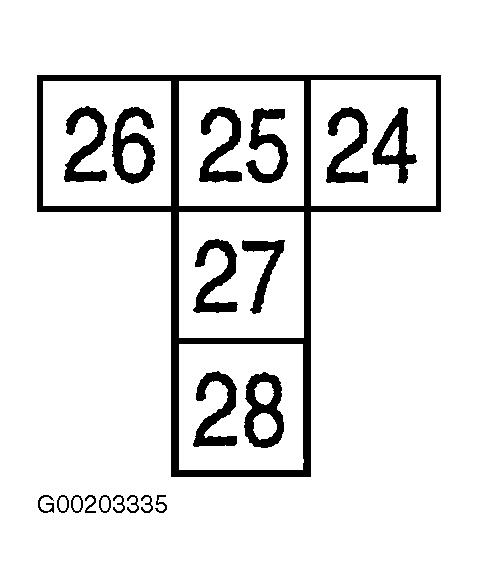
- Using jumper wires, apply battery voltage to starter interlock relay terminals No. 24 and 26. Measure resistance across interlock relay terminals No. 27 and 28. See Fig 2
. If resistance is less than one ohm, go to next step. If resistance is greater than one ohm, replace starter interlock relay.
- Turn ignition off. Locate and disconnect clutch switch 2-pin electrical harness connector. Measure resistance between clutch switch 2-pin electrical harness connector terminal No. 1 (Black wire) and good chassis ground point. If resistance is less than one ohm, go to next step. If resistance is not less than one ohm, repair clutch switch ground circuit. See appropriate STARTING/CHARGING wiring diagram in SYSTEM WIRING DIAGRAMS article in ELECTRICAL.
- With ignition off and clutch switch still disconnected, connect DVOM across terminals of clutch switch. With clutch pedal depressed, resistance should be less than one ohm. If resistance is less than one ohm, go to next step. If resistance is not less than one ohm, replace clutch switch.
- Turn ignition off and reconnect clutch switch 2-pin electrical harness connector. Remove starter interlock relay from Black fuse and relay block located on bulkhead under left side of instrument panel. Using a DVOM, measure resistance between starter interlock relay cavity No. 24 and good chassis ground point while depressing clutch. See Fig 1
. If resistance is less than one ohm, repair short to ground in Yellow/Blue wire between starter interlock relay and starter motor. If resistance is not less than one ohm, repair open circuit in Green/Yellow wire between starter interlock relay and clutch switch. See appropriate STARTING/CHARGING wiring diagram in SYSTEM WIRING DIAGRAMS article in ELECTRICAL.