Repair and Diagnosis: Electrical: Starter: Overhaul: Inspection: Commutator
- Inspect commutator for dirt or signs of burning. If dirt or burning is present, sand lightly with No. 300-400 sand paper or lathe as necessary to clean surface.
- Using a dial indicator, check commutator for runout. Standard runout is .0019" (.05 mm). Maximum runout is .015" (.4 mm). If runout exceeds maximum limit, replace commutator.
- Using a micrometer, measure diameter of brush end of commutator. On Samurai, standard measurement is 1.26" (32 mm). Minimum measurement is 1.22" (31 mm). On Sidekick and Swift GT (A/T), standard measurement is 1.16" (29 mm). Minimum measurement is 1.13" (29 mm). On all Swift models except GT (A/T), minimum measurement is 1.06" (27 mm). If measurement is less than minimum, replace commutator.
- Measure depth of grooves between commutator segments and insulators. See Fig 1. On Samurai, standard depth is .015-.023" (.4-.6 mm). Minimum depth is .0078" (.2 mm). On Sidekick and Swift GT (A/T), standard depth is .020-.031" (.5-.8 mm). Minimum depth is .0078" (.2 mm). On all Swift models except GT (A/T), minimum depth is .0078" (.2 mm). If measurement is less than minimum depth, replace commutator.
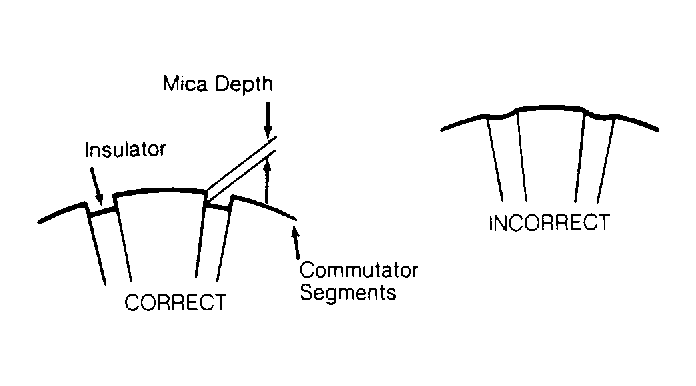 Courtesy of SUZUKI OF AMERICA CORP.