Idle Speed Control (ISC) System
- Warm engine to normal operating temperature. Using a jumper wire, ground diagnosis terminal of test connector. See Fig 1
. Observe CHECK ENGINE light. If Code 12 flashes, go to next step. If Code 12 dose not flash, see INITIAL DIAGNOSTIC PROCEDURE (SIDEKICK) chart in TESTS W/CODES
article in the ENGINE PERFORMANCE Section.
- Check ISC duty and idle speed. If idle speed is within specification but duty is not, adjust idle speed screw to obtain proper duty. See IDLE SPEED in ADJUSTMENTS
article in the ENGINE PERFORMANCE Section. If idle speed is high, proceed to next step. If idle speed is low, proceed to step 5).
- Using an ohmmeter, check ISC resistance. Reading should be 11-14 ohms. If resistance reading is not within specification, replace ISC solenoid. If reading is within specification, observe duty meter. Reading should be less than 28 percent, (greater than 72 percent for OFF duty meter).
- If reading is not as specified, check Light Green/Black wire for short to ground. See WIRING DIAGRAMS
article in the ENGINE PERFORMANCE Section. If wire is okay, substitute known good ECM and recheck. If reading is okay, check intake system for vacuum leaks. If system is okay, adjust idle speed screw to obtain correct idle. If idle will not set to specification, check air valve.
- Using an ohmmeter, check ISC resistance. Reading should be 11-14 ohms. If resistance reading is not within specification, replace ISC solenoid. If reading is within specification, observe duty meter. Reading should be approximately 100 percent, (approximately zero percent for OFF duty meter).
- If reading is as specified, adjust idle speed and duty. If reading is not as specified, check Light Green/Black wire for open condition. If wire is okay, substitute known good ECM and recheck.
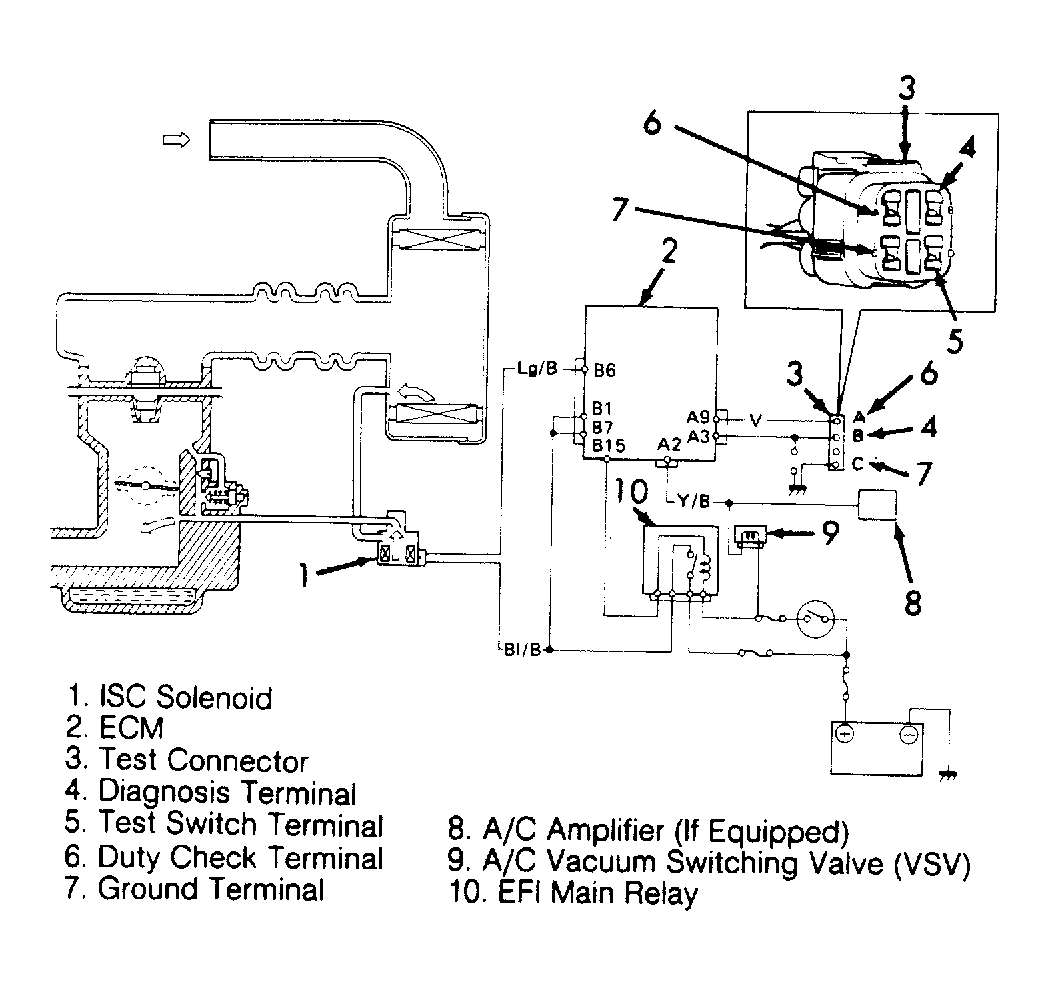 Courtesy of SUZUKI OF AMERICA CORP.