Fuel-Cut Rpm
- Connect a tachometer to engine (to monitor needle fluctuations). Start engine and warm to operating temperature. Disconnect throttle position sensor connector from throttle position sensor. Short terminals IDL and E1 (or E2) on wire side of connector. See Fig 1.
- Gradually raise engine RPM. Fuel-cut operation can be checked by noting the fluctuation of tachometer needle. Fluctuation indicates fuel-cut system is being turned on and off. See Fig 2. Check that fuel-cut points and fuel return points are within specifications. See FUEL-CUT & FUEL RETURN RPM table.
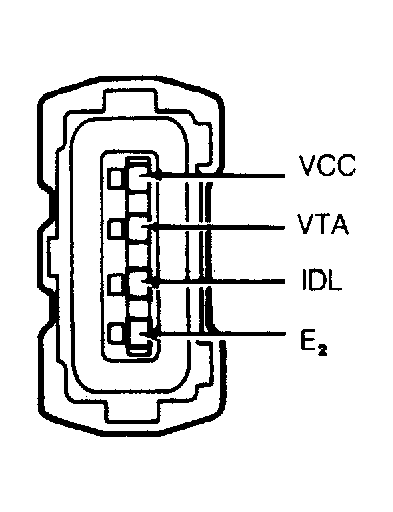 Courtesy of © TOYOTA, LICENSE AGREEMENT TMS1002
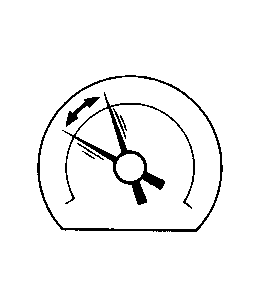 Courtesy of © TOYOTA, LICENSE AGREEMENT TMS1002
 FUEL-CUT & FUEL RETURN RPM
| Model Type |
Fuel-Cut Engine RPM |
Fuel Return Engine RPM |
| Pickup (Turbo) |
1800 |
1600 |
| Pickup (Non-Turbo) & 4Runner 4-Cyl. & V6 |
1300 |
1000 |