Fuel System Pressure Test
NOTE:
Before testing fuel pressure, check all fuel delivery and return lines for leaks.
- Ensure battery is fully charged. Turn ignition off. Disconnect negative battery cable. On all except Pickup and 4Runner with 3VZ-E, place container or shop towel under cold start injector. Disconnect cold start injector (if equipped) and slowly loosen cold start injector union bolt to relieve fuel pressure. Remove union bolt and 2 gaskets.
- Install fuel pressure gauge to cold start injector delivery pipe. See Fig 1. Wipe off excess fuel. On Pickup and 4Runner with 3VZ-E, attach gauge to No. 3 fuel pipe using same method. See Fig 1.
- Install jumper wire between engine check connector FP and +B pins. See Figure. See ENGINE CHECK CONNECTOR LOCATION table.
- Reconnect negative battery cable and turn ignition on, with engine off. Measure fuel pressure. Fuel pressure should be same as unregulated pressure. See appropriate FUEL PUMP PERFORMANCE table.
- If fuel pressure is high, replace fuel pressure regulator. If fuel pressure is low, check the following:
- Fuel hoses and connections.
- Fuel pump.
- Fuel filter.
- Fuel pressure regulator.
- Remove jumper wire installed in step 3). Start engine and run for 2 minutes. Disconnect vacuum sensing hose from fuel pressure regulator and plug hose end. Fuel pressure regulator is mounted on fuel rail.
NOTE:
On Camry (2VZ-FE), Celica (3S-GTE), Corolla (4A-GE), Land Cruiser, Pickup, Supra Turbo and 4Runner allow engine to idle for 2 minutes to stabilize fuel pressure. These models have a fuel pressure-up system which temporarily increases fuel pressure after a hot start.
- Measure unregulated fuel pressure at idle speed. See appropriate FUEL PUMP PERFORMANCE table.
- With engine still idling, reconnect fuel pressure regulator vacuum hose. Measure regulated pressure at idle.
- If regulated pressure was not as specified, check vacuum sensing hose to fuel pressure regulator. On models so equipped, check fuel pressure-up system. Refer to the I - EFI SYS/COMP TESTS article in this section.
- Stop engine. Note fuel pressure. Leave fuel pressure gauge attached to engine for at least 5 minutes.
- Residual fuel pressure after 5 minutes should be at least 21 psi (1.5 kg/cm2
). If pressure is not as specified, check for leaking injectors, fuel pressure regulator or bad check valve in fuel pump.
- Relieve fuel system pressure. Remove fuel pressure gauge. Install cold start injector. Run engine and check for fuel leaks.
NOTE:
For more information on checking fuel injectors and other fuel sub-systems, see the I - EFI SYS/COMP TESTS article in this section.
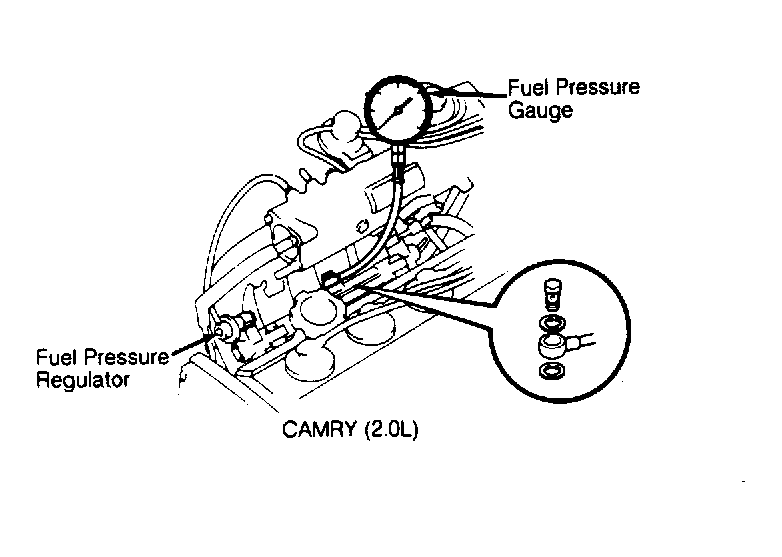 Courtesy of © TOYOTA, LICENSE AGREEMENT TMS1002
 Courtesy of © TOYOTA, LICENSE AGREEMENT TMS1002
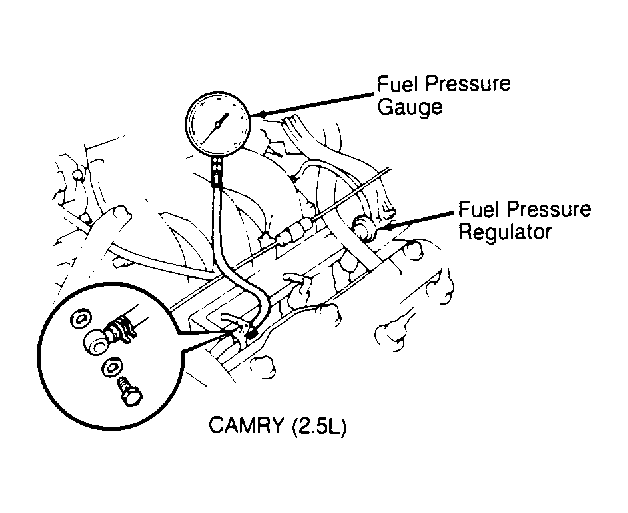 Courtesy of © TOYOTA, LICENSE AGREEMENT TMS1002
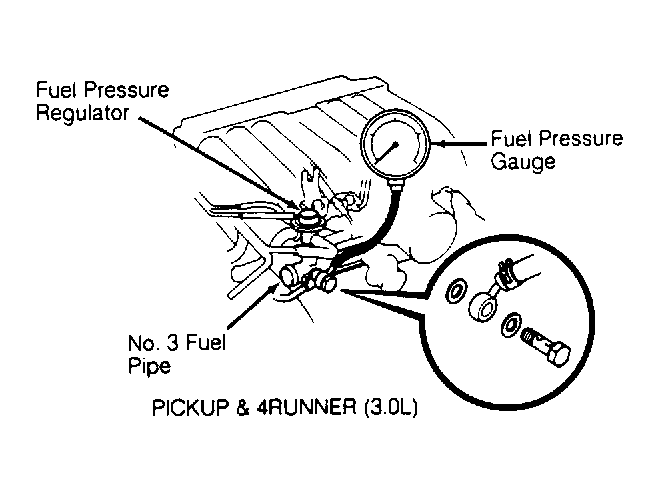 Courtesy of © TOYOTA, LICENSE AGREEMENT TMS1002
 4-CYLINDER FUEL PUMP PERFORMANCE
| Application |
Unregulated psi (kg/cm2
) |
Regulated psi (kg/cm2
) |
| Camry & Tercel |
38-44 (2.7-3.1) |
33-37 (2.3-2.6) |
| Celica |
| Non-Turbo |
38-44 (2.7-3.1) |
33-37 (2.3-2.6) |
| Turbo |
33-38 (2.3-2.7) |
27-31 (1.9-2.2) |
| Corolla |
38-44 (2.7-3.1) |
30-37 (2.1-2.6) |
| Pickup & 4Runner |
38-44 (2.7-3.1) |
33-37 (2.3-2.6) |
6-CYLINDER FUEL PUMP PERFORMANCE
| Application |
Unregulated psi (kg/cm2
) |
Regulated psi (kg/cm2
) |
| Cressida |
38-44 (2.7-3.1) |
33-37 (2.3-2.6) |
| Land Cruiser |
37-46 (2.6-3.2) |
33-37 (2.3-2.6) |
| Supra |
| Non-Turbo |
38-44 (2.7-3.1) |
30-37 (2.3-2.6) |
| Turbo |
33-40 (2.3-2.8) |
23-30 (1.6-2.1) |
V6 FUEL PUMP PERFORMANCE
| Application |
Unregulated psi (kg/cm2
) |
Regulated psi (kg/cm2
) |
| All Models |
38-44 (2.7-3.1) |
33-37 (2.3-2.6) |