Idle-Up System Test - 2WD (4A-GE)
- Engine should be at normal operating temperature and all accessories off. Connect tachometer to engine. See ADJUSTMENTS
for tachometer attachment points.
- Start engine. After 10 seconds, engine RPM should drop about 100 RPM. With engine idling, watch tachometer for engine speed increase of about 100 RPM as each of the following electrical loads are switched on for a few seconds, and turned off.
- Brake Light Switch
- Defogger Switch
- Engine Cooling Fan
- Headlight Switch
- Heater Blower Switch
- If any switch or component does not cause an increase of about 100 RPM, check for open circuit between switch and idle-up vacuum switching valve. If RPM does not increase with any switch turned on or components activated, check vacuum switching valve and circuit.
- To check circuit, ensure all accessories are off. Check for battery voltage at vacuum switching valve connector during cranking and for 10 seconds after starting.
- To check vacuum switching valve, remove vacuum switching valve from vehicle. The idle-up vacuum switching valve is located on the left shock tower. Air should not flow through vacuum switching valve ports. Connect 12 volts to one wire terminal on valve and ground other terminal. Air should flow through ports. See Fig 1.
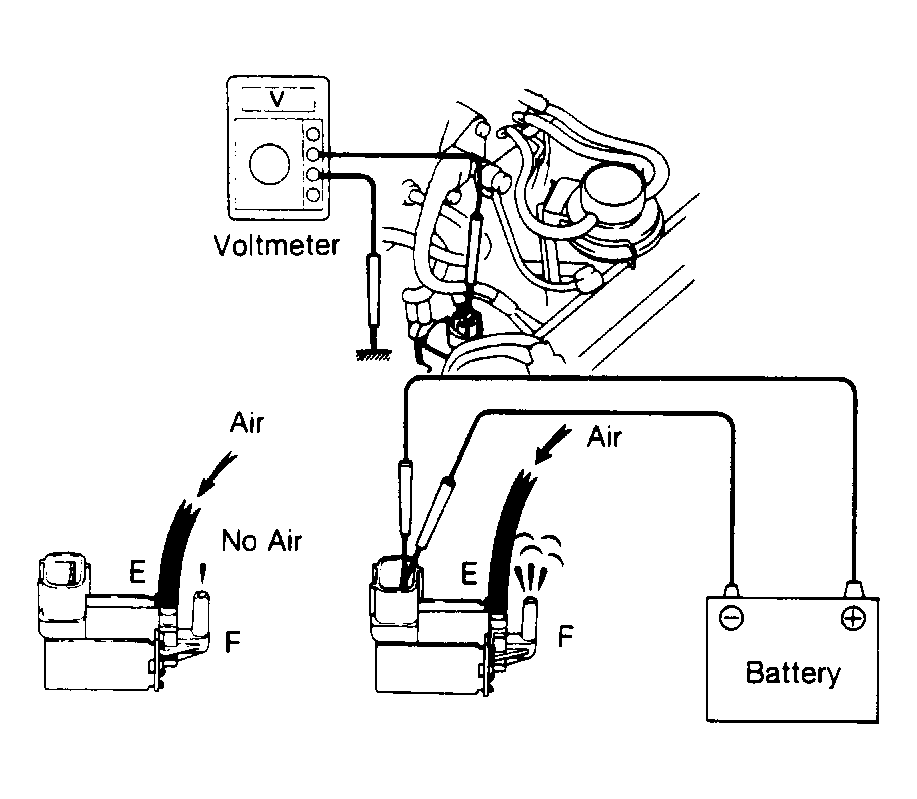 Courtesy of © TOYOTA, LICENSE AGREEMENT TMS1002