2-4-1 (EGR Flow Incorrect)
- EGR temperature sensor signal should change when signal from ECU is sent to vacuum controller. If signal does not change, ECU registers a fault and sets code. Possible faults include:
- Break in signal lead.
- No voltage at EGR controller.
- Faulty EGR controller.
- Poor vacuum supply to EGR valve (White vacuum hose).
- Faulty Yellow vacuum hose.
- EGR valve does not open.
- To check operation of EGR vacuum controller, start and run engine so it reaches normal operating temperature. Put hand on EGR controller and increase engine speed several times over 2000 RPM. If EGR controller produces a ticking sound, go to next step. If EGR controller is not ticking, go to step 9) and check voltage supply to EGR controller.
- Ensure engine is still running. Carefully disconnect White vacuum hose from EGR controller and check for vacuum. If vacuum is not present, check White vacuum hose between controller and intake manifold. If vacuum is present, go to next step and check vacuum from EGR controller.
- Turn ignition off. Reconnect White vacuum hose to EGR controller. Carefully disconnect Yellow vacuum hose from EGR controller. Connect vacuum gauge to EGR controller. Start engine. Increase engine speed repeatedly. If gauge pointer moves rapidly, verifying EGR controller is passing vacuum, go to step 6) and check EGR valve. If gauge does not move rapidly, go to next step.
- Turn ignition off. Carefully disconnect Yellow vacuum hose at both ends. Check Yellow vacuum hose for blockage. If hose is okay, repeat test using new EGR controller. If hose is blocked, repeat test using new vacuum hose.
- To check EGR valve, turn ignition off. Reconnect Yellow vacuum hose to EGR valve. Connect vacuum pump to Yellow vacuum hose at EGR controller. Start engine. Increase vacuum to 9 in. Hg. (30 kPa). Ensure EGR valve retains vacuum (engine will run rough).
- If engine runs rough when vacuum pump shows vacuum but vacuum pump loses vacuum, check Yellow vacuum hose for leakage. If hose is okay, retest using new EGR valve. Clear codes. If engine idles evenly when vacuum pump shows vacuum and vacuum pump maintains vacuum, ensure EGR pipe is not blocked. If pipe is not blocked, repeat test using new EGR valve. Clear codes.
- If engine idles rough when vacuum pump shows vacuum and vacuum pump maintains vacuum, fault is intermittent. Check vacuum controller connector. If connector is okay, check Green/Brown wire between EGR controller terminal No. 1 and ignition ECU terminal No. 27 for intermittent short to voltage or ground.
- If EGR controller was not ticking in step 2), check voltage at EGR controller. Turn ignition on. Disconnect EGR controller connector. Connect voltmeter between EGR controller connector terminal No. 2 and ground. See Fig 1
. If voltmeter indicates battery voltage, go to next step and check signal lead. If no voltage is present, check for open circuit in Green wire between EGR controller terminal No. 2 and main relay terminal No. 3. Clear codes.
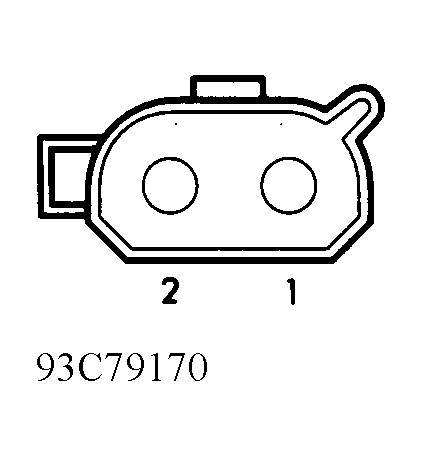 Courtesy of VOLVO CARS OF NORTH AMERICA.
- To check signal lead, turn ignition on. Disconnect EGR controller connector. Connect voltmeter between wiring side of EGR controller terminals No. 1 and 2. See Fig 1
. If battery voltage is not present, check for open circuit or short to voltage in Green/Brown wire between EGR controller terminal No. 1 and ignition ECU terminal No. 27. Clear codes. If battery voltage is present, go to next step.
- To check EGR controller resistance, turn ignition off. Disconnect EGR controller connector. Connect an ohmmeter between EGR controller terminals. See Fig 1
. If ohmmeter shows 75-95 ohms at 68°F (20°C), check EGR controller connections for oxidation. Clear codes. If ohmmeter does not show 75-95 ohms at 68°F (20°C), repeat test using new EGR controller. Clear codes.