Knock Sensor: Description and Operation
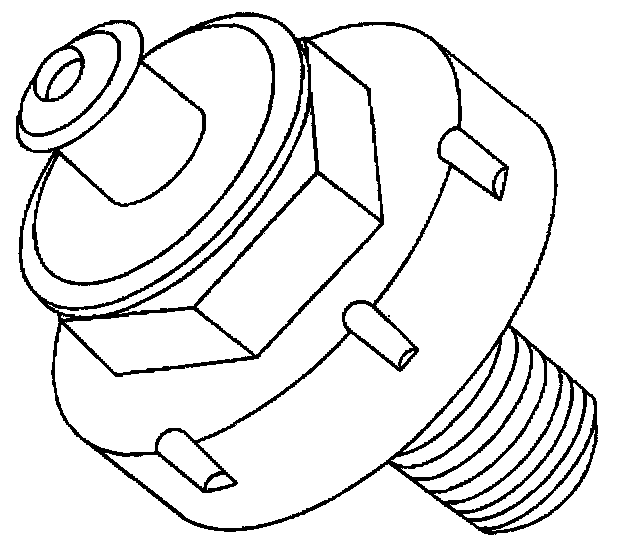
PURPOSE
Varying octane levels in today's gasoline can cause detonation in an engine. This detonation is sometimes called a spark knock.
All engines use a Knock Sensor (KS) system with a knock sensor. The KS system reduces spark knock in the engine. This allows the engine to have maximum spark advance for improved driveability and fuel economy.
OPERATION
A Vehicle Control Module (VCM) is used in conjunction with one knock sensor in order to control detonation. On a VCM application no KS module will be found as it is internal to the control module.
A 5 volt reference is applied to the knock sensor which has an internal resistance of about 100,000 ohms. This resistance will lower the applied voltage to about half or 2.5 volts. When a knock is present, a small AC voltage is produced by the knock sensor and transmitted to the control module riding on top of the already existing 2.5 volts. An AC voltage monitor inside the control module will detect the knock and trigger the control module to start retarding the spark incrementally.