Test NTC-3: Checking EGR System
- Ensure ignition is off. Disconnect vacuum supply hose at EGR solenoid. The EGR solenoid is located on top of EGR backpressure transducer which contains vacuum hose to EGR valve. See Fig 1
.
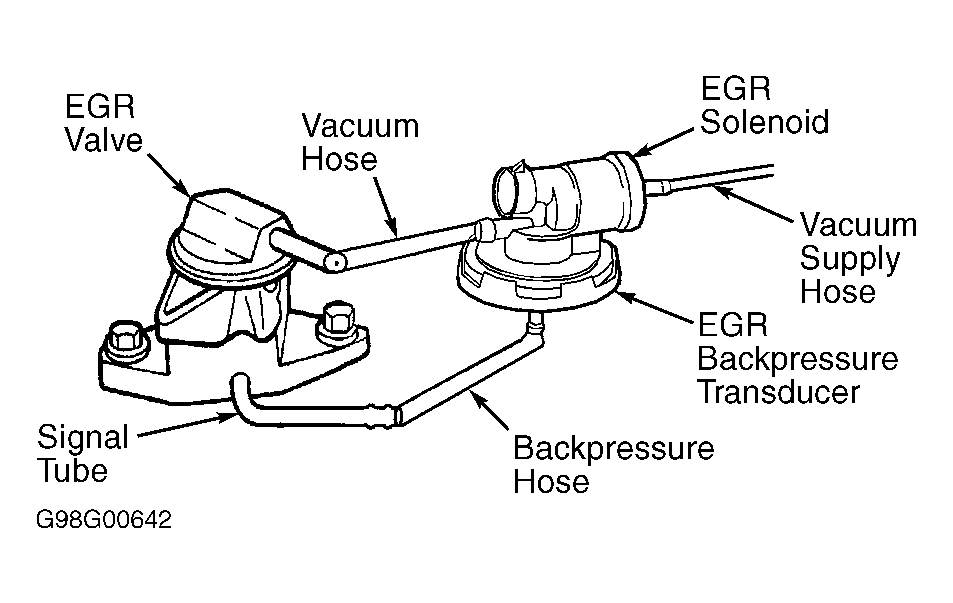 Courtesy of DAIMLERCHRYSLER CORPORATION
- Install vacuum gauge on disconnected vacuum supply hose. Start engine and note vacuum reading with engine idling. If vacuum is more than 10 in. Hg at idle, go to next step. If vacuum is 10 in. Hg or less at idle, go to step 9
.
- Shut engine off. Disconnect vacuum gauge from vacuum supply hose. Reinstall vacuum supply hose on EGR solenoid. Disconnect backpressure hose from bottom of EGR backpressure transducer. Place cap on fitting for vacuum hose on bottom of EGR backpressure transducer. Disconnect vacuum hose from top of EGR valve.
- Start engine and allow engine to idle. With engine idling, using vacuum pump, slowly apply vacuum to EGR valve while listening for a change in the engine speed. If engine speed changes, go to next step. If engine speed does not change, replace EGR valve assembly. Perform TEST VER-2A
.
- Shut engine off. Disconnect backpressure hose from signal tube at base of EGR valve. See Fig 1
.
- Using shop air, apply 20 psi (1.4 kg/cm2
) air pressure on signal tube at base of EGR valve. Open and close throttle while listening for a tone change. If tone does not change, go to next step. If tone changes, replace EGR valve assembly. Perform TEST VER-2A
.
- Disconnect vacuum hose from top of EGR valve. Install vacuum gauge on disconnected vacuum hose. Start engine and maintain engine speed slightly above idle. Disconnect EGR solenoid connector while observing vacuum gauge. If vacuum is more than 3 in. Hg, go to next step. If vacuum is 3 in. Hg or less, replace EGR valve assembly. Perform TEST VER-2A
.
- Shut engine off. Disconnect backpressure hose from bottom of EGR backpressure transducer and place cap on fitting for vacuum hose on bottom of EGR backpressure transducer if not previously done. Using vacuum pump, apply 10 in. Hg of vacuum to EGR valve. Vacuum should hold for at least 30 seconds. If vacuum is maintained for 30 seconds, test is complete. If vacuum cannot be maintained for 30 seconds, replace EGR valve assembly. Perform TEST VER-2A
.
- Shut engine off. Disconnect vacuum supply hose from intake manifold. Connect vacuum gauge to intake manifold. Start engine and allow engine to idle. Note vacuum reading with engine idling. If vacuum is more than 10 in. Hg at idle, repair restricted or leaking vacuum supply hose to EGR solenoid. Perform TEST VER-2A
. If vacuum is 10 in. Hg or less at idle, repair restricted vacuum supply passage on intake manifold. Perform TEST VER-2A
.