EVAP Emission Control System Operation
- Disconnect purge control vacuum hose from top of EVAP canister. This hose fits between check valve and the EVAP canister. Check valve is located near EVAP canister. See Fig 1
.
- Install Purge Control Flow Indicator (MB991700) between EVAP canister and the disconnected purge control vacuum hose. Start engine and warm engine until coolant temperature is 176-203°F (80-95°C).
- Ensure all accessories are off. Apply parking brake. Place transaxle in Park on A/T models or Neutral on M/T models.
- Ensure engine has been idling for at least 3 minutes. Apply brakes several times and note purge flow volume on purge flow indicator. Purge flow volume should be momentarily 20 cc per second or more than 2.5 Standard Cubic Feet per Hour (SCFH).
- If purge flow volume is within specification, go to step 7). If purge flow volume is less than specified, disconnect purge control vacuum hose from EVAP canister and recheck purge flow volume.
- If purge flow volume is now with specification, replace EVAP canister. Go to next step. If purge flow volume is still less than specified, check purge port vacuum supply. If vacuum supply is okay, check for restricted or leaking purge control vacuum hose, defective EVAP purge solenoid and defective purge control valve.
- Shut engine off. Remove purge control flow indicator and reconnect purge control vacuum hose at EVAP canister.
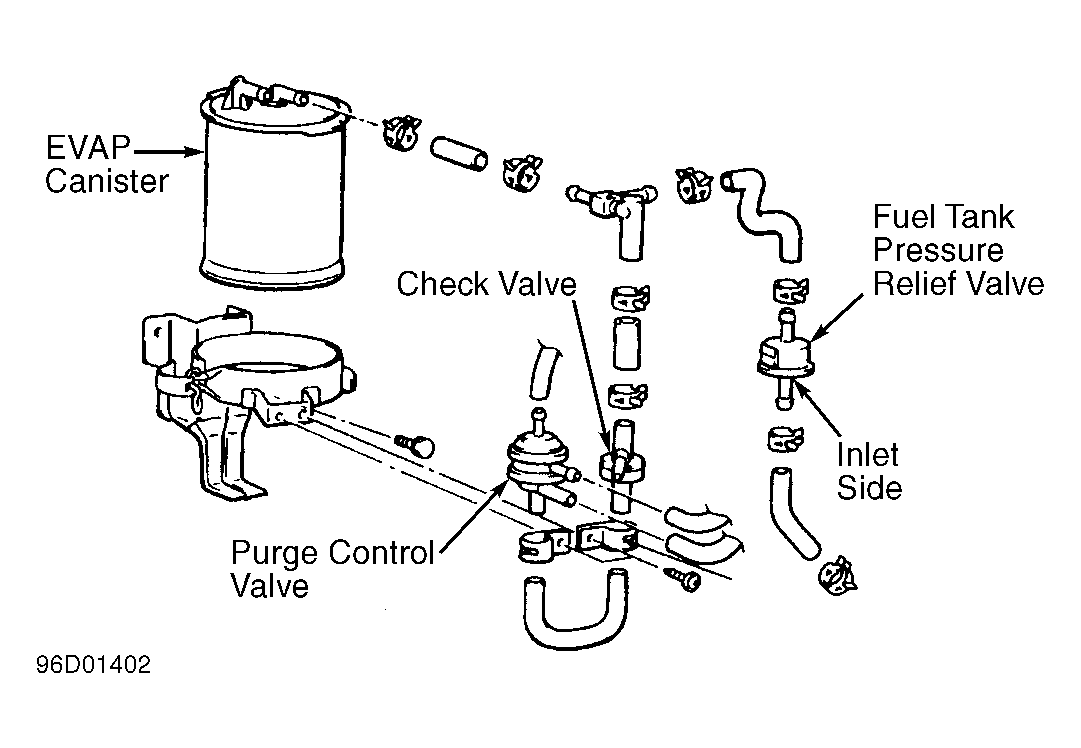 Courtesy of CHRYSLER CORP.