Checking Fluid Level
- Using the scan tool (WDS), monitor the Transmission Fluid Temperature (TFT) using PID: TFT. Start the vehicle. Engine idle speed is approximately 650 RPM. While proceeding with this procedure, run the engine until the transmission fluid temperature is between 80-120°F (27-49°C). Move the range selector lever slowly through each gear, stopping in each position and allowing the transmission to engage.
- Place the range selector lever in the Park position. With the engine running, position the vehicle on a hoist and set it as close to level as possible. Hold the larger drain plug with a wrench and remove the small (center) fluid level indicating plug using a 3/16" Allen key.
- Install the Fluid Level & Fill Plug Adapter (307-437) into the pan. See Fig 1. Prior to filling the special tool with clean transmission fluid, make sure that the canister is clean. Fill the Fluid Transporter/Evacuator/Injector (307-D465) with clean automatic transmission fluid. See RECOMMENDED FLUIDS .
- Hang the fluid transporter/evacuator/injector under the vehicle. See Fig 2. Position it upright and close to the transmission. Connect the open end of the fluid hose from the fluid transporter/evacuator/injector to the fluid level and fill plug adapter at the bottom of the transmission fluid pan. See Fig 3.
- Apply a maximum of 30 psi (206.85 kPa) to the open end of the vacuum/pressure hose from the Rubber Tip Air Nozzle (100-D009). See Fig 4. Fluid will immediately start flowing out of the rubber tip air nozzle into the transmission fluid pan. Add one pint of transmission fluid into the fluid pan. Stop the process by releasing the air pressure and removing the air nozzle from the end of the hose.
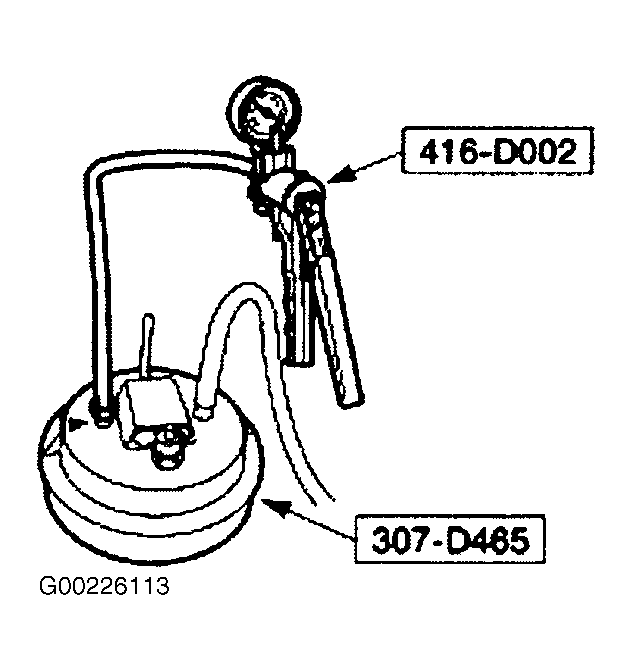
- Inspect the fluid level in the special tool. If the fluid drains back into the canister, the transmission is full. If no fluid drains back, more fluid will need to be added. Repeat step 5. Once the transmission is full, place a hand vacuum pump on the open end of the vacuum/pressure hose of the Vacuum Pump Kit (416-D002) and apply vacuum to the system. See Fig 5. This will pull out any extra fluid trapped in the system and direct it into the container.
- Allow the fluid to drain. Make sure that the fluid temperature is between 80-120°F (27-49°C). When the fluid comes out as a thin stream or drip, the fluid is at the correct level. Reinstall the small (center) fluid level indicating plug using a 3/16" Allen key.
- Check the operation of the transmission by moving the range selector lever slowly through each gear, stopping in each position and allowing the transmission to engage.
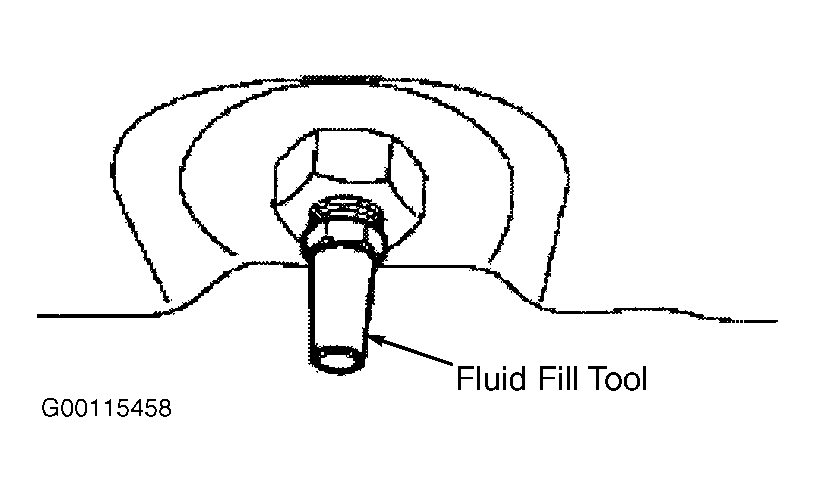 Courtesy of FORD MOTOR CO.
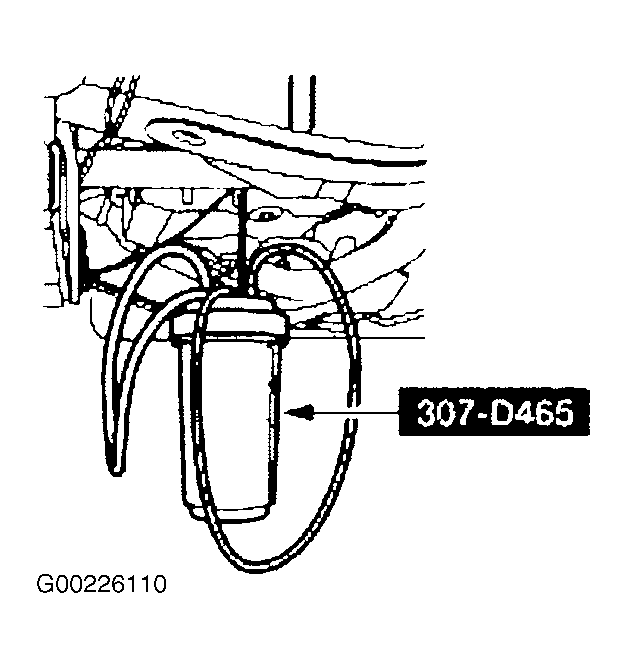 Courtesy of FORD MOTOR CO.
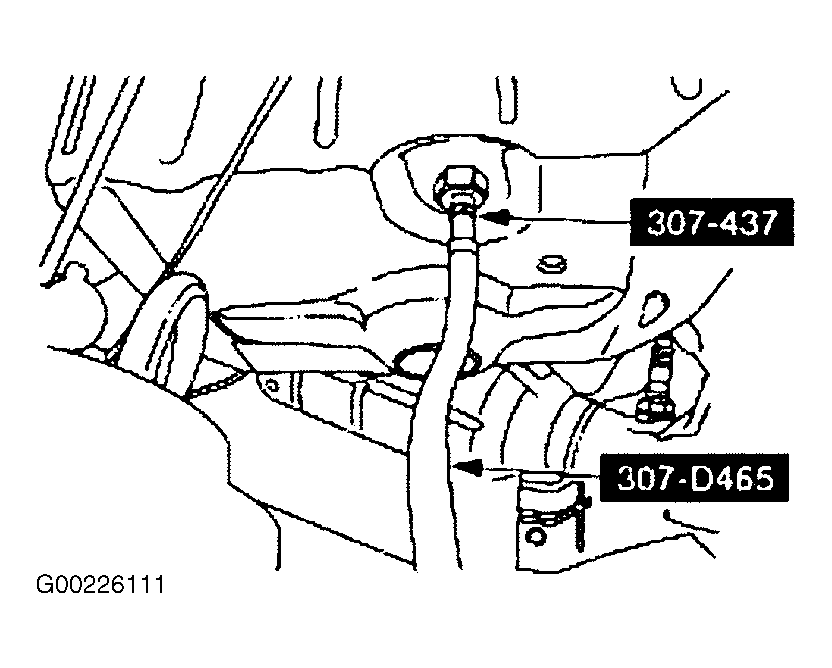 Courtesy of FORD MOTOR CO.
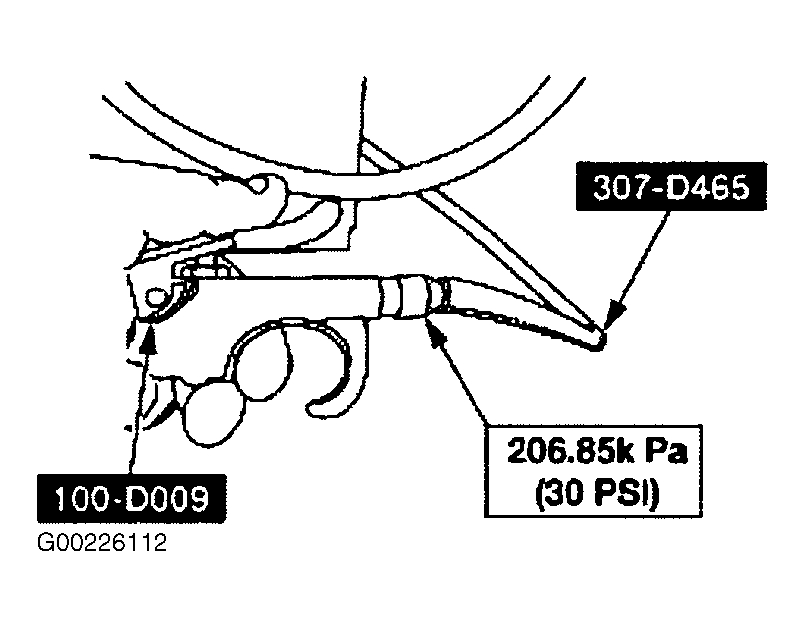 Courtesy of FORD MOTOR CO.
 Courtesy of FORD MOTOR CO.