Pinpoint Test W: The Temperature Control Does Not Operate Using The Front/Rear Auxiliary Climate Controls
- W1 CHECK THE FRONT AUXILIARY TEMPERATURE CONTROL OPERATION
- Key in ON position.
- Place the front auxiliary blower motor switch in the HI position.
- Rotate the front auxiliary temperature control switch from COOL to WARM.
- Does the front temperature control operate correctly?
- Yes
: GO to W2.
- No
: GO to W8.
- W2 TEST THE REAR AUXILIARY TEMPERATURE CONTROL OPERATION
- Place the front auxiliary blower motor switch in the REAR position.
- Place the rear auxiliary blower motor switch in the HI position.
- Rotate the rear auxiliary temperature control switch from COOL to WARM.
- Does the rear temperature control operate correctly?
- Yes
: System is OK.
- No
: GO to W3.
- W3 CHECK CIRCUIT 1127 (YE)
- Key in OFF position.
- Disconnect: Rear Auxiliary Temperature Control Switch C990d.
- Disconnect: Auxiliary Climate Control Module C3005.
- Measure the resistance between rear auxiliary temperature control switch C990d pin 2, circuit 1127 (YE) and auxiliary climate control module C3005 pin 9, circuit 1127 (YE); and between auxiliary climate control module C3005 pin 9, circuit 1127 (YE) and ground.
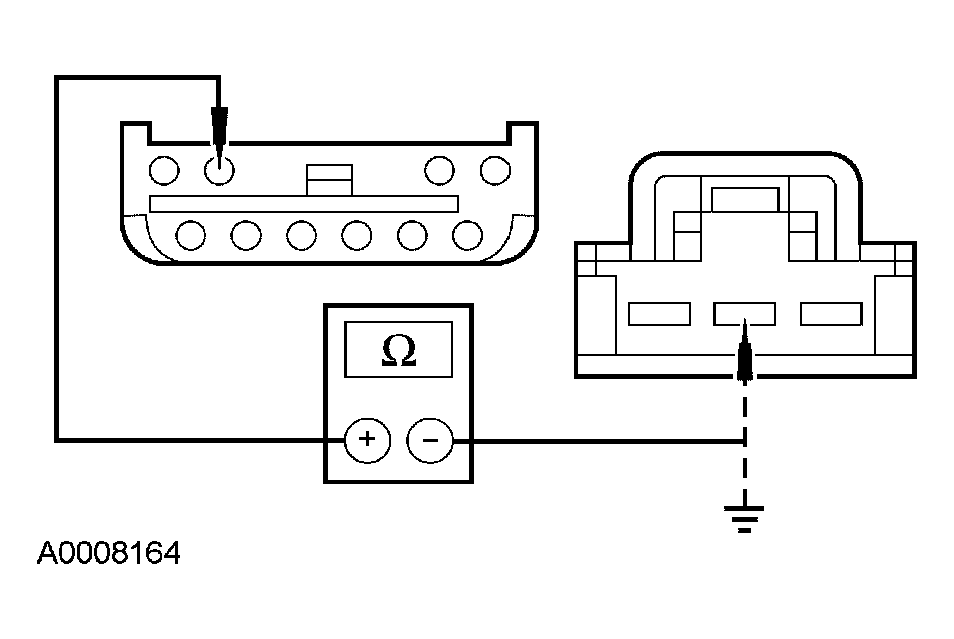 Courtesy of FORD MOTOR CO.
- Is the resistance less than 5 ohms between the rear auxiliary temperature control switch and the auxiliary climate control module, and greater than 10,000 ohms between the auxiliary climate control module and ground?
- Yes
: GO to W4.
- No
: REPAIR circuit 1127 (YE). TEST the system for normal operation.
- W4 CHECK THE REAR AUXILIARY TEMPERATURE CONTROL CIRCUIT 1124 (WH)
- Disconnect: Auxiliary Blend Door Actuator C356.
- Measure the resistance between rear auxiliary temperature control switch C990d pin 1, circuit 1124 (WH) and auxiliary blend door actuator C3004 pin 4, circuit 1124 (WH).
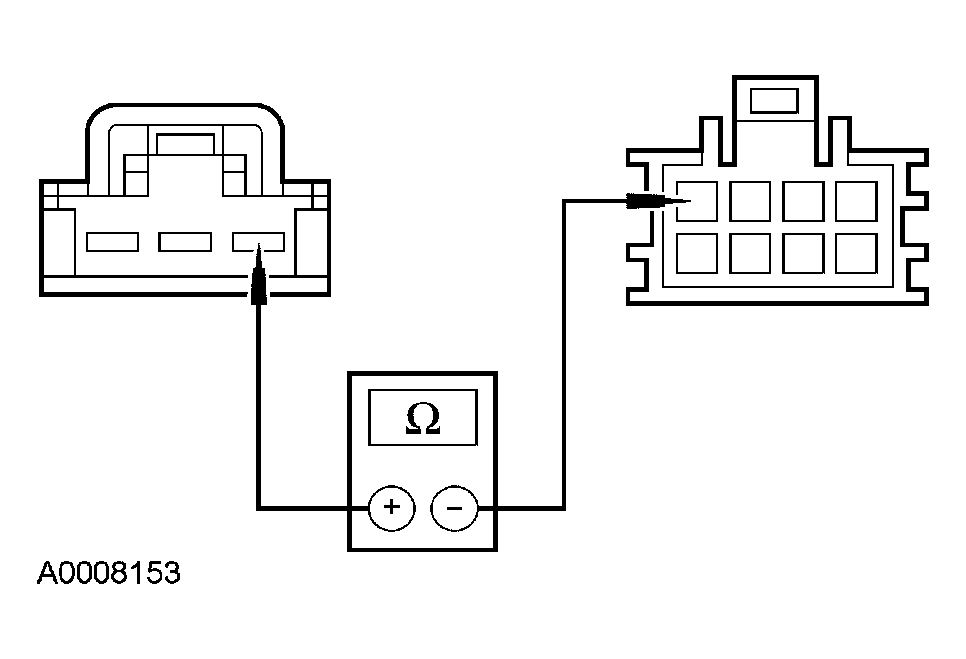 Courtesy of FORD MOTOR CO.
- Is the resistance less than 5 ohms?
- Yes
: GO to W5.
- No
: REPAIR circuit 1124 (WH). TEST the system for normal operation.
- W5 CHECK THE REAR AUXILIARY TEMPERATURE CONTROL CIRCUIT 1125 (BN)
- Measure the resistance between rear auxiliary temperature control switch C990d pin 3, circuit 1125 (BN) and auxiliary blend door actuator C3004 pin 6, circuit 1125 (BN).
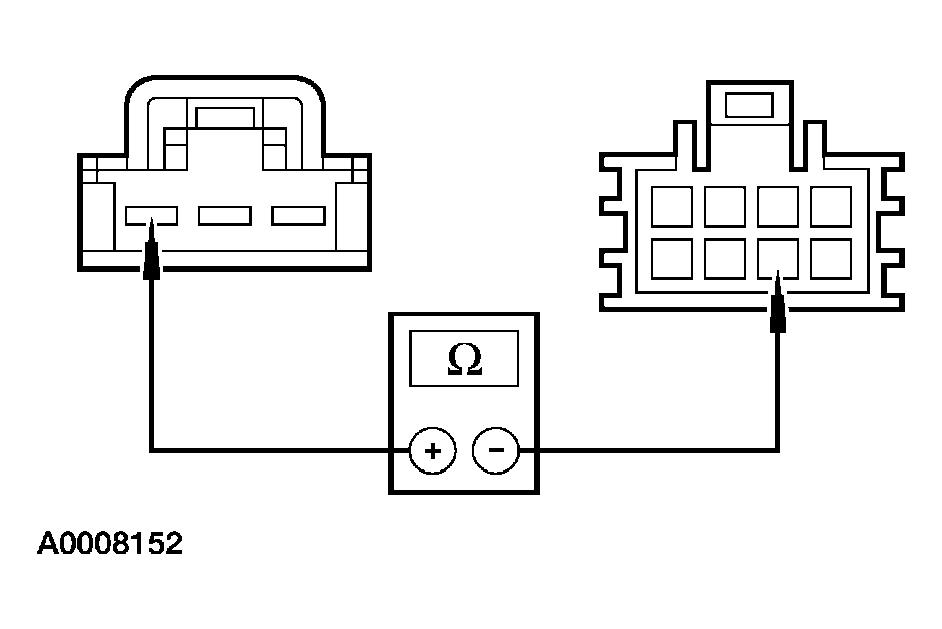 Courtesy of FORD MOTOR CO.
- Is the resistance less than 5 ohms?
- Yes
: GO to W6.
- No
: REPAIR circuit 1125 (BN). TEST the system for normal operation.
- W6 CHECK THE REAR AUXILIARY TEMPERATURE CONTROL SWITCH
- Measure the resistance between rear auxiliary temperature control switch C990d pin 1 and pin 3, component side.
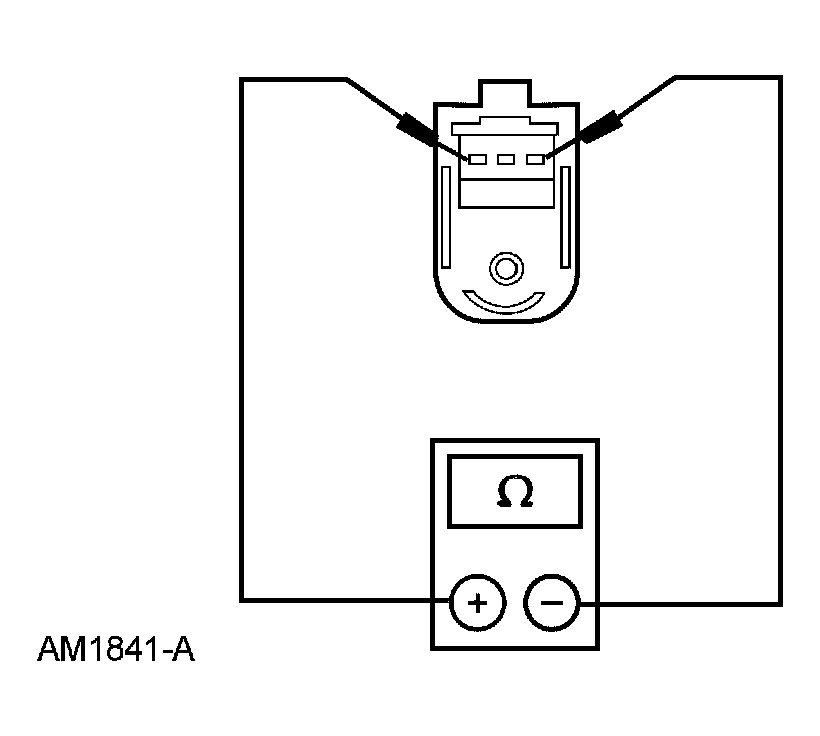 Courtesy of FORD MOTOR CO.
- Is the resistance between 4,000 and 6,000 ohms?
- Yes
: GO to W7.
- No
: INSTALL a new rear auxiliary temperature control switch. refer to AUXILIARY CLIMATE CONTROL
. TEST the system for normal operation.
- W7 CHECK THE REAR AUXILIARY TEMPERATURE CONTROL SWITCH WIPER
- Measure the resistance between the rear auxiliary temperature control switch pin 1 and pin 2, component side, while rotating the rear auxiliary temperature control switch.
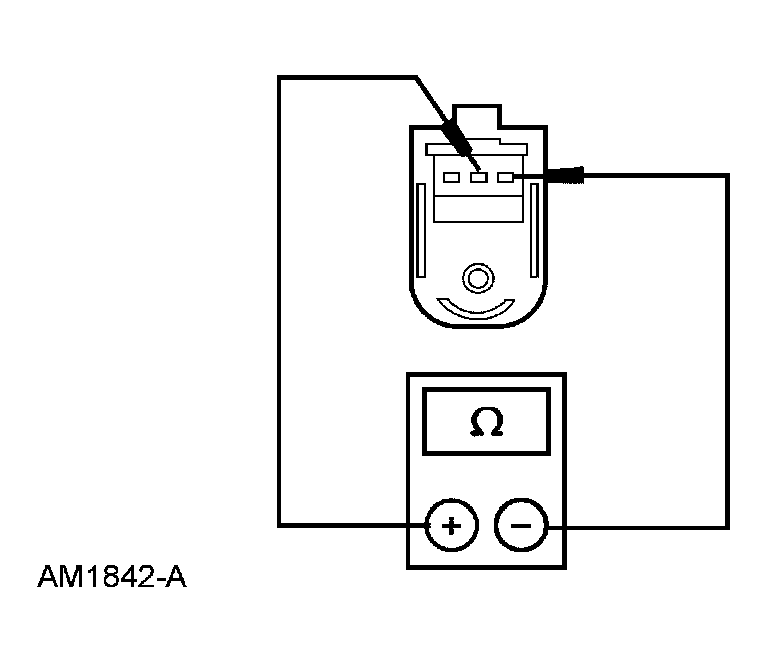 Courtesy of FORD MOTOR CO.
- Does the resistance vary?
- Yes
: INSTALL a new auxiliary climate control module. TEST the system for normal operation.
- No
: INSTALL a new rear auxiliary temperature control switch. refer to AUXILIARY CLIMATE CONTROL
. TEST the system for normal operation.
- W8 CHECK THE REAR AUXILIARY TEMPERATURE CONTROL OPERATION
- Place the front auxiliary blower motor switch in the REAR position.
- Place the rear auxiliary blower motor switch in the HI position.
- Rotate the rear auxiliary temperature control switch from COOL to WARM.
- Does the rear temperature control operate correctly?
- Yes
: GO to W9.
- No
: GO to W14.
- W9 CHECK CIRCUIT 1122 (RD)
- Key in OFF position.
- Disconnect: Front Auxiliary Temperature Control Switch C989d.
- Disconnect: Auxiliary Climate Control Module C3005.
- Measure the resistance between front auxiliary temperature control switch C989d pin 2, circuit 1122 (RD) and auxiliary climate control module C3005 pin 5, circuit 1122 (RD); and between auxiliary climate control module C3005 pin 5, circuit 1122 (RD) and ground.
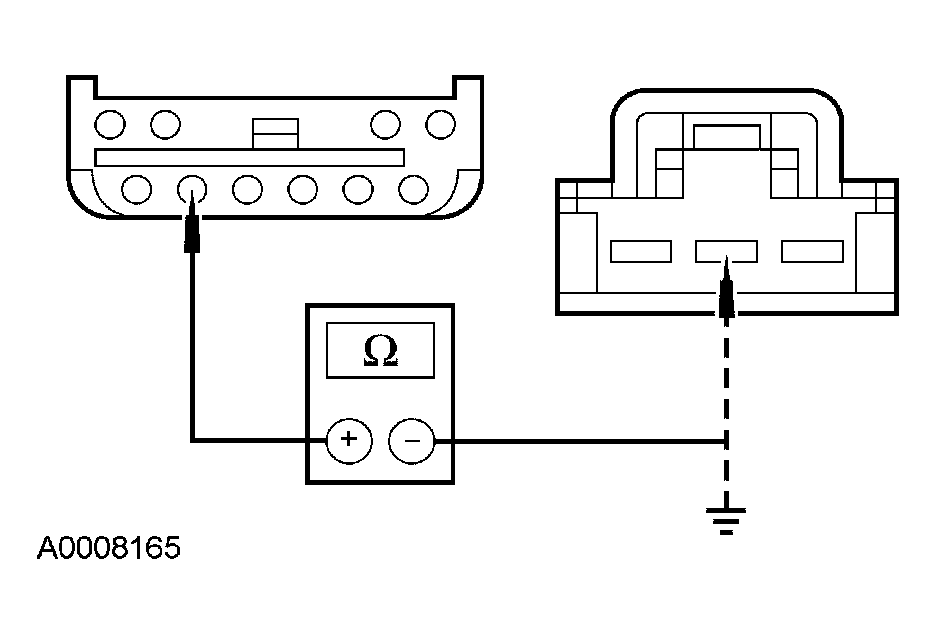 Courtesy of FORD MOTOR CO.
- Is the resistance less than 5 ohms between the front auxiliary temperature control switch and the auxiliary climate control module, and greater than 10,000 ohms between the auxiliary climate control module and ground?
- Yes
: GO to W10.
- No
: REPAIR circuit 1122 (RD). TEST the system for normal operation.
- W10 CHECK THE FRONT AUXILIARY TEMPERATURE CONTROL CIRCUIT 1124 (WH)
- Disconnect: Auxiliary Blend Door Actuator C356.
- Measure the resistance between front auxiliary temperature control switch C989d pin 1, circuit 1124 (WH) and auxiliary blend door actuator C3004 pin 4, circuit 1124 (WH).
Courtesy of FORD MOTOR CO.
- Is the resistance less than 5 ohms?
- Yes
: GO to W11.
- No
: REPAIR circuit 1124 (WH). TEST the system for normal operation.
- W11 CHECK THE FRONT AUXILIARY TEMPERATURE CONTROL CIRCUIT 1125 (BN)
- Measure the resistance between front auxiliary temperature control switch C989d pin 3, circuit 1125 (BN) and auxiliary blend door actuator C3004 pin 6, circuit 1125 (BN).
Courtesy of FORD MOTOR CO.
- Is the resistance less than 5 ohms?
- Yes
: GO to W12.
- No
: REPAIR circuit 1125 (BN). TEST the system for normal operation.
- W12 CHECK THE FRONT AUXILIARY TEMPERATURE CONTROL SWITCH
- Measure the resistance between the front auxiliary temperature control switch pin 1 and pin 3, component side.
Courtesy of FORD MOTOR CO.
- Is the resistance between 4,000 and 6,000 ohms?
- Yes
: GO to W13.
- No
: INSTALL a new front auxiliary temperature control switch. refer to AUXILIARY CLIMATE CONTROL
. TEST the system for normal operation.
- W13 CHECK THE FRONT AUXILIARY TEMPERATURE CONTROL SWITCH WIPER
- Measure the resistance between the front auxiliary temperature control switch pin 1 and pin 2, component side.
Courtesy of FORD MOTOR CO.
- Does the resistance vary?
- Yes
: INSTALL a new auxiliary climate control module. TEST the system for normal operation.
- No
: INSTALL a new front auxiliary temperature control switch. refer to AUXILIARY CLIMATE CONTROL
. TEST the system for normal operation.
- W14 CHECK THE VOLTAGE TO THE AUXILIARY BLEND DOOR ACTUATOR
- Key in OFF position.
- Disconnect: Auxiliary Blend Door Actuator C3004.
- Key in ON position.
- Measure the voltage between auxiliary blend door actuator C3004 pin 7, circuit 295 (LB/PK) and ground.
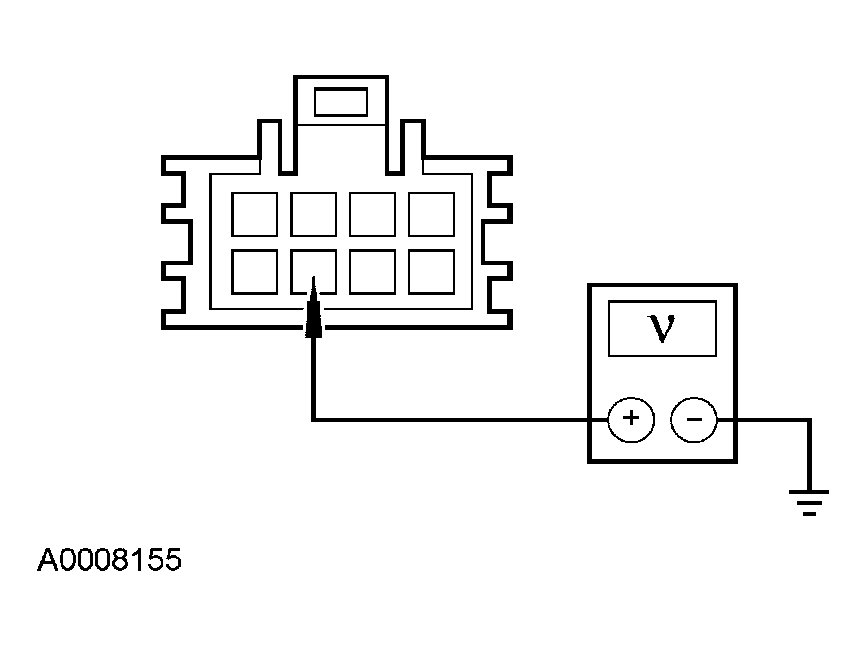 Courtesy of FORD MOTOR CO.
- Is the voltage greater than 10 volts?
- Yes
: GO to W15.
- No
: REPAIR circuit 295 (LB/PK). TEST the system for normal operation.
- W15 CHECK CIRCUIT 57 (BK)
- Key in OFF position.
- Measure the resistance between auxiliary blend door actuator C3004 pin 8, circuit 57 (BK) and ground.
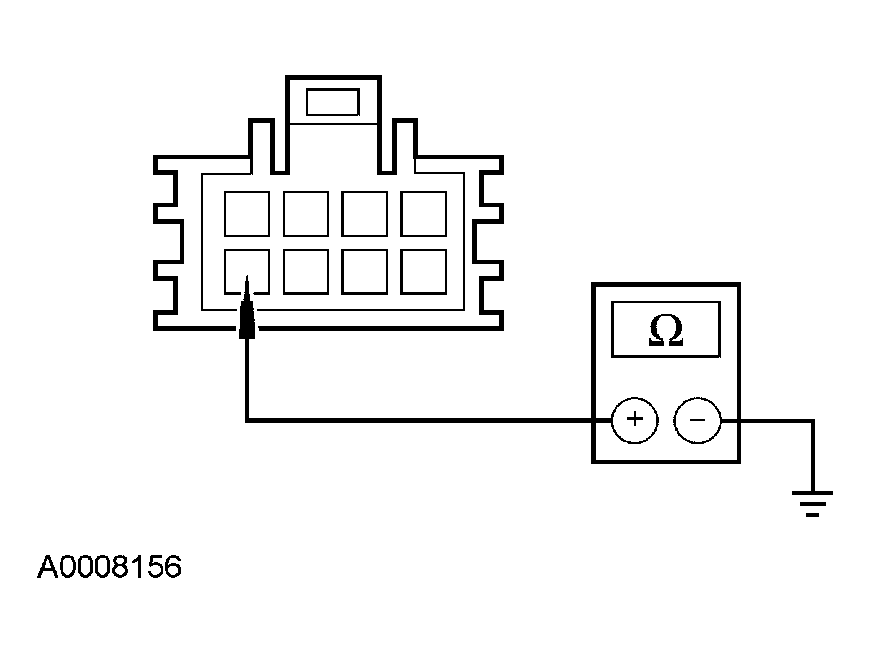 Courtesy of FORD MOTOR CO.
- Is the resistance less than 5 ohms?
- Yes
: GO to W16.
- No
: REPAIR circuit 57 (BK). TEST the system for normal operation.
- W16 CHECK CIRCUIT 1126 (LB)
- Disconnect: Auxiliary Climate Control Module C3005.
- Measure the resistance between auxiliary climate control module C3005 pin 2, circuit 1126 (LB) and auxiliary blend door actuator C3004 pin 3, circuit 1126 (LB); and between auxiliary blend door actuator C3004 pin 3, circuit 1126 (LB), and ground.
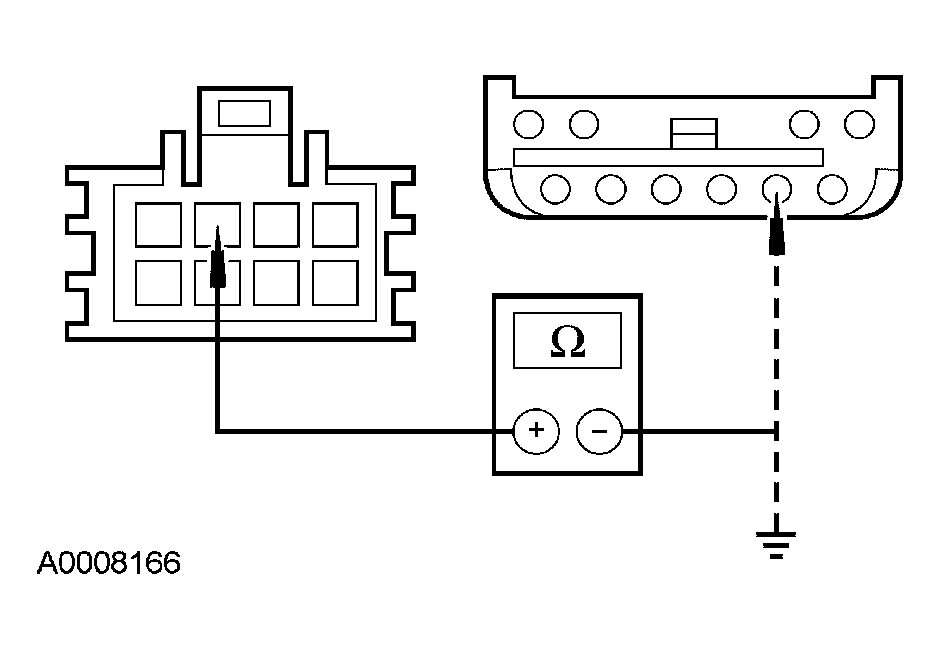 Courtesy of FORD MOTOR CO.
- Is the resistance less than 5 ohms between the auxiliary climate control module and the auxiliary blend door actuator, and greater than 10,000 ohms between the auxiliary blend door actuator and ground?
- Yes
: GO to W17.
- No
: REPAIR circuit 1126 (LB). TEST the system for normal operation.
- W17 CHECK CIRCUIT 1124 (WH)
- Disconnect: Front Auxiliary Temperature Control Switch C989d.
- Disconnect: Rear Auxiliary Temperature Control Switch C990d.
- Measure the resistance between auxiliary blend door actuator C3004 pin 4, circuit 1124 (WH) and rear auxiliary temperature control switch C990d pin 1, circuit 1124 (WH); and between auxiliary blend door actuator C3004 pin 4, circuit 1124 (WH) and ground.
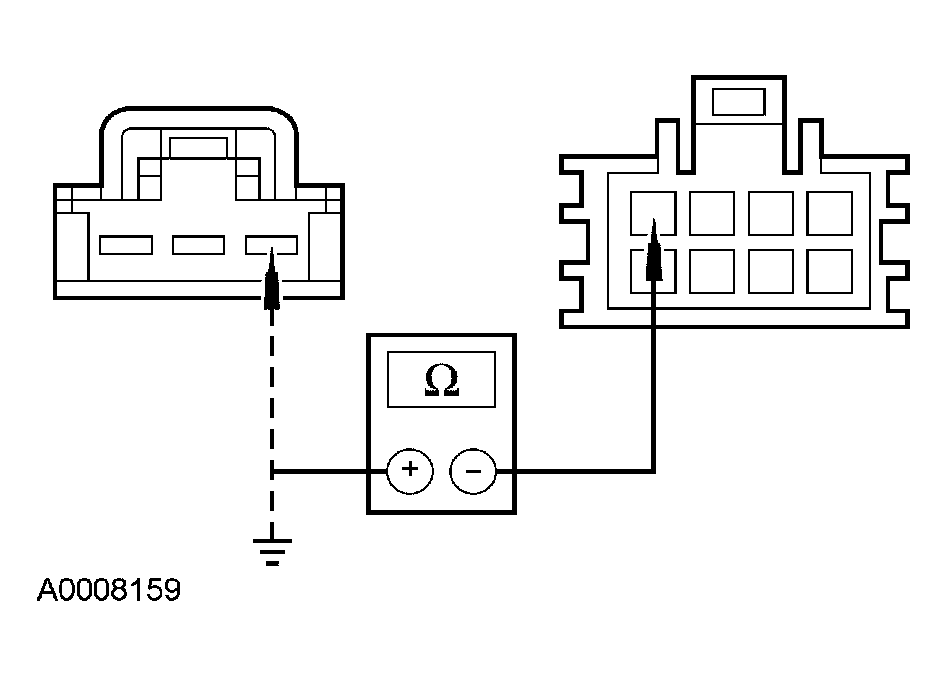 Courtesy of FORD MOTOR CO.
- Is the resistance less than 5 ohms between the auxiliary blend door actuator and the rear auxiliary temperature control switch, and greater than 10,000 ohms between the auxiliary blend door actuator and ground?
- Yes
: GO to W18.
- No
: REPAIR circuit 1124 (WH). TEST the system for normal operation.
- W18 CHECK CIRCUIT 1125 (BN)
- Measure the resistance between auxiliary blend door actuator C3004 pin 6, circuit 1125 (BN) and rear auxiliary temperature control switch C990d pin 3, circuit 1125 (BN); and between auxiliary blend door actuator C3004 pin 6, circuit 1125 (BN) and ground.
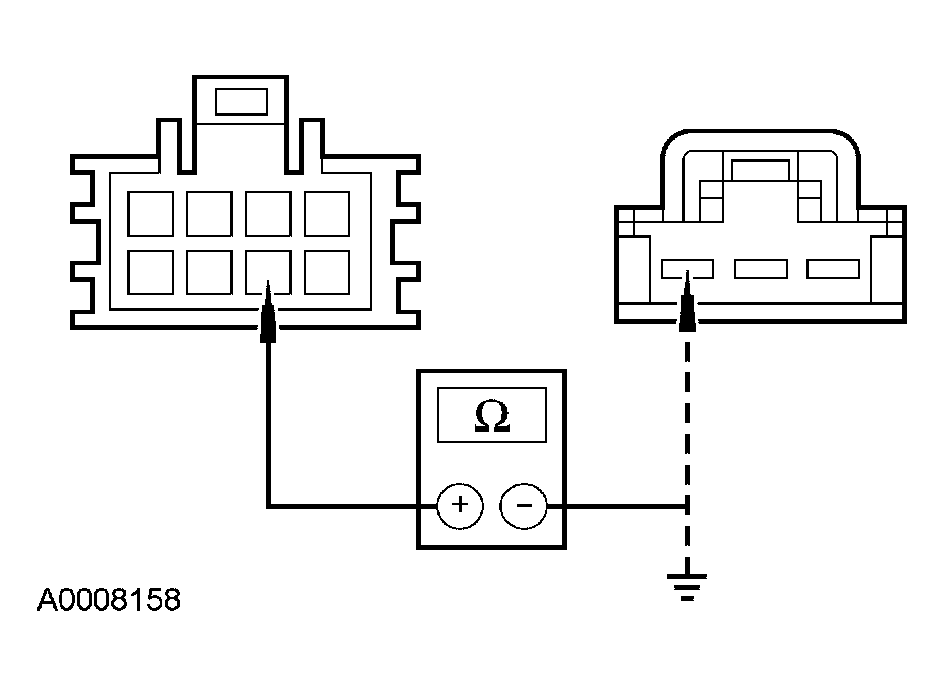 Courtesy of FORD MOTOR CO.
- Is the resistance less than 5 ohms between the auxiliary blend door actuator and the rear auxiliary temperature control switch, and greater than 10,000 ohms between the auxiliary blend door actuator and ground?
- Yes
: GO to W19.
- No
: REPAIR circuit 1125 (BN). TEST the system for normal operation.
- W19 CHECK CIRCUIT 1127 (YE) FOR A SHORT
- Measure the resistance between auxiliary climate control module C3005 pin 9, circuit 1127 (YE) and ground.
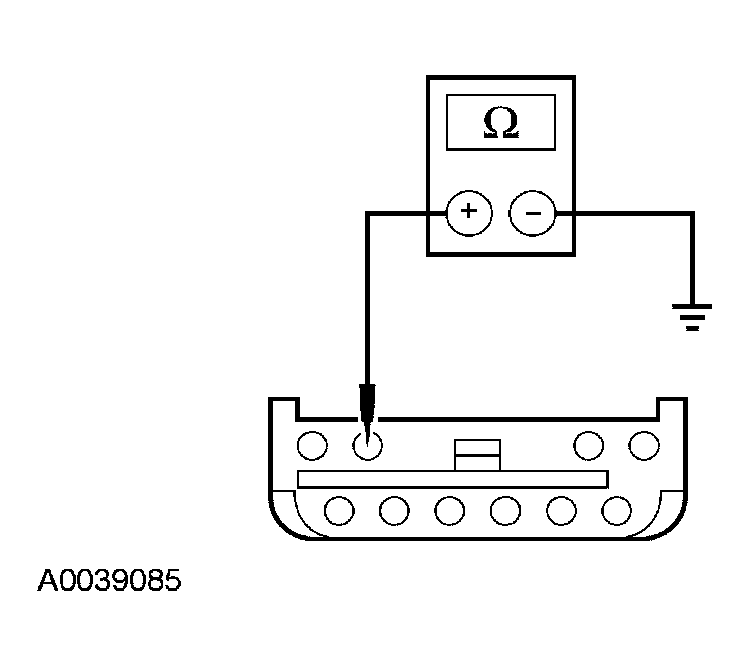 Courtesy of FORD MOTOR CO.
- Is the resistance greater than 10,000 ohms?
- Yes
: GO to W20.
- No
: REPAIR circuit 1127 (YE). TEST the system for normal operation.
- W20 CHECK CIRCUIT 1122 (RD) FOR A SHORT
- Measure the resistance between auxiliary climate control module C3005 pin 5, circuit 1122 (RD) and ground.
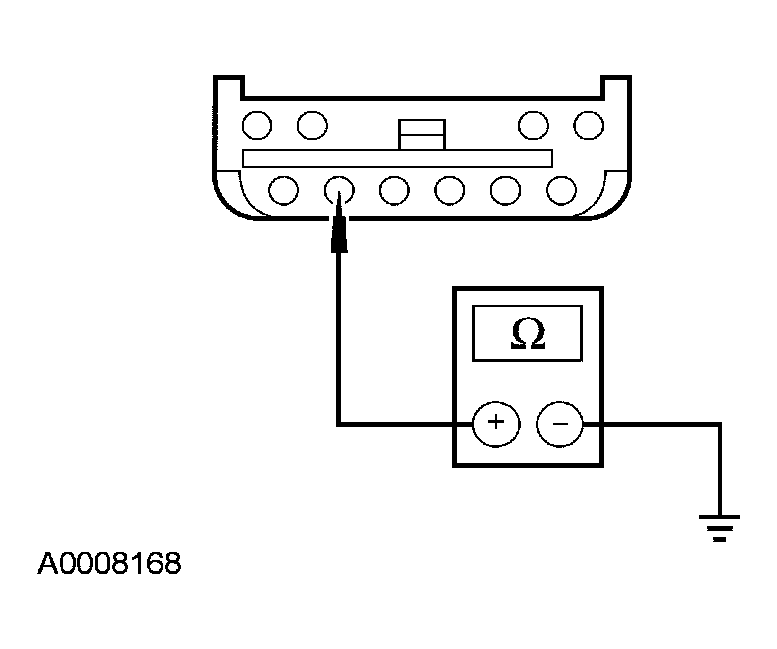 Courtesy of FORD MOTOR CO.
- Is the resistance greater than 10,000 ohms?
- Yes
: GO to W21.
- No
: REPAIR circuit 1122 (RD). TEST the system for normal operation.
- W21 CHECK THE AUXILIARY BLEND DOOR ACTUATOR - 12 VOLTS
- Connect: Auxiliary Blend Door Actuator C3004.
- Key in ON position.
- Place the front auxiliary blower motor switch in the HI position.
- Connect a fused jumper lead between auxiliary climate control module C3005 pin 8, circuit 295 (LB/PK) and pin 2, circuit 1126 (LB).
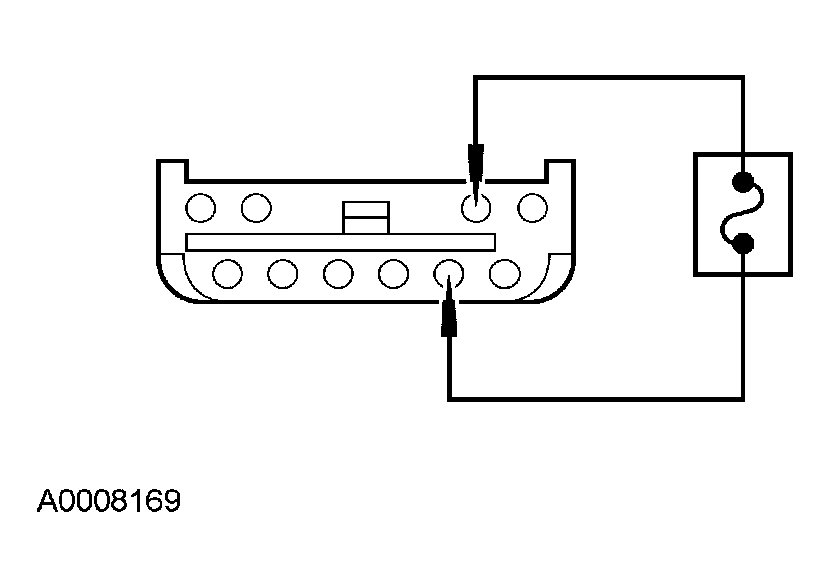 Courtesy of FORD MOTOR CO.
- Does the auxiliary blend door actuator operate?
- Yes
: INSTALL a new auxiliary climate control module. TEST the system for normal operation.
- No
: GO to W22.
- W22 CHECK THE AUXILIARY BLEND DOOR ACTUATOR - 0 VOLTS
- Connect a fused jumper lead between auxiliary climate control module C3005 pin 2, circuit 1126 (LB) and pin 6, circuit 57 (BK).
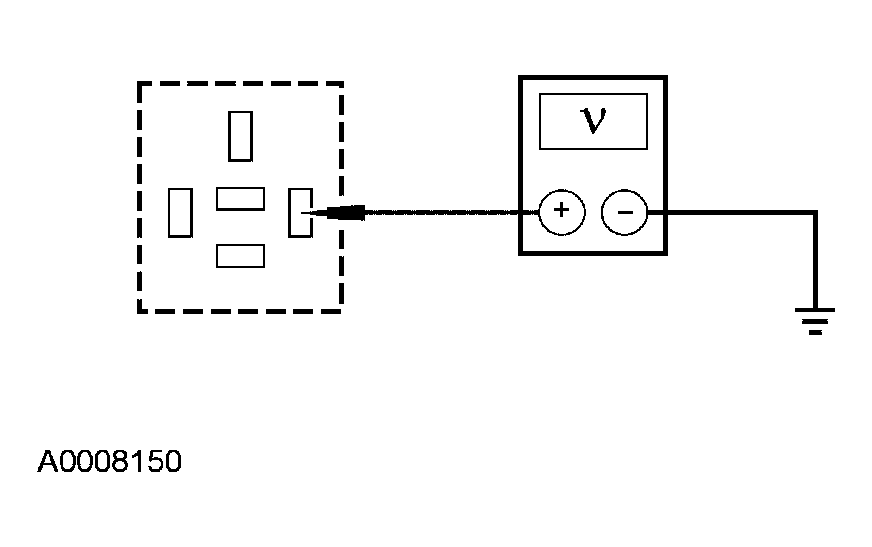 Courtesy of FORD MOTOR CO.
- Does the auxiliary blend door actuator operate?
- Yes
: INSTALL a new auxiliary climate control module. TEST the system for normal operation.
- No
: INSPECT for a binding, stuck or broken blend door or linkage. If no condition is found, INSTALL a new auxiliary blend door actuator. refer to AUXILIARY CLIMATE CONTROL
. TEST the system for normal operation.