Fuel Pressure Test: Sonata
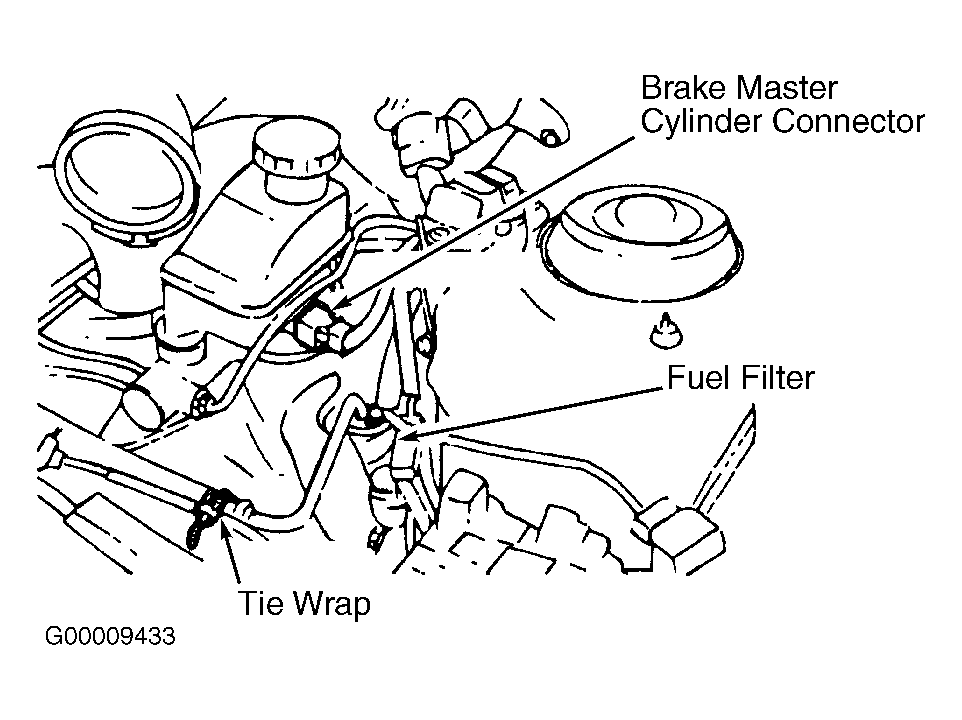
- Release fuel pressure. See FUEL PRESSURE RELEASE . Disconnect high-pressure fuel hose from fuel delivery pipe. Cover hose connection using rags to avoid spraying of fuel.
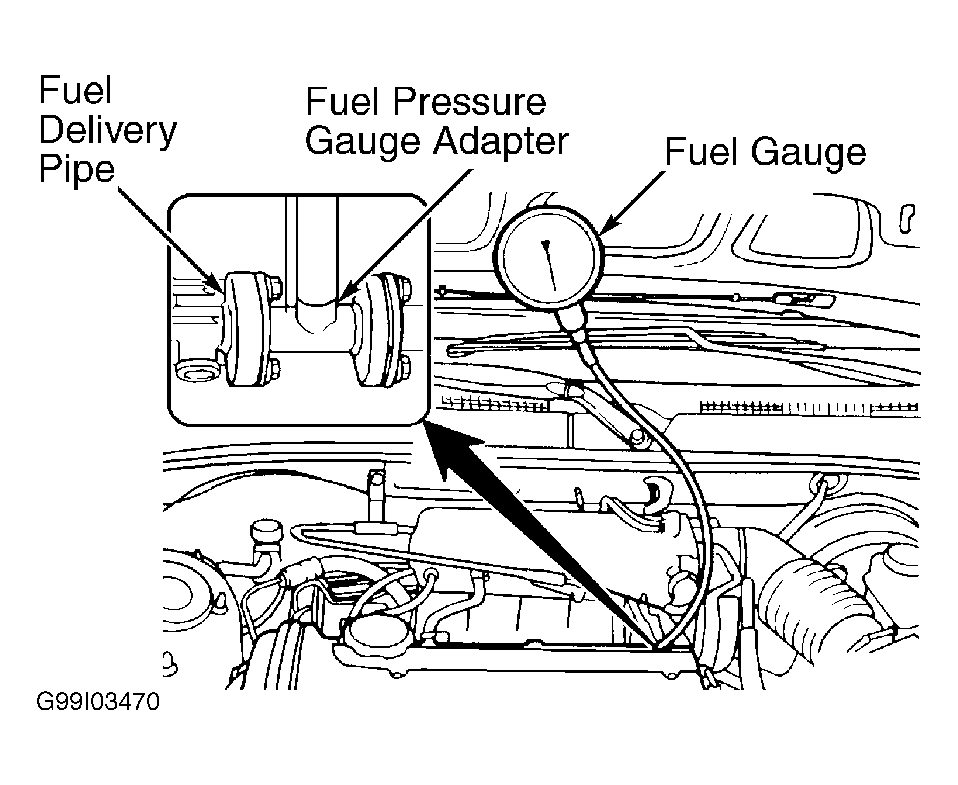
- Using Fuel Pressure Gauge Adapter (09353-38000), install fuel pressure gauge to fuel delivery pipe. See Fig 2. Tighten fuel gauge adapter bolt to 18-26 ft. lbs. (24-35 N.m). Connect negative battery cable.
- Using fuel pump check terminal connector, activate fuel pump and ensure no fuel leakage exists at pressure gauge or connection. See FUEL PUMP TEST . If no leaks are present, start engine and allow to idle.
- Disconnect vacuum hose from fuel pressure regulator, and plug hose end. Measure and record fuel pressure at idle. Reconnect vacuum hose, and again measure and record fuel pressure. See REGULATED FUEL PRESSURE (AT IDLE) table. If measurements are not within specification, go to next step. If measurements are okay, go to step 8.
- If fuel pressure is less than specified, check for a restricted fuel filter, fuel pressure regulator leaking fuel to fuel return side, leaking in-tank fuel pick-up hose, or low fuel pump discharge pressure. Replace fuel filter, fuel pressure regulator, pick-up hose or fuel pump as necessary. Recheck fuel pressure.
- If fuel pressure is greater than specified, check for sticking fuel pressure regulator or a restricted or bent fuel return hose or pipe. Repair or replace fuel hoses and/or pipe, or replace fuel pressure regulator.
- If fuel pressure does not change when regulator vacuum hose is connected and disconnected, check for restricted or damaged vacuum hose and/or manifold vacuum port, or fuel pressure regulator sticking or poorly seated valve.
- If fuel pressures are as specified, stop engine and check for a decrease in fuel pressure gauge. Fuel pressure should hold for approximately 5 minutes. If fuel pressure decreases slowly after engine is stopped, check for a leaking injector. Replace as necessary. If fuel pressure decreases immediately after engine is stopped, check valve inside fuel pump is not working. Replace fuel pump. After repairs are completed, check for fuel leaks, and recheck fuel pressure.
- After testing is completed, release fuel pressure. See FUEL PRESSURE RELEASE . Disconnect fuel pressure gauge from adapter bolt. Ensure hose connection is covered by a shop towel to prevent fuel spray. Remove adapter bolt, install NEW "O" ring, and replace with original bolt. Apply battery voltage to fuel pump drive connector terminal. See Figure. Check for fuel leaks.
REGULATED FUEL PRESSURE (AT IDLE)
| Application |
W/ Vacuum - psi (kg/cm2
) |
W/O Vacuum - psi (kg/cm2
) |
| Accent (1.5L) |
|
|
| Elantra & Tiburon (2.0L) |
37.0 (2.60) |
43.5 (3.06) |
| Sonata (2.4L & 2.5L) |
37.0 (2.60) |
46.4-49.3 (3.26-3.48) |
 Courtesy of HYUNDAI MOTOR CO.
 Courtesy of HYUNDAI MOTOR CO.