Power Steering Pressure (PSP) Switch (2.3L Only) Malfunction
DTC P1650, P1651 DETECTION CONDITION & POSSIBLE CAUSES
| DTC P1650, P1651 |
POWER STEERING PRESSURE (PSP) SWITCH (2.3L ONLY) MALFUNCTION |
| DETECTION CONDITION |
- P1650 indicates the PSP signal to the powertrain control module (PCM) is high during KOEO or PSP signal did not change state during KOER.
- P1651 indicates that the PSP signal is open or shorted. (PCM expects PSP signal to change after a calibrated number of speed transitions).
|
| POSSIBLE CAUSE |
- SIG RTN circuit open or shorted to GND
- PSP circuit open or shorted to SIG RTN
- PCM damaged
|
| HINT |
PSP Switch Description
- Monitors the hydraulic pressure within the power steering system.
- Normally closed switch that opens as the hydraulic pressure increases.
- the PCM uses the input signal from the PSP switch to compensate for additional loads on the engine by adjusting the idle rpm and preventing engine stall during parking maneuvers. It also signals the PCM to adjust the transmission electronic pressure control (EPC) pressure during the increased engine load.
|
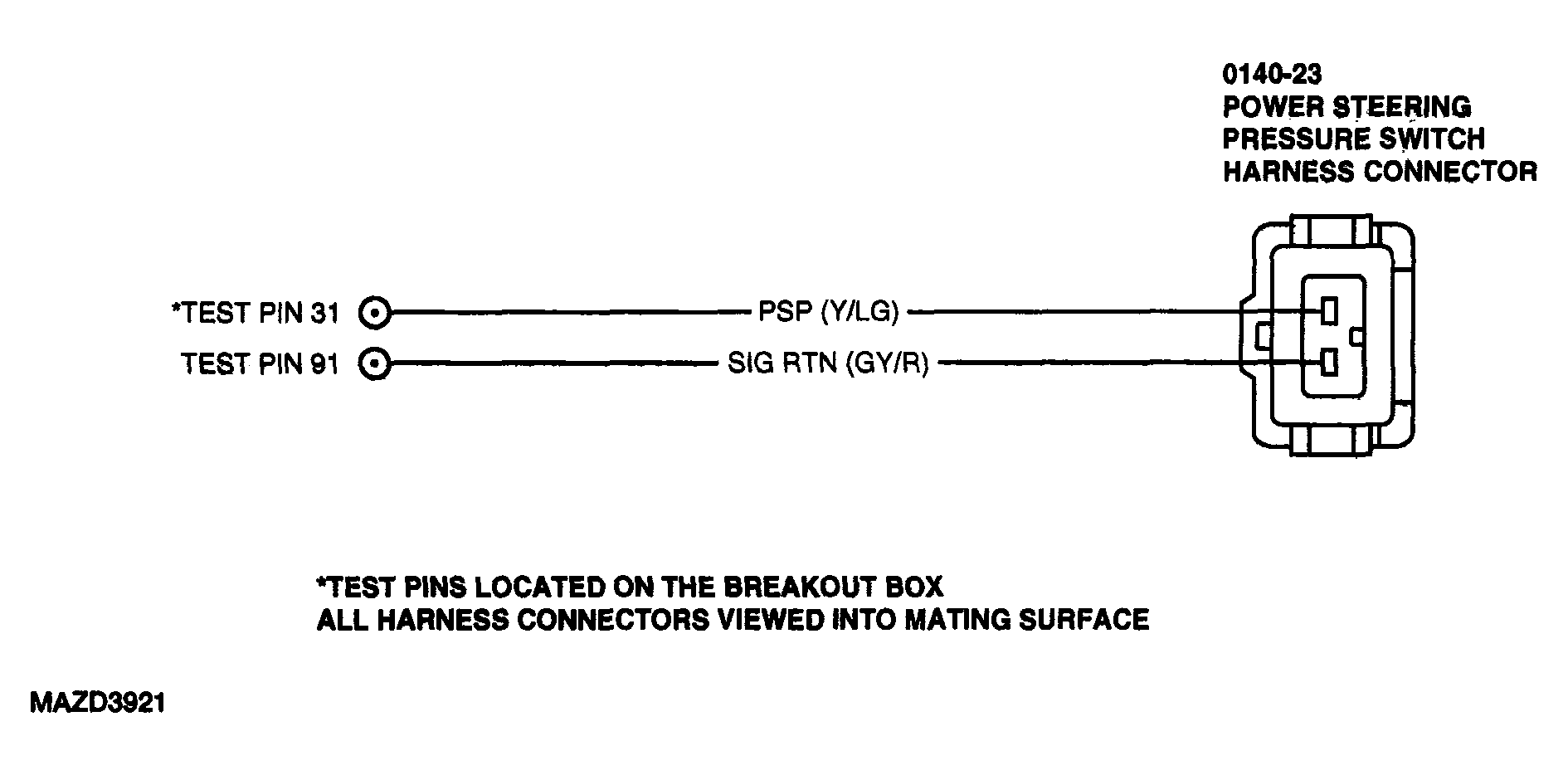 Courtesy of MAZDA MOTORS CORP. Courtesy of MAZDA MOTORS CORP.
|
DTC P1650, P1651 DIAGNOSTIC PROCEDURE
| DTC P1650, P1651 |
POWER STEERING PRESSURE (PSP) SWITCH (2.3L ONLY) MALFUNCTION |
| STEP |
INSPECTION |
ACTION |
| 1 |
NOTE:
- Steering wheel must be turned during KOER self-test.
- Was the PCM quick test performed?
|
Yes |
Go to next step. |
| No |
Perform PCM quick test. See
PCM QUICK TEST
. |
| 2 |
VERIFY ELECTRICAL FUNCTION
- Key on, engine running (KOER).
- Using WDS or equivalent tester, select Diagnostic Data Link.
- Select PCM.
- Select PID/Data Monitor and Record.
- View PSP PID while turning the steering wheel back and forth.
- Does PSP PID Indicate Low/High or High/Low?
|
Yes |
See
GENERAL PINPOINT TEST 4: INTERMITTENT
step 2. |
| No |
Go to next step. |
| 3 |
CHECK FOR PSP SWITCH CYCLING
- Disconnect PSP switch.
- Install a jumper wire across the PSP switch harness connector.
- Key on, engine running (KOER).
- Using WDS or equivalent tester, Select Diagnostic Data Link.
- Select PCM.
- Select PID/Data Monitor and Record.
- Record the PSP PID reading.
- Remove the jumper wire and record the PSP PID reading.
- Key OFF.
- Does the PSP PID change from high to low?
|
Yes |
Replace the PSP switch.
Go to step 6. |
| No |
Go to next step. |
| 4 |
CHECK CONTINUITY OF PSP CIRCUITS
- Disconnect PCM.
- Install breakout box, leave PCM disconnected.
- Measure resistance of PSP circuit between PCM test pin 31 and PSP switch harness connector.
- Measure resistance of SIG RTN circuit between PCM test pin 91 and the PSP switch harness connector.
- Is each resistance less than 5.0 ohms?
|
Yes |
Go to next step. |
| No |
Repair open circuit.
Go to step 6. |
| 5 |
CHECK PSP CIRCUIT FOR SHORT
- Measure resistance between PCM test pin 31 (PSP) and PCM test pin 91 (SIG RTN).
- Measure resistance between test pin 31 (PSP) and chassis ground.
- Is either resistance less than 10K ohms?
|
Yes |
Repair short in harness.
Go to next step. |
| No |
Replace PCM.
See
POWERTRAIN CONTROL MODULE (PCM) REMOVAL / INSTALLATION
Go to next step. |
| 6 |
VERIFY TROUBLESHOOTING OF DTCs COMPLETED
- Connect all disconnected connectors.
- Clear DTCs from PCM memory using WDS or equivalent tester.
- Perform PCM quick test.
- Is same DTC present?
|
Yes |
Replace PCM.
See
POWERTRAIN CONTROL MODULE (PCM) REMOVAL / INSTALLATION
Repeat PCM quick test. |
| No |
If any other DTC is present, go to applicable DTC inspection. See
DIAGNOSTIC TROUBLE CODE (DTC) INDEX - POWERTRAIN CONTROL MODULE (PCM)
. If no DTC is present, troubleshooting is complete. |