Pressure Bleeding
- Clean master cylinder reservoir cover and surrounding area. Remove reservoir cap. Ensure reservoir is full. Attach Bleeder Adapter (J-35589) to reservoir. See Fig 1
. Attach bleeding equipment and pressurize system to 5-10 psi (.35-.70 kg/cm2
) for 30 seconds to ensure there are no leaks. Slowly increase pressure to 30-35 psi (2.1-2.4 kg/cm2
).
- Raise and support vehicle. Attach a clear hose to specified bleeder valve and submerge other end of hose in a container of clean brake fluid. See BRAKE BLEEDING SEQUENCE
table. Open bleeder valve. Allow fluid to flow until no air bubbles are seen in hose. Tap lightly on caliper or backing plate to free trapped air. Close valve and repeat procedure on remaining bleeder valves.
- Lower vehicle. Remove pressure bleeding equipment. Ensure reservoir is full. Turn ignition on, with engine off. Apply moderate force to brake pedal, noting travel and feel. If pedal is firm and travel is not excessive, start engine and recheck. If okay, go to next step. If pedal feels soft or has excessive travel, DO NOT drive vehicle. Repeat manual bleeding procedure.
- Road test vehicle, making several normal (non-ABS) stops from a moderate speed.
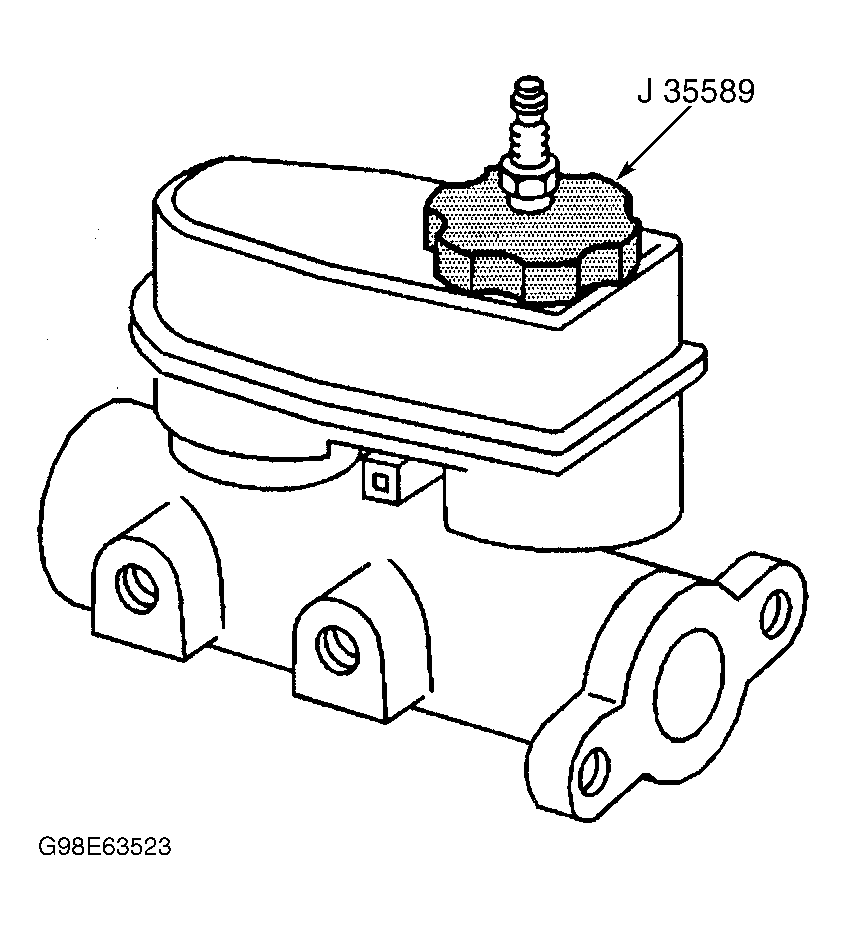 Courtesy of GENERAL MOTORS CORP.