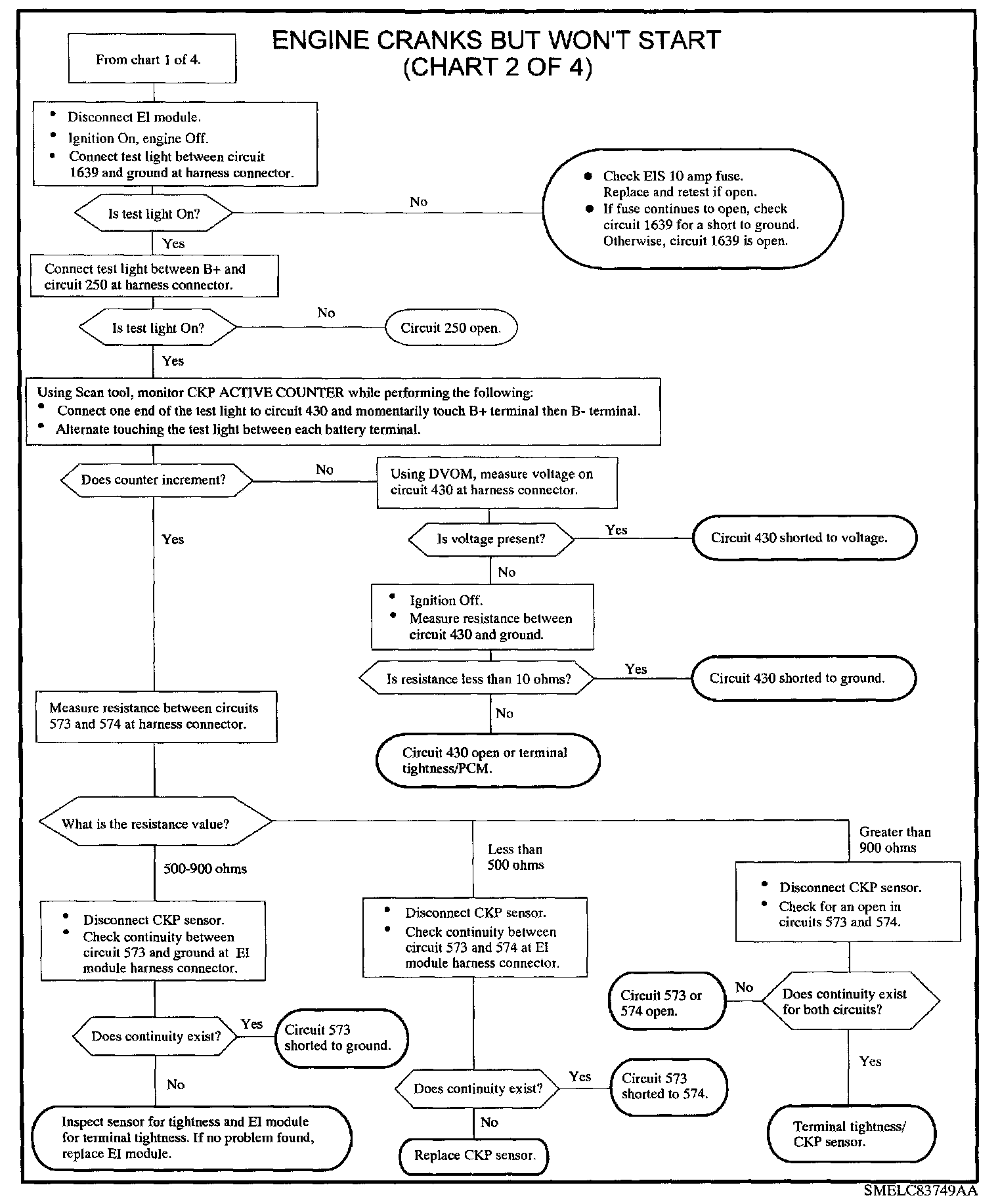
Chart 2
Diagnostic Chart:
Schematic:
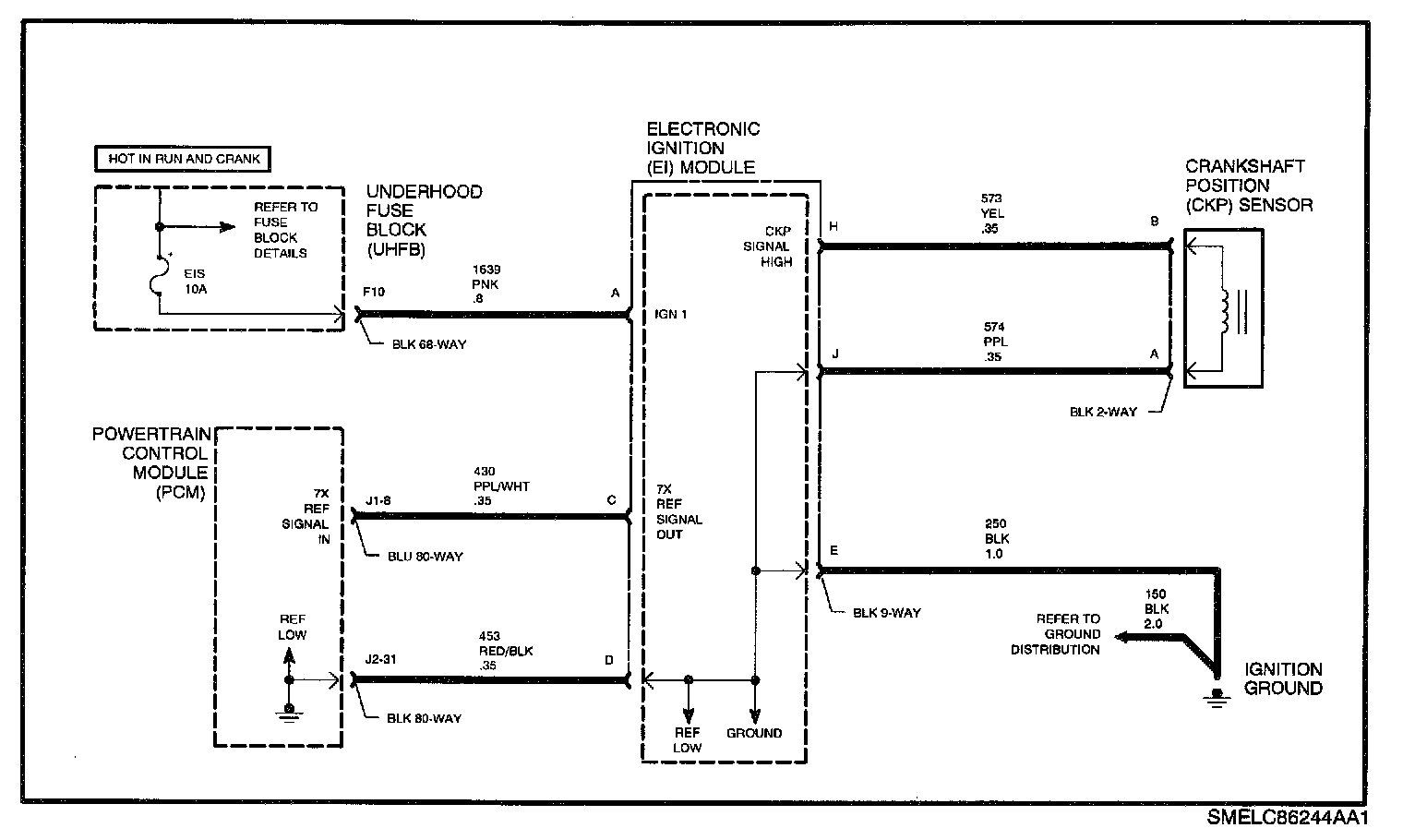
The Crankshaft Position (CKP) sensor produces an AC voltage of different amplitude and frequency depending on the velocity of the crankshaft. This AC voltage signal is fed into the EI module, which is converted to a square wave, zero or 5 volts, to the PCM. The crankshaft has 7 total machined notches, 6 of which are spaced 60° apart. The remaining tooth is 10° before the #4 cylinder TDC notch. This extra notch is used by the PCM to determine the position of the top dead center #4 cylinder necessary to synchronize engine position. The CKP sensor is used for fuel delivery, spark timing and misfire diagnostics.
DIAGNOSTIC AIDS
If ENGINE SPEED on Scan tool does not indicate any RPM while engine is cranking, the PCM will not look for a cam signal and the CMP ACTIVE COUNTER will stay at 0.
Intermittent CKP signal loss will cause the tachometer to dropout and may cause the engine to stall setting P1599.
RPM may dropout as a result of a loose CKP sensor or resistance value that sharply changes due to temperature differences.
If the CKP sensor is tight and resistance values under different temperatures are correct, the sensor is probably not at fault.
The voltage between circuit 573 and 574 measured at the EI module harness connector (disconnected) while the engine is cranking should be over 200 mV AC.
CKP sensor resistance: 500-900 ohms.