Description & Operation: Notes
WARNING:
Vehicles are equipped with air bag supplemental restraint system. Before attempting ANY repairs involving steering column, instrument panel or related components, see SERVICE PRECAUTIONS and DISABLING & ACTIVATING AIR BAG SYSTEM in AIR BAGS -- ALLANTE
article.
CAUTION:
When battery is disconnected, vehicle computer and memory systems may lose memory data. Driveability problems may exist until computer systems have completed a relearn cycle. See COMPUTER RELEARN PROCEDURES -- GENERAL MOTORS
article in GENERAL INFORMATION before disconnecting battery.
CAUTION:
Some require that hydraulic lines, hoses and fittings be disconnected for inspection testing and replacement purposes. This brake system uses a hydraulic accumulator which, when fully charged, contains brake fluid at high pressure. Before disconnecting any hydraulic lines, hoses or fittings, be sure that the accumulator is fully depressurized. Failure to depressurize the hydraulic accumulator may result in personal injury.
CAUTION:
Certain components in the anti-lock brake system are not intended to be serviced individually. Attempting to remove or disconnect certain system components, such as the hydraulic accumulator and valve block, may result in personal injury and/or improper system operation. Only those components with approved removal and installation procedures in REMOVAL & INSTALLATION should be serviced.
CAUTION:
When servicing brake parts, do not create dust by grinding, sanding brake linings, or by cleaning wheel brake parts with a dry brush or compressed air. Brake parts contain asbestos fibers which can become airborne if dust is created during servicing. Breathing dust containing asbestos fibers may cause serious bodily harm. A water dampened cloth or water based solution should be used to remove any dust on brake parts. These wet methods will prevent asbestos fibers from becoming airborne.
NOTE:
Avoid spilling brake fluid on any of the vehicle's painted surfaces, wiring, cables or electrical connectors. Brake fluid will damage paint and electrical connections. If any fluid is spilled on the vehicle, flush the area with water to lessen the damage.
All vehicles are equipped with the Bosch SR 2U Anti-Lock Brake System (ABS). See Fig 1. The purpose of Anti-lock Brake System is to maintain vehicle maneuverability by preventing wheel lock-up under heavy braking conditions on virtually any type of road surface. Anti-lock braking is desirable because a vehicle while is stopped without locking the wheels will normally stop in a shorter distance than a car with locked wheels, while retaining directional stability and some steering capability. This allows the driver to retain greater control of the vehicle during heavy breaking.
In addition to the Anti-lock Brake System, vehicles are also equipped with Bosch Traction Control System (TCS). The purpose of the Traction Control System (TCS) is to prevent wheels from spinning excessively during acceleration or when turning corners at higher speeds. The Traction Control System also prevents wheel slip on slippery surfaces such as wet or ice-covered roads. Traction Control is desired because the vehicle will be able to maintain the road surfaces better while allowing improved stability while driving.
The Anti-lock Brake System and the Traction Control System (ABS/TCS) are both part of the same hydraulic system and electrical system. Both systems use many of the same components and a problem in either of the systems usually will disable the other system until it is repaired. Anti-lock braking controls wheel slip when braking; traction control controls wheel slip when accelerating.
Removal and installation procedures for these components are located under REMOVAL & INSTALLATION . Component location information may be found under COMPONENT LOCATIONS .
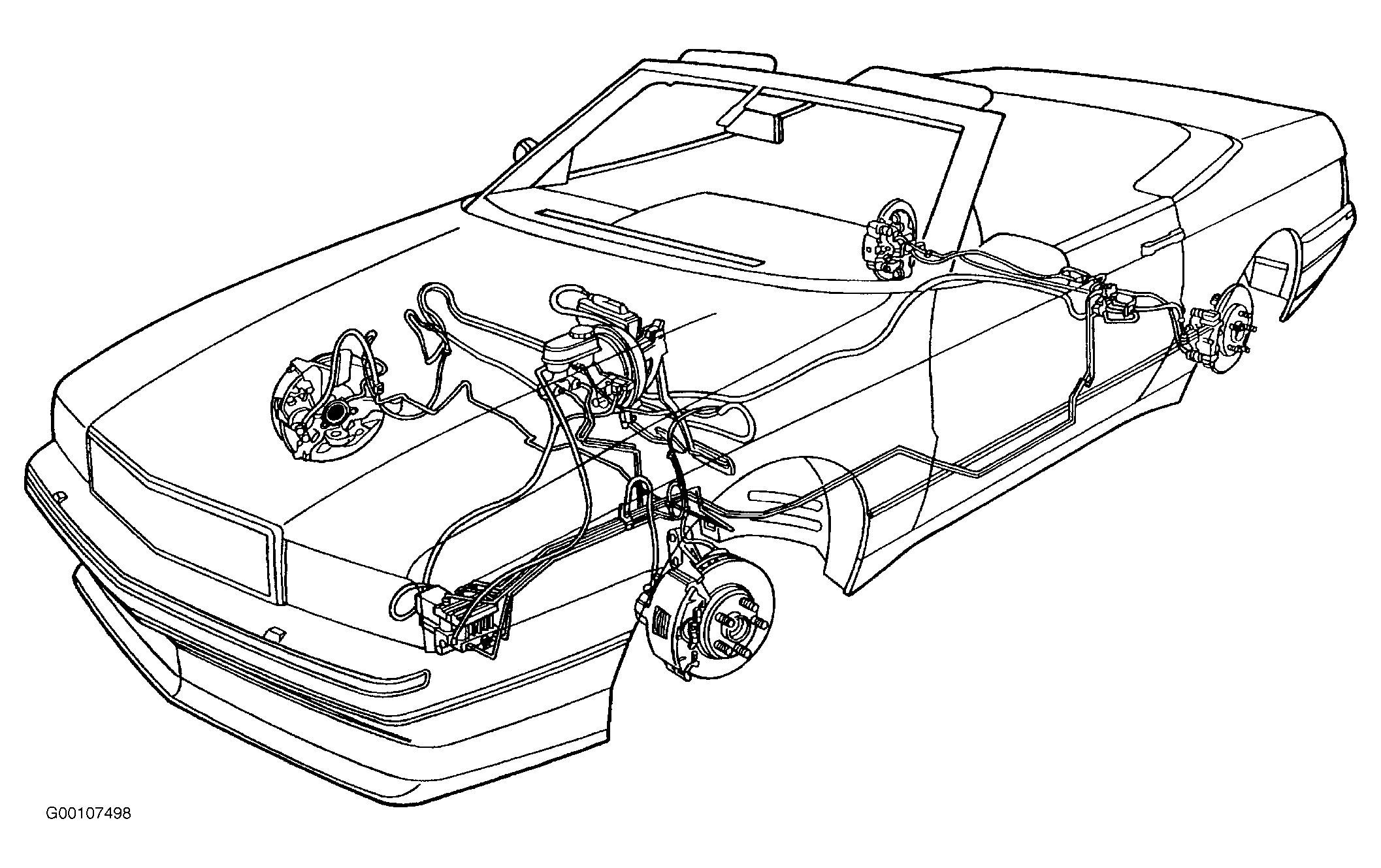 Courtesy of GENERAL MOTORS CORP.