Test J: Remote Keyless Entry Transmitter Panic Function Does Not Operate Properly
- Use recorded results from GEM Self-Test. If DTC C1182 or C1183 are recorded, go to step 6
. If DTC B1217 is retrieved, go to step 15
. If DTC B1218 is retrieved, go to step 14
.
- Turn ignition off. Using scan tool, monitor GEM PID LAST DATA RECEIVED while pressing and releasing panic button on both remote keyless entry transmitters. If PANIC appears after pressing buttons on both transmitters, and parking lights operate incorrectly, go to next step. If PANIC appears after pressing buttons on both transmitters, and horn operates incorrectly, go to step 11
. If PANIC does not appear after pressing buttons on both transmitters, replace or reprogram transmitters. See REMOTE KEYLESS ENTRY TRANSMITTER
under PROGRAMMING. If concern still exists after reprogramming or replacement of remote keyless entry transmitters, go to step 16
.
- Select active command TURN SIGNAL AND MARKER LAMPS. Using scan tool, trigger PARK LAMPS ON and OFF. If parking lights operate properly, go to step 16
. If parking lights do not operate properly, go to next step.
- Turn ignition off. Remove park lamp relay from RKE relay box. Turn ignition on. Measure voltage between park lamp relay cavity No. 3 (Tan/White wire) and ground. See Figure
. If voltage is greater than 10 volts, go to next step. If voltage is not greater than 10 volts, repair Tan/White wire. See WIRING DIAGRAMS
. Clear DTCs, and repeat GEM Self-Test.
- Ensure ignition is on. Install fused jumper wire between park lamp relay cavities No. 3 (Tan/White wire) and No. 5 (Brown wire). See Figure
. If parking lights illuminate, go to next step. If parking lights do not illuminate, repair open in appropriate wire(s). See WIRING DIAGRAMS
. Clear DTCs, and repeat GEM Self-Test.
- Turn ignition off. Remove park lamp relay from RKE relay box. Test relay. See PARK LAMP RELAY
under COMPONENT TESTS. If relay tests okay and DTC C1182 is recorded, go to next step. If relay tests okay and DTC C1183 is recorded, go to step 8
. If relay tests okay and DTC C1182 and C1183 are not recorded, repair Brown wire. See WIRING DIAGRAMS
. Retest system operation. If relay does not test okay, replace defective relay. Clear DTCs, and repeat GEM Self-Test.
- Turn ignition on. Ensure park lamp relay is removed from RKE relay box. Measure voltage between park lamp relay cavity No. 1 (Black/White wire) and ground. See Figure
. If voltage is greater than 10 volts, go to next step. If voltage is not greater than 10 volts, repair Black/White wire. See WIRING DIAGRAMS
. Clear DTCs, and retest system operation.
- Turn ignition off. Disconnect GEM 22-pin connector C240c. Ensure park lamp relay is removed from RKE relay box. Turn ignition on. Measure voltage between park lamp relay cavity No. 2 (Light Green/Yellow wire) and ground. See Figure
. If voltage is greater than 10 volts, repair short to voltage in Light Green/Yellow wire. See WIRING DIAGRAMS
. Clear DTCs, and repeat GEM Self-Test. If voltage is not greater than 10 volts, go to next step.
- Turn ignition off. Ensure GEM 22-pin connector C240c is disconnected and park lamp relay is removed from RKE relay box. Measure resistance of Light Green/Yellow wire between park lamp relay cavity No. 2 and GEM 22-pin harness connector C240c terminal No. 7. See Figure
and Figure
. If resistance is less than 5 ohms, go to next step. If resistance is not less than 5 ohms, repair open circuit in Light Green/Yellow wire. See WIRING DIAGRAMS
. Clear DTCs, and repeat GEM Self-Test.
- Ensure park lamp relay is removed from RKE relay box. Measure resistance between park lamp relay cavity No. 2 (Light Green/Yellow wire) and ground. See Figure
. If resistance is greater than 10 k/ohms, go to step 16
. If resistance is not greater than 10 k/ohms, repair short to ground in Light Green/Yellow wire. See WIRING DIAGRAMS
. Clear DTCs, and repeat GEM Self-Test.
- Using scan tool, monitor GEM PID HORNRLY while pressing and releasing panic button on remote keyless entry transmitter. If scan tool GEM PID HORNRLY displays ON and OFF, go to next step. If scan tool GEM PID HORNRLY does not display ON and OFF, replace remote keyless entry transmitter, or reprogram. See REMOTE KEYLESS ENTRY TRANSMITTER
under PROGRAMMING. If concern still exists after replacement or reprogramming of transmitter, go to step 16
.
- Turn ignition on. Using scan tool, select active command HORN CONTROL. Trigger HORN ON, then OFF. If horn activates ON and OFF, go to step 16
. If horn does not activate ON and OFF, go to next step.
- Press horn button on steering wheel. If horn sounds, go to next step. If horn does not sound, repair horn as necessary. See WIRING DIAGRAMS in STEERING COLUMN SWITCHES -- EXCURSION & F250-F550 SUPER DUTY PICKUPS
.
- Turn ignition off. Remove Generic Electronic Module (GEM) from central junction box. See GENERIC ELECTRONIC MODULE
under REMOVAL & INSTALLATION. Measure voltage between central junction box 18-pin connector C240d terminal No. 3 and ground. See Figure
. If voltage is greater than 10 volts, go to step 16
. If voltage is not greater than 10 volts, repair central junction box, as necessary. Retest system operation.
- Turn ignition off. Disconnect central junction box 34-pin connector C242a. Measure voltage between central junction box 34-pin harness connector terminal No. 31 (Dark Blue wire) and ground. See Fig 1
. If voltage is greater than 10 volts, repair short to voltage in Dark Blue wire. Retest system operation. If voltage is not greater than 10 volts, repair central junction box, as necessary. Retest system operation.
- Turn ignition off. Disconnect all GEM connectors. Inspect for corrosion or pushed-out pins. Reconnect all GEM connectors, securing them correctly. Operate system, and verify concern is still present. If concern is still present, replace GEM. Clear DTCs, and repeat GEM Self-Test. If concern is not present, system is operating properly at this time. Clear DTCs, and repeat GEM Self-Test.
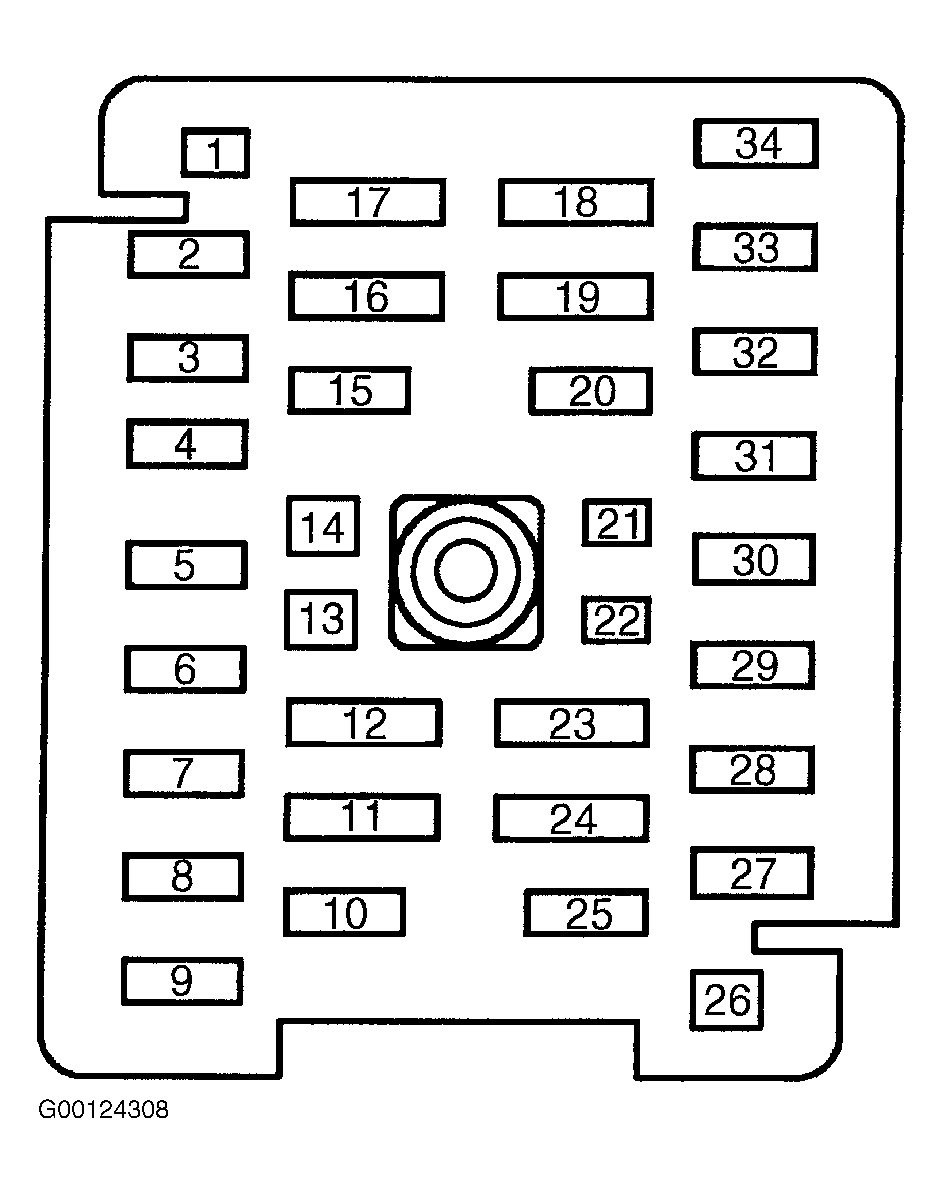 Courtesy of FORD MOTOR CO.