September 30: LEMON manuals is back up on a temporary server! Slowness is possible
Traction Control System (TCS)
- NORMAL MODE
 Courtesy of HYUNDAI MOTOR CO.
- In the normal driving condition, TC valve (normally open) is the passage between the master cylinder and the each wheel cylinder.
- When brake pedal is applied, brake pressure is delivered to the wheel cylinders via NO-TC valve and all solenoid valves inside the hydraulic unit are deactivated.
- In case of TCS malfunction it does not affect brake operation.
- PRESSURE INCREASE MODE
 Courtesy of HYUNDAI MOTOR CO.
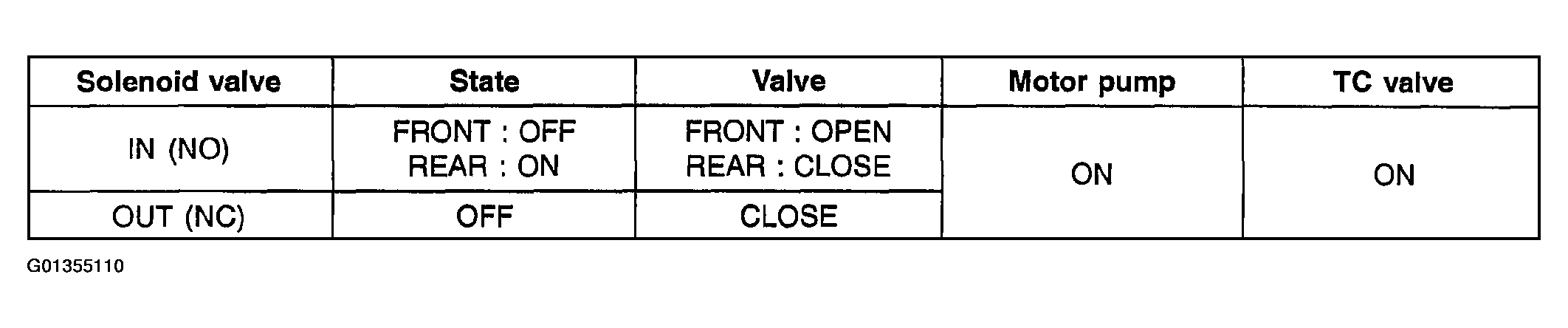
- If a front wheel spin is detected, TCS begins a brake control to decrease a wheel spin.
- Hydraulic shuttle valve (HSV) is opened. Brake fluid is supplied from the master cylinder by motor operation to the spin wheel via HSV.
- TC valve is closed (ON). Brake pressure generated from motor pump is delivered only to the front wheel.
- Inlet valve remains open to deliver the brake pressure generated from motor pump to the spinning wheels.
- PRESSURE DUMP MODE
 Courtesy of HYUNDAI MOTOR CO.
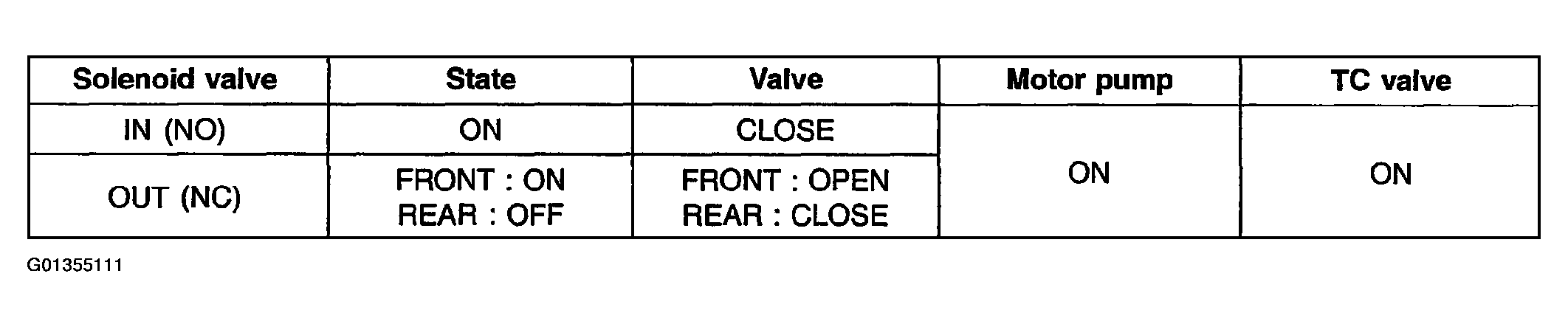
- When the wheel deceleration is under the threshold and the wheel spin is reduced under a slip threshold, applied brake pressure is reduced to get a optimum traction force.
- Outlet valve is open to release the brake pressure and inlet valve is closed to block the pressure increase from the motor pump.
- Hydraulic shuttle valve (HSV) remains opened, TC valve is ON.
- Motor is ON, to dump the brake fluid being released from the lock-up wheel.
- PRESSURE HOLD MODE
 Courtesy of HYUNDAI MOTOR CO.